Israeli Airstrikes Target Hezbollah Depots and Infrastructure in Lebanon as Ceasefire Tensions Mount
Israel strikes Hezbollah depots in Lebanon, citing threats despite ceasefire; 340+ killed since Nov. as U.S. presses Beirut on disarmament deadline.
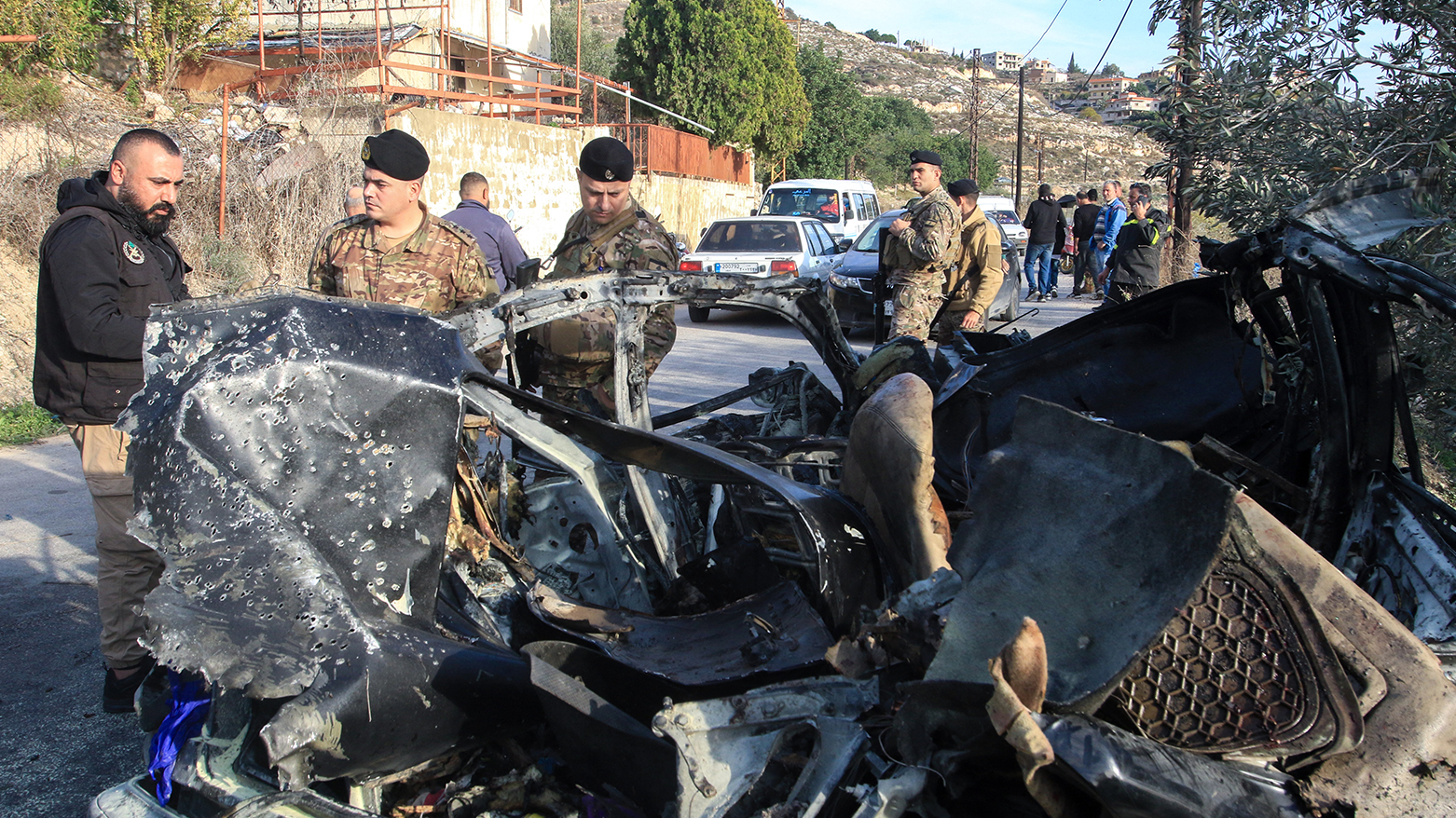
ERBIL (Kurdistan24) — The Israeli military launched a significant wave of airstrikes against Hezbollah targets across Lebanon on Friday, striking weapons depots and a training complex in an operation that underscores the fragility of the ceasefire agreement meant to halt the conflict.
he strikes, which targeted locations ranging from the southern districts to the eastern reaches of the country, come amidst a contentious implementation of a truce that has failed to fully quell hostilities more than a year into the fighting.
According to a statement released by the Israeli military, the Friday operation was directed at dismantling specific logistical and operational capabilities of the Iran-backed group.
The military identified the targets as "weapons storage facilities and terrorist infrastructure sites," which it asserted were being actively utilized by Hezbollah to advance attacks against the State of Israel.
The military’s statement emphasized a proactive posture, warning that its forces would continue to "remove any threat posed to the state of Israel," signaling a determination to degrade Hezbollah's military assets despite the diplomatic framework nominally in place.
The scope of the operation was detailed by Lebanon’s state-run National News Agency (NNA), which reported a "series of airstrikes" conducted by Israeli aircraft.
The NNA’s reporting indicated that the bombardment was geographically widespread, hitting mountainous areas in the Nabatiyeh and Jezzine districts in southern Lebanon, as well as the Hermel district in the eastern part of the country.
This geographic distribution suggests a broad targeting strategy by Israel, extending operations beyond the immediate border zone where ground tensions have been highest.
The renewal of high-intensity strikes occurs against the backdrop of a ceasefire agreement brokered in November 2024. While that accord was intended to bring an end to more than a year of cross-border warfare between Israel and Hezbollah, the reality on the ground has remained volatile.
Despite the cessation of hostilities agreement, Israel has maintained a military presence in five areas within Lebanon that it deems strategic, a point of friction that has persisted as the diplomatic process struggles to take hold.
The human cost of the post-ceasefire period has been significant.
According to an Agence France-Presse (AFP) tally based on reports from the Lebanese health ministry, more than 340 people have been killed by Israeli fire in Lebanon since the November agreement was signed.
This figure highlights the lethal nature of the ongoing "interim" period, where sporadic clashes and targeted strikes continue to claim lives despite the official pause in full-scale war.
Friday’s airstrikes followed a day of similar violence.
On Thursday, Israeli attacks near the Syrian border and in southern Lebanon resulted in the deaths of three people. In a disclosure that points to the regional dimension of the conflict, the Israeli military reported on Thursday that one of its strikes in Lebanon had killed a member of the Quds Force, the elite wing of Iran’s Islamic Revolutionary Guard Corps.
The targeting of an operative linked to Israel’s arch-foe, Iran, within Lebanese territory suggests that Israeli intelligence and air power are focused on disrupting the supply lines and command structures that link Hezbollah to its external patrons.
The persistence of these strikes and the presence of Israeli troops on Lebanese soil have intensified diplomatic pressure on the Lebanese government to accelerate the implementation of security arrangements.
Under heavy pressure from the United States, which fears that continued Israeli strikes could expand the conflict into a wider regional war, Lebanon has committed to a disarmament process. The plan involves removing Hezbollah’s weapons from the southern part of the country, specifically the area south of the Litani River.
The Litani River, located approximately 30 kilometers (19 miles) from the border with Israel, serves as a crucial demarcation line in the security negotiations.
The Lebanese army has drafted plans to complete the disarmament of armed groups in this zone by the end of the year. The success of this initiative is viewed by international mediators as essential to stabilizing the border and creating the conditions for a full Israeli withdrawal.
However, deep-seated distrust remains a formidable obstacle to this process. Israeli officials have publicly questioned the effectiveness of the Lebanese military in enforcing the disarmament mandate.
Furthermore, Israel has accused Hezbollah of utilizing the ceasefire period to rearm and reconstitute its forces rather than dismantling them. This perception of rearmament has been cited by Israeli officials as a primary justification for the continued airstrikes on infrastructure and weapons depots.
For its part, Hezbollah has remained defiant regarding the status of its arsenal. The group has rejected calls to surrender its weapons, maintaining its stance that its military capabilities are necessary for the defense of Lebanon.
This refusal to disarm complicates the Lebanese army’s mission and creates a potential flashpoint for future confrontations as the year-end deadline for the disarmament south of the Litani approaches.
The diplomatic impasse is further complicated by the continued Israeli military footprint in the five strategic areas it occupies.
While the November 2024 ceasefire was premised on a de-escalation, the retention of these zones by Israeli troops suggests that the Israeli defense establishment views physical control of certain terrain as a necessary security guarantee, at least until the disarmament of Hezbollah in the south is verified to their satisfaction.
As the situation stands, the cycle of airstrikes and reciprocal rhetoric continues to erode the foundations of the ceasefire.
The strikes on Friday, targeting both the logistical hubs in Hermel and the tactical positions in the south, serve as a reminder that the conflict has transitioned from a full-scale war to a high-stakes campaign of attrition and interdiction.
With the United States exerting pressure on Beirut to deliver on its security commitments, and Israel demonstrating its willingness to strike deep inside Lebanon to neutralize threats, the coming weeks leading up to the year-end deadline will be critical in determining whether the ceasefire holds or collapses entirely.