Iraq’s Coordination Framework Signals Key Parliamentary and Premiership Choices Amid Government Deadlock
On the Sunni side, Hayani said the Coordination Framework expects Muthanna Samarrai, leader of the Azem Coalition, to assume the position of speaker of parliament, stressing that the Shiite bloc would respect the decision of the Sunni National Political Council.
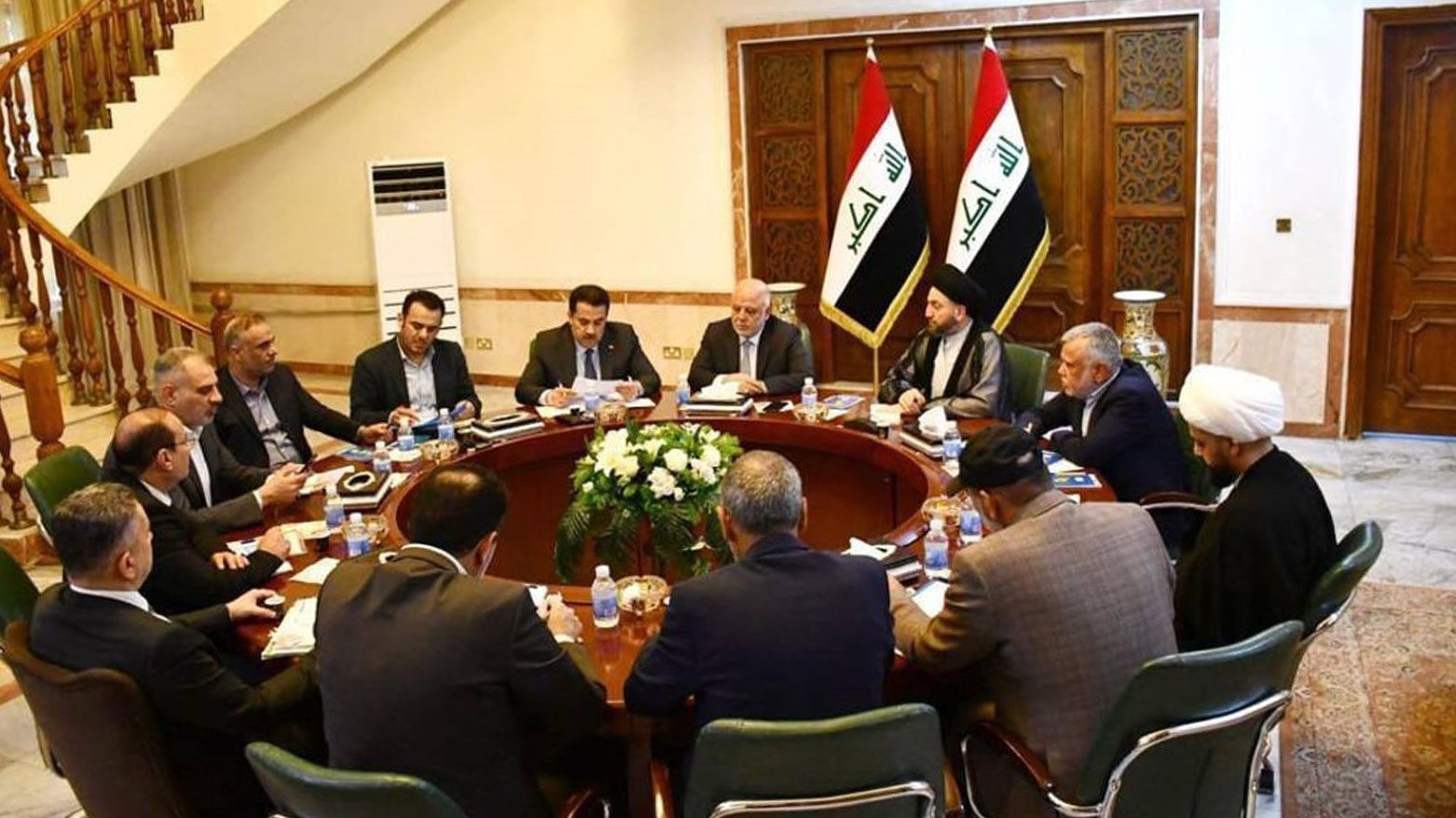
ERBIL (Kurdistan24) — Mahmoud Hayani, a senior figure in Iraq’s Fatah Alliance, said the Shiite Coordination Framework is likely to nominate Ahmad Assad of the Reconstruction and Development Coalition for the post of deputy speaker of parliament, as negotiations intensify ahead of the first session of the new legislature.
Speaking to Kurdistan24, Hayani said the Coordination Framework does not fully back Mohammed Shia Sudani as the next prime minister. He added that Nouri Maliki, leader of the State of Law Coalition, is also unlikely to secure the position. Instead, Hayani indicated that there is a growing consensus within the framework to support Haider Abadi, head of the Nasr Coalition, for the premiership.
On the Sunni side, Hayani said the Coordination Framework expects Muthanna Samarrai, leader of the Azem Alliance, to assume the position of speaker of parliament, stressing that the Shiite bloc would respect the decision of the Sunni National Political Council.
“We believe that Muthanna Samarrai will take the post, and the Coordination Framework will respect the decision of the Sunni National Political Council,” Hayani said.
Hayani’s remarks come as Iraq remains locked in a political stalemate over the formation of a new government following recent elections. The first session of the newly elected parliament is scheduled for Monday, during which lawmakers are expected to be sworn in and a parliamentary presidency elected.
Within the Shiite political parties, competition for the prime ministerial post continues among Mohammed Shia Sudani, Nouri Maliki, and Haider Abadi. Despite ongoing talks aimed at reaching a unified position, the Coordination Framework has yet to agree on a single final candidate.
Meanwhile, Sunni parties grouped under the Sunni National Political Council are holding intensive negotiations to nominate a consensus candidate for the speakership. Disagreements among major Sunni factions have so far delayed an agreement, though the Azem Alliance has formally put forward Muthanna al-Samarrai as its nominee in the latest development.
Polling for the sixth session of the Council of Representatives took place on November 11, with voting open from 7:00 a.m. to 6:00 p.m. across all Iraqi provinces, including the Kurdistan Region.
According to the Iraqi Independent High Electoral Commission (IHEC), voter turnout has surpassed 55 percent, an increase compared to recent electoral cycles. The commission said the figure is based on data from most polling centers and reflects the participation of more than 12 million voters out of over 21 million eligible Iraqis.
This year’s election featured a crowded field of political contenders: 38 political parties, 31 coalitions, and 75 individual lists. In total, 7,768 candidates—5,520 men and 2,248 women—competed for seats in the 329-member parliament.
The vote was held under a revised electoral framework, introduced in response to demands that emerged from the nationwide protests of 2019–2021. The system replaced proportional representation with a single non-transferable vote mechanism, dividing the country into 83 multi-member constituencies.