Azm Alliance Leader Withdraws from Iraqi Speaker Race, Backing Haibet al-Halbousi
Muthanna al-Samarrai withdrew from the Iraqi Speaker race, endorsing Haibet al-Halbousi to unify Sunni ranks. A candidate needs 166 votes to win.
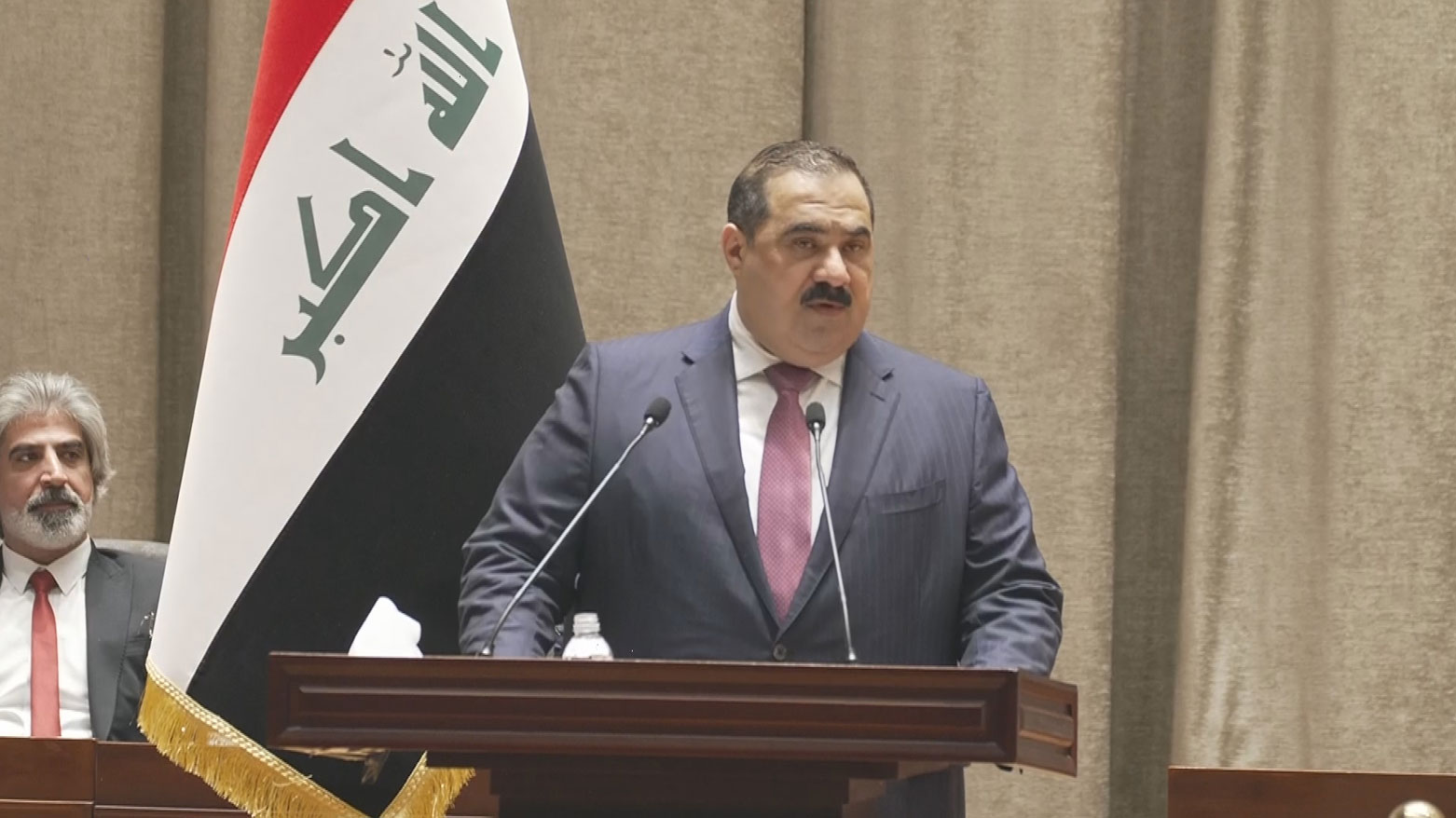
ERBIL (Kurdistan24) — In a significant political development aimed at unifying the Sunni political bloc within the Iraqi legislature, Muthanna al-Samarrai, the head of the Azm Alliance, formally withdrew his candidacy for the post of Speaker of the Iraqi Parliament on Monday. The announcement, made during the inaugural session of the parliament's sixth term, was accompanied by an explicit endorsement of Haibet al-Halbousi, a move intended to streamline the selection process and avert fragmentation within the legislative chamber.
The withdrawal occurred on Monday, during a session that marked the commencement of the new parliamentary era.
The proceedings began with the administration of the constitutional oath to the winning members of the legislature. Following the swearing-in ceremony, Amir Fayez, acting in his capacity as the eldest Member of Parliament and Speaker pro tempore, formally opened the floor for self-nomination for the three primary leadership positions: the Speaker of Parliament, the First Deputy, and the Second Deputy.
Al-Samarrai, who had been positioned as a leading contender representing the Sunni component for the speakership, utilized the platform to reshape the contest. In a speech delivered to the assembly, the Azm Alliance leader articulated that his decision to step aside was driven by a desire to respect the prevailing political consensus and to facilitate a smooth transition of power. He specifically cited the preferences of his colleagues across the political spectrum as the primary catalyst for his exit from the race.
"Considering the desire and wish of the parliamentarians from the Sunni component and our brothers in the Coordination Framework and other political parties regarding the nomination of Haibet al-Halbousi for the post of Parliament Presidency, I announce my withdrawal," al-Samarrai stated. He emphasized that his primary motivation was "to support the political process and to avoid division within the parliament hall," signaling a prioritization of legislative unity over personal political ambition.
Beyond merely exiting the race, al-Samarrai offered a robust endorsement of his rival, framing Haibet al-Halbousi as the candidate best suited to navigate the complexities of the coming term. He expressed hope that al-Halbousi would not only secure the victory but would also emerge as a transformative figure in the governance of the legislative body. Al-Samarrai described his expectations for the prospective speaker, characterizing him as a potential "man of a new phase in managing the Parliament."
The Azm Alliance leader outlined specific areas where he expects the new leadership to focus, including the critical domains of oversight and legislation. Furthermore, he emphasized the parliament's responsibility in "following up on the role of the future government and implementing constitutional promises on time." In a nod to the national scope of the role, al-Samarrai stressed the importance of achieving "justice for all Iraqis from Basra to Zakho," underscoring the need for a leadership that transcends sectarian and regional divides.
Following al-Samarrai’s departure from the contest, the field of candidates vying for the Speaker’s gavel has narrowed. The remaining contenders for the post of Speaker of the Iraqi Parliament are Haibet al-Halbousi, Salim al-Issawi, and Amir Abduljabbar. The consolidation of support behind al-Halbousi by a former rival is expected to alter the parliamentary arithmetic as lawmakers move toward the ballot.
The election process is governed by strict constitutional and procedural mandates. According to Article 55 of the Iraqi Constitution and Article 12 of the Parliament's Internal Bylaws, the threshold for victory is high. To secure the post of Speaker of Parliament—or that of his deputies—a candidate must obtain an absolute majority of the votes of the total members of Parliament.
For the current sixth term, the Iraqi Parliament consists of 329 members. Consequently, the mathematical threshold for an absolute majority stands at half the total membership plus one. This requires a successful candidate to secure a minimum of 166 votes to assume the speakership. The stringent requirement ensures that the elected leader possesses a broad mandate from the legislative body.
The procedural framework also accounts for the possibility of a deadlock. If no single candidate is able to obtain the requisite absolute majority in the first round of voting, the regulations stipulate that the voting process must be repeated. However, the legal texts leave room for interpretation regarding subsequent steps. The Constitution and Internal Bylaws do not specify a concrete procedure for the second round, such as a runoff limited to the top two vote-getters.
In the absence of explicit statutory guidance for a second round, the matter is typically settled according to political agreement and established parliamentary custom. This often results in several rounds of voting continuing until one of the candidates manages to secure the necessary majority through negotiation and coalition-building within the hall.
The election of the Speaker is merely the first step in a sequence of constitutional obligations facing the new parliament. According to Article 72 of the Constitution, once the Presidency Board of the Iraqi Parliament—comprising the Speaker and his two deputies—is elected, the legislature enters a time-bound process. The Parliament is mandated to elect a new President of the Republic within a period of 30 days following the seating of its own leadership.
These procedural steps are deeply influenced by the unwritten political customs that have defined Iraqi governance for more than two decades. According to the political tradition of distributing sovereign posts in Iraq, which has been implemented since 2003, the nation's top offices are allocated along ethno-sectarian lines to ensure representation for the country's major communities.
Under this established custom, the post of Speaker of Parliament is designated as the share of the Sunni component. Simultaneously, the post of Prime Minister is reserved for the Shiite component, and the post of President of the Republic is allocated to the Kurds. This distribution extends to the Parliament's Presidency Board as well, where the First Deputy is designated for the Shiites and the Second Deputy for the Kurds.
While this sectarian distribution of power is not statutory and does not appear in the text of the Constitution, it has become an integral part of the Iraqi political process. Political parties routinely hold internal discussions within their own components beforehand to determine their consensus candidates for these specific roles. Al-Samarrai’s withdrawal and his reference to the "desire and wish of the parliamentarians from the Sunni component" reflect the heavy weight this tradition carries in guiding the decisions of the legislature.
As the session proceeds, the focus remains on whether the endorsement from the Azm Alliance will be sufficient to propel Haibet al-Halbousi past the 166-vote threshold in the first round, or if the chamber will be forced into multiple rounds of voting to settle the leadership of the legislative branch.