Shopkeeper Strikes Spur Iran to Open Dialogue on Economic Crisis
Iran's government recognized economic protests as legitimate and unveiled a 20-point plan to curb inflation and stabilize the currency, shifting to direct consumer subsidies amid severe unrest.
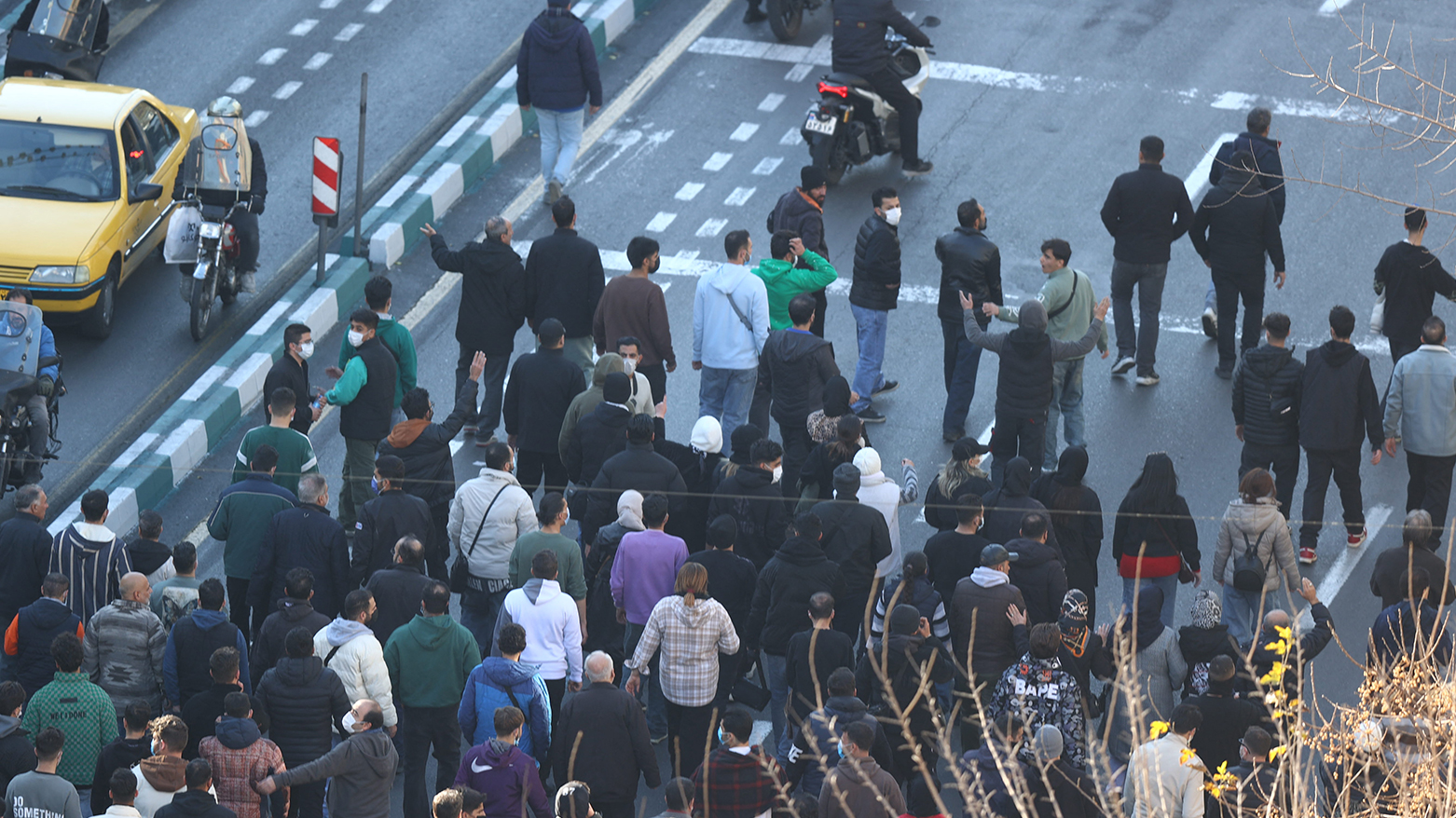
ERBIL (Kurdistan24) – The Iranian government signaled a shift in its approach to growing domestic unrest on Tuesday, officially recognizing the legitimacy of protests driven by economic hardship and announcing a comprehensive 20-point plan aimed at stabilizing the nation’s collapsing currency and curbing inflation.
Speaking at a press conference in Tehran, Government Spokesperson Fatemeh Mohajerani confirmed that the administration views the demonstrations as an "opportunity for repair" and emphasized the right to peaceful assembly, marking a notable departure from the harsh rhetoric often employed against dissenters.
The spokesperson’s comments, reported by the IRIB News Agency, follow days of strikes by shopkeepers in the capital who shuttered their businesses to protest the rial’s precipitous decline.
"We see and recognize both the protests and the bottlenecks and crises," Mohajerani stated on Tuesday, December 30, 2025. She revealed that President Masoud Pezeshkian has ordered the Ministry of Interior to "create a mechanism for dialogue and to sit down for talks with individuals who have objections."
Mohajerani framed the protests not as acts of sedition, but as a symptom of immense societal pressure. "If they have raised their voices, it means the pressure exerted on them is immense," she said. "The government will listen with patience even if there are harsh voices."
Root Causes and Remedial Plans
The administration’s conciliatory tone was accompanied by an admission of systemic economic failure. Addressing the issue of price hikes, Mohajerani stated that the government’s approach is to address the problem at its root.
"From about 20 years ago until now, we have all witnessed salary increases, yet people's purchasing power has decreased," she noted. "This issue indicates that we must treat the roots and address them."
To combat this entrenched instability, the government convened an emergency meeting on Monday night, resulting in the approval of a 20-point economic development plan.
According to the spokesperson, this strategy focuses on four key pillars: improving livelihood, curbing inflation, market management, and improving economic growth. The plan is designed to manage the economic situation over a 15-month period to restore stability in line with the country's Seventh Development Plan.
A central component of this strategy involves a radical restructuring of subsidies.
Mohajerani explained that while the government spends billions of dollars on livelihood support, the current system of "hidden subsidies" is ineffective. The administration has obtained permission in the 1405 budget (the upcoming Iranian calendar year) to shift subsidies "to the end of the chain," meaning direct transfers to consumers rather than price supports for producers.
"To improve people's livelihood and their dignified living, two solutions including a goods basket and credit have been predicted," she said. The government plans to implement an "electronic coupon" system aimed at guaranteeing the purchase of basic goods for vulnerable households.
Mohajerani confirmed that the next stage of electronic coupon payments would begin in the current month of Dey, with regular payments scheduled for the following year.
Battling Inflation and Budget Deficits
The government identified budget deficits and banking irregularities as the primary drivers of inflation, which official data placed at 52 percent year-on-year in December. "The important point is preventing a budget deficit, because the cause of inflation is the budget deficit and the imbalance of banks," Mohajerani stated.
She outlined a plan to save between 300 to 500 trillion Tomans (300 to 500 thousand billion Tomans) in the next budget to manage the deficit and prevent the Central Bank from printing money to cover bank overdrafts.
The spokesperson also addressed the "war of narratives" surrounding the economy, dismissing dire predictions by some economists of a 300 percent hyperinflation in the coming year. "We are in a multi-layered war, and some numbers create mental preparation," she warned, calling on the media to help calm the atmosphere. She asserted that the Ministry of Economic Affairs and Finance's models do not support such catastrophic forecasts.
In a move to restore confidence in monetary policy, the government confirmed a leadership change at the Central Bank. Presidency communications official Mehdi Tabatabaei announced earlier that President Pezeshkian had appointed Abdolnasser Hemmati as the new governor.
Mohajerani stated that Hemmati’s mission is "rebuilding trust and reforming the fundamental function of monetary policy." She expressed hope that the new governor would restore the credibility of the institution and curb inflation through better coordination.
Social Tensions and Structural Reform
While focusing on macroeconomics, the press conference also touched on sensitive social issues. Regarding the controversial "Protection 3" plan in Parliament, which critics fear will further restrict internet access, Mohajerani clarified the government's stance.
"The government's view is to support free access to information, and any work contrary to this issue is not supported by the government," she said, describing free access to information as "the people's right."
The spokesperson also discussed structural reforms within the government itself. In compliance with Article 105 of the Seventh Plan, reviews have been conducted in 11 ministries to downsize the bureaucracy.
Mohajerani noted that a draft document for the structural reform of the Ministries of Roads and Urban Development and Agriculture Jihad has already been approved.
On the issue of poverty, Mohajerani promised transparency regarding the poverty line, though she noted it is usually announced at the end of the year. She reiterated the government's commitment to protecting the most vulnerable, stating that "a chain breaks at its weakest links."
To this end, the budget includes tax exemptions for food items and salaries up to 40 million Tomans, ensuring that the burden of fiscal adjustments does not fall disproportionately on the poor.
The press conference also addressed specific concerns for the upcoming Ramadan period. Mohajerani assured the public that strategic reserves of fruit, vegetables, and basic items are sufficient and that a special headquarters has been formed to supervise proper access and pricing during the holidays.
Background of Unrest
The government's announcements come against a backdrop of severe economic strain. As reported by Kurdistan24 earlier on Tuesday, the Iranian rial has plummeted to new lows, trading at around 1.42 million to the U.S. dollar on the unofficial market. This collapse has fueled the protests by shopkeepers in Tehran, who say business has become impossible due to price volatility.
President Pezeshkian’s call for dialogue and the unveiling of the 20-point plan represent an attempt to quell this unrest without resorting to the violent crackdowns that have characterized previous responses to dissent. However, with Western sanctions intensifying following the reinstatement of UN measures linked to the nuclear program, the government faces an uphill battle to stabilize an economy that has been under pressure for decades.