Iran's 'Flawed and Deadlocked' Policies on Women Decried by Iranian Activist
Faiza Rafsanjani said Iran’s current government has failed to meaningfully improve women’s rights, criticizing laws on domestic violence, discrimination, and barriers to professional advancement.
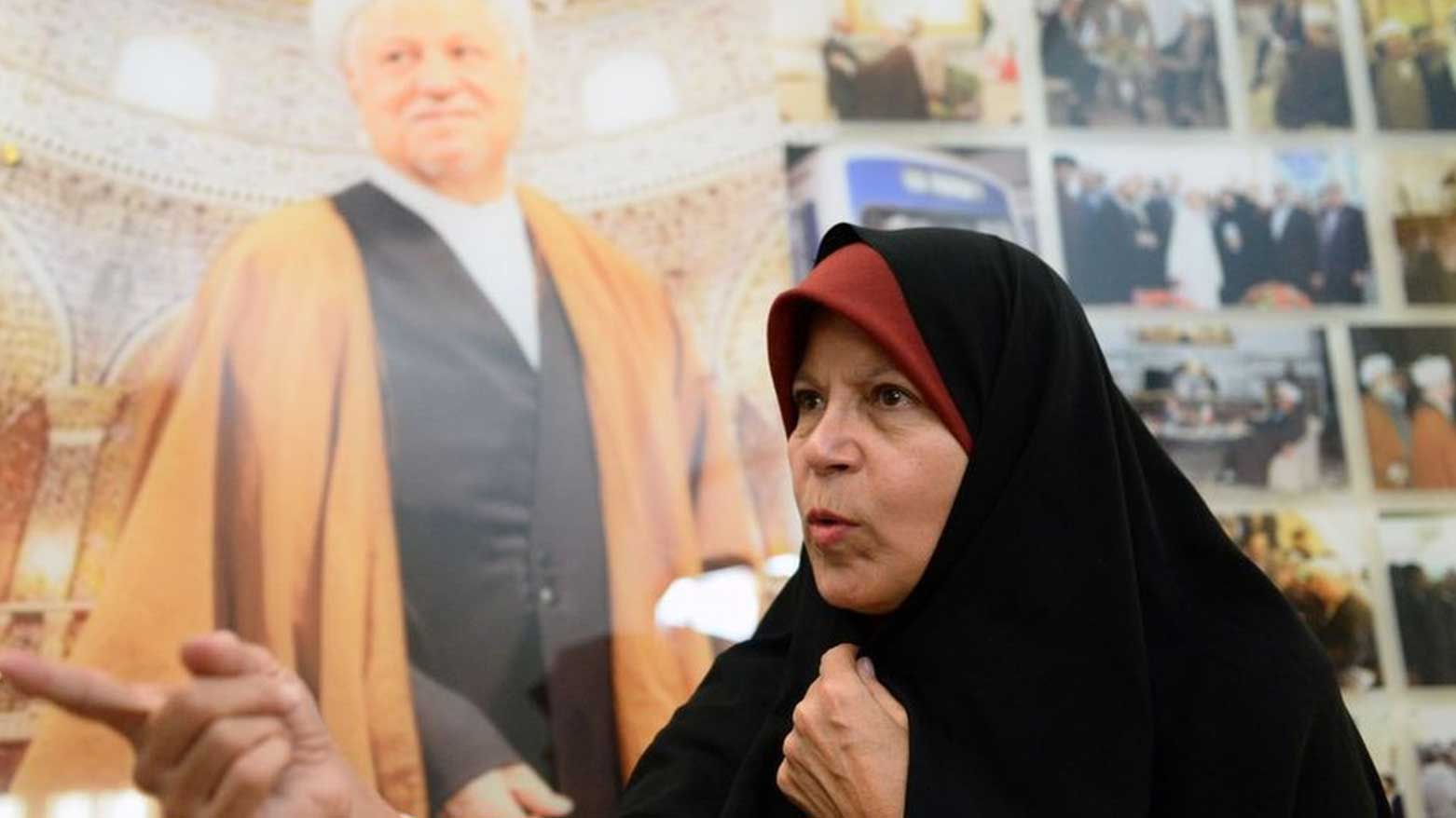
ERBIL (Kurdistan24) - Faiza Rafsanjani, a prominent political activist and women’s rights advocate, has delivered a blunt assessment of Iran’s legal and political framework, arguing that despite limited positive steps, the current government has failed to bring meaningful change to women’s rights and social justice.
Faiza Rafsanjani said the government led by Masoud Pezeshkian, while taking some positive steps on certain issues such as the hijab, has generally failed to act adequately in the field of women’s rights.
Rafsanjani, the daughter of the late Iranian political figure Ali Akbar Hashemi Rafsanjani, made the remarks in an interview with the Tabnak website, addressing the issue of domestic violence.
She said such incidents exist in all societies, but stressed that the decisive factor lies in laws capable of preventing the spread of such phenomena, as well as the broader approach of state institutions. She emphasized that “government” should not be understood solely as the executive authority, but rather as the entire system of governance, which must confront domestic violence through appropriate legislation, sound policies, and clearly defined responsibilities.
Rafsanjani said the government must introduce draft legislation on this issue for parliamentary approval, or alternatively, the judiciary should initiate such legislation to pave the way for reform.
She argued that women currently do not enjoy special legal protections. According to Rafsanjani, if a woman commits violence and her husband files a complaint, the law addresses the case, but if a man commits violence, even if it results in injury or death, serious and effective legal action often does not follow. She said this demonstrates the urgent need to revise and restructure Iran’s laws in this area.
Rafsanjani described the rise in domestic violence as deeply alarming. Citing what she said were reports published by Etemad newspaper, she stated that in Iran, a woman is killed by a family member approximately every three days. She added that, in practice, uncovering a woman’s hair is treated as a more serious crime than the killing of a woman by a man.
She also reiterated her opposition to the death penalty, saying she believes it should be permanently abolished. She said punishment for murder should instead involve long-term imprisonment, ranging from ten to twenty years or life sentences. Rafsanjani stressed that laws must work to raise social awareness to prevent the growth of domestic violence, while ensuring that perpetrators receive appropriate punishment.
On workplace equality, Rafsanjani said that within the government’s administrative system, direct discrimination in base salaries between men and women is not widely evident. However, she noted that certain benefits, including housing-related and other privileges, are granted exclusively to men, excluding women.
She said women face invisible barriers, unequal traditions, and cultural obstacles that limit their opportunities for promotion and prevent them from reaching senior management positions.
Rafsanjani added that while she is not aware of cases in which female government employees receive lower base salaries than men, the core problem lies in women being denied professional advancement. She said men are able to progress to positions such as manager, general director, deputy, or president, roles that come with higher pay, benefits, and improved welfare services, opportunities that are largely inaccessible to women.
In concluding remarks, Rafsanjani said the current Iranian government’s policies toward women have not improved and instead reproduce the same flawed and deadlocked approaches of the past. She warned that this situation naturally fuels growing despair within society.
She said that when examining key indicators of the country’s condition, including currency value, gold prices, inflation rates, and economic challenges, it becomes clear that these crises are affecting all social classes and segments of society.
Rafsanjani’s remarks present a stark critique of Iran’s legal and political landscape, warning that without structural reform and genuine commitment to equality, women’s rights and broader social stability will continue to erode.