Russia Warns Against Military Strikes on Iran, Urges Diplomacy Amid Rising US-Israel Rhetoric
"Bombing nuclear facilities operating under IAEA safeguards would have a disastrous impact on the global non-proliferation regime," said Russian Foreign Ministry spokeswoman Maria Zakharova.
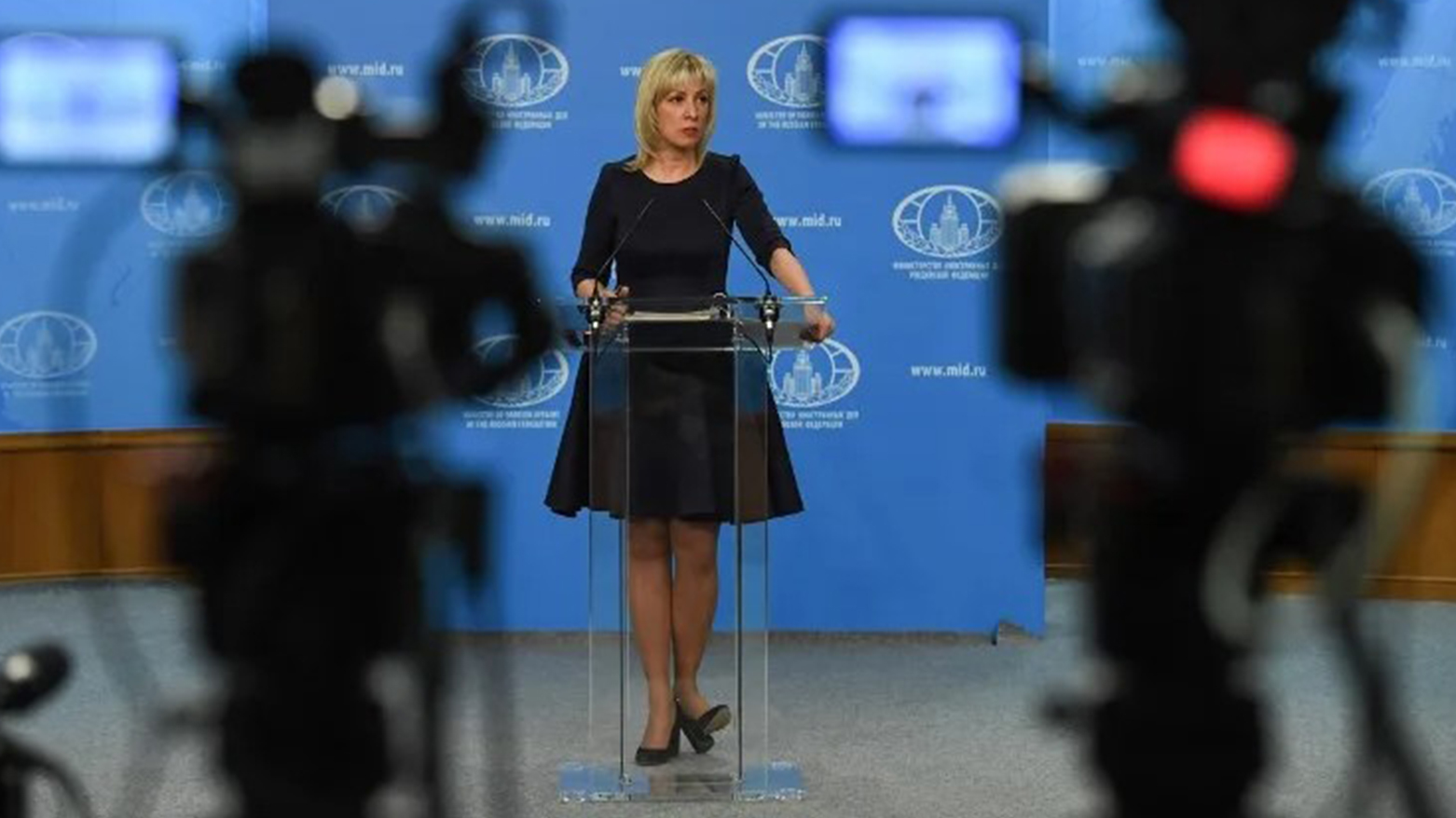
ERBIL (Kurdistan24) — Russia on Tuesday expressed “justified alarm” over renewed threats of military action against Iran, warning that any strikes—particularly against nuclear facilities—would violate international law, undermine global nuclear safeguards, and push the Middle East toward a dangerous escalation.
In a statement issued by Russian Foreign Ministry spokeswoman Maria Zakharova, Moscow condemned remarks made on December 29 during Israeli Prime Minister Benjamin Netanyahu’s visit to the United States, in which the possibility of new military strikes on Iranian territory, including nuclear infrastructure, was openly discussed.
Zakharova said such statements, while not new, have been “repeatedly and unequivocally rejected” by the international community, stressing that they contradict the UN Charter and carry the risk of severe radiological and humanitarian consequences.
“Of particular concern are attempts to force the world to accept the possibility of resolving the situation around Iran’s nuclear program through military force,” she said, noting that bombing nuclear facilities operating under International Atomic Energy Agency (IAEA) safeguards would have a disastrous impact on the global non-proliferation regime.
She emphasized that the threats are being made by a country that has never joined the Nuclear Non-Proliferation Treaty (NPT) against Iran, which is a signatory and, according to Moscow, regularly reaffirms its commitment to the treaty’s requirements.
Russia also warned against repeating what it described as “fatal mistakes” made in June 2025, when military actions severely disrupted IAEA verification activities in Iran.
Zakharova urged those advocating escalation to abandon what she called a “destructive course,” arguing that confrontation only generates real threats to international peace and security.
Moscow reiterated that diplomacy and negotiations remain the only viable path forward, calling for long-term and sustainable solutions to Iran’s peaceful nuclear program that respect international law and Tehran’s legitimate interests.
Escalating Rhetoric from Washington and Tehran
The Russian warning comes amid heightened tensions following sharp exchanges between US and Iranian leaders. Iranian President Masoud Pezeshkian on Tuesday threatened a “severe and regret-inducing” response to any aggression against Iran, following comments by US President Donald Trump suggesting support for a renewed Israeli attack if Tehran resumes its nuclear program.
“The response of the Islamic Republic of Iran to any unjust aggression will be severe and regret-inducing,” Pezeshkian wrote on X.
A day earlier, Trump said he would back Israeli military action against Iran if it restarted its nuclear activities, warning that the United States would “knock the hell out of them.” Speaking alongside Netanyahu at his Palm Beach estate in Florida, Trump also accused Iran of attempting to rebuild and expand its ballistic missile program, while claiming Tehran was simultaneously seeking negotiations with Washington.
During a 12-day war in June, the United States carried out strikes on three major Iranian nuclear facilities—Fordo, Natanz, and Isfahan—using bunker-buster bombs. Iran strongly condemned the attacks, while Trump repeatedly claimed the strikes had “obliterated” Iran’s nuclear program, assertions Iranian officials have neither confirmed nor denied.
Although a US-mediated ceasefire between Iran and Israel has held since June, tensions have continued to simmer. Reports indicate that possible new strikes targeting Iran’s missile and ballistic missile capabilities were among the key issues discussed during Netanyahu’s latest meeting with Trump, his fifth this year.
Ali Shamkhani, a senior adviser to Iran’s Supreme Leader Ayatollah Ali Khamenei, was among the first Iranian officials to respond to Trump’s remarks. He warned that any act of aggression would be met with a “harsh and immediate response,” stressing that Iran’s missile and defensive capabilities are “neither containable nor in need of anyone’s permission.”
Shamkhani, who survived an Israeli attack during the June conflict, cautioned that any future strikes against Iran would provoke a response “beyond the imagination of its architects.”
Economic Strain Fuels Student and Trader Protests Across Iran Amid Rising External Pressure
The renewed diplomatic and military tensions are unfolding against a backdrop of mounting domestic pressure inside Iran, where protests have flared over worsening economic conditions. On Tuesday, Iranian students staged demonstrations at universities in Tehran and several other cities, a day after shopkeepers in the capital protested against economic hardship.
According to labour-linked Ilna news agency, protests were reported at 10 universities nationwide, including seven prominent institutions in Tehran, as well as campuses in Isfahan, Yazd, and Zanjan.
Security forces and riot police were deployed around major intersections and university areas in Tehran, while many shops that had closed during Monday’s demonstrations reopened.
The student protests followed unrest among traders at Tehran’s largest mobile phone market, where anger has been fuelled by the sharp depreciation of the Iranian rial, soaring import costs, and declining purchasing power.
The US dollar was trading at around 1.42 million rials when the protests erupted, compared with about 820,000 rials a year earlier.
The demonstrations have highlighted the strain on an economy battered by decades of Western sanctions and further hit by the reinstatement of UN sanctions related to Iran’s nuclear program in late September.
Inflation officially stood at 52 percent year-on-year in December, though traders say real price increases—particularly for basic goods—are significantly higher.
President Masoud Pezeshkian has called for dialogue with protesters and announced measures aimed at easing the crisis, including replacing the central bank governor, while parliamentary speaker Mohammad Bagher Ghalibaf urged steps to boost purchasing power and warned against attempts to exploit the unrest.
While the current protests remain limited in scale and far below the nationwide demonstrations that shook Iran in 2022 after the death of Mahsa Amini in police custody, they underscore persistent public anger over the cost of living and economic challenges.
Previous waves of unrest, including the deadly 2019 protests sparked by fuel price hikes, continue to loom large in the authorities’ calculations as they seek to contain dissent amid rising external pressure and the threat of renewed confrontation over Iran’s nuclear program.