Basra Residents Renew Push for Regional Status as Signature Drive Begins
Basra residents have relaunched a constitutional campaign for regional status, citing economic neglect, historical precedent, and a new signature drive approved by Iraq’s electoral commission.
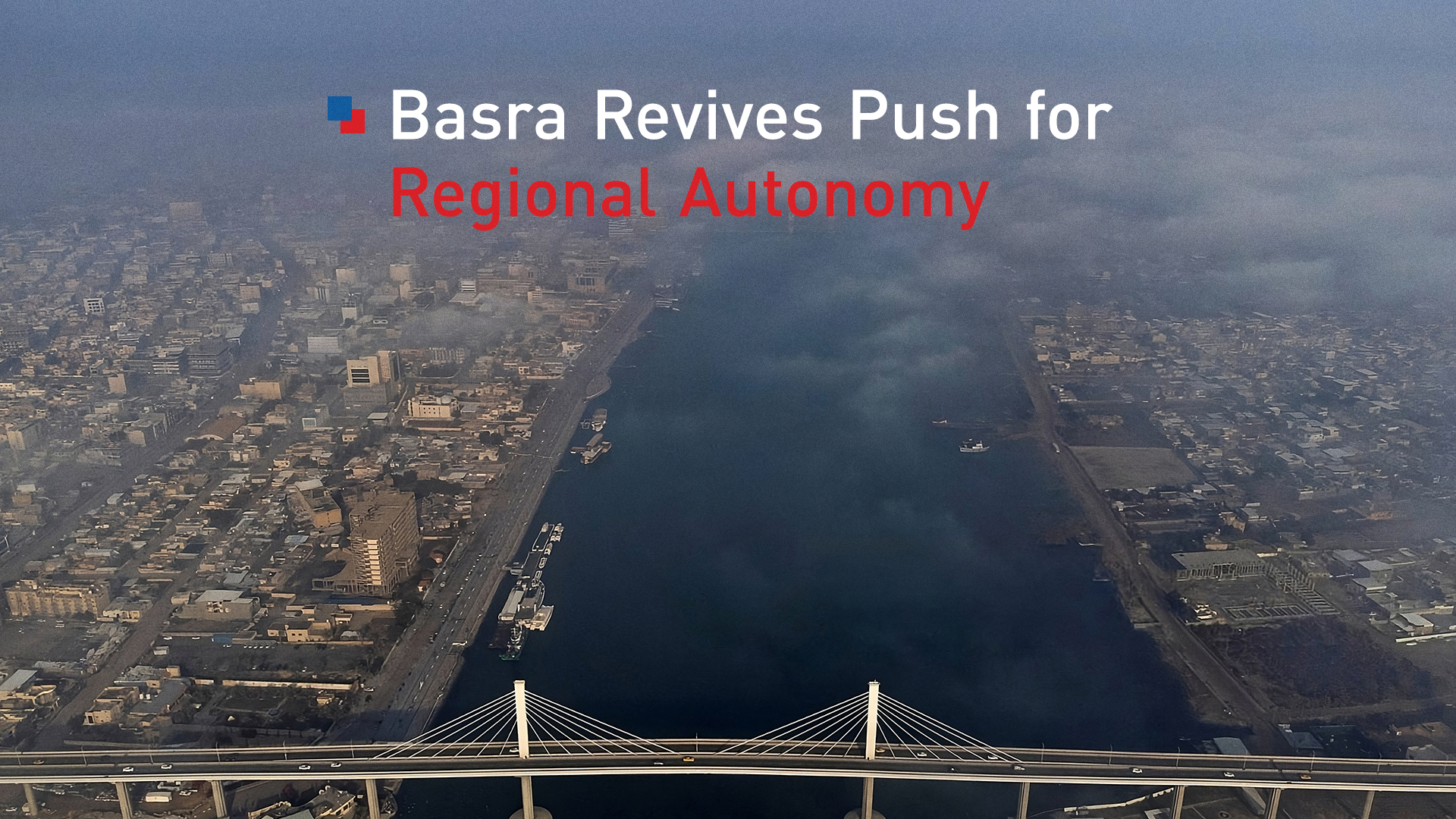
ERBIL (Kurdistan24) — The long-simmering campaign to transform the resource-rich governorate of Basra into an autonomous federal region has re-emerged as a focal point of Iraq’s political landscape, propelled by deep-seated economic grievances and a renewed activation of constitutional mechanisms.
The Independent High Electoral Commission (IHEC) recently released signature collection forms designed to initiate a referendum on the matter, signaling a procedural green light that has galvanized local activists, civil society organizations, and residents who argue that the central government in Baghdad has systematically failed to translate the province’s immense wealth into basic public services.
For years, demands for federalism in Iraq’s southernmost governorate have waxed and waned, often correlating with the intensity of public service crises. However, the current mobilization appears more structured, with proponents leveraging Article 119 of the Iraqi Constitution, which explicitly grants governorates the right to organize into regions.
Organizers and activists involved in the signature drive have publicly stated they will not retreat from what they view as a legal imperative, asserting that a "Basra Region" must become a reality to address the disparity between the province's economic output and its dilapidated infrastructure.
The economic paradox of Basra is the central grievance driving the movement. The governorate is widely recognized as the economic capital of the nation, providing approximately 90 percent of Iraq’s total revenue through its vast oil fields and maritime ports.
Yet, residents grapple with severe deficiencies in essential services, including a chronic lack of potable water, failing electricity grids, and high unemployment rates. This disconnect has fostered a rejection of central authority among significant segments of the population, who now view administrative independence as the only viable corrective measure.
Renewed Debate Over Basra’s Political Status
Residents of Iraq’s southern province of Basra have once again intensified calls for transforming the governorate into a self-administered region, reviving a long-running political initiative that has periodically resurfaced over the past several years.
The renewed debate has gained momentum following procedural steps taken by Iraq’s Independent High Electoral Commission, which has released official forms required to begin collecting signatures for a referendum.
Activists and local organizations say the issue has moved beyond political rhetoric and into an organized constitutional process.
Supporters argue that the initiative is grounded in Iraqi law and reflects deep-seated public dissatisfaction with governance, services, and economic management in a province they describe as central to the country’s financial stability.
Electoral Commission Enables Signature Collection
The Independent High Electoral Commission’s decision to distribute referendum forms has been interpreted by supporters as a formal green light to advance the regionalization project. Under Iraqi law, the collection of signatures is a necessary step toward triggering a vote on whether a governorate may become a region.
Organizations and activists in Basra have responded by intensifying their outreach efforts, mobilizing volunteers and coordinating campaigns aimed at gathering the required public support.
According to campaign leaders, the commission’s move has transformed the initiative from a stalled political demand into an actionable legal process.
Economic Grievances and Public Frustration
At the core of the renewed campaign are widespread economic and social grievances. Basra is described by residents and activists as Iraq’s economic capital and is said to provide 90 percent of the country’s revenue.
Despite this role, locals point to persistent shortages of drinking water, deteriorating infrastructure, and limited employment opportunities.
Abu Yasin, a taxi driver in Basra, told Kurdistan24's correspondent Hemn Delo, that economic hardship has contributed to social instability.
“We hope to have [proper] streets and for our youth to work, because truly crime, theft, and drugs have increased significantly because there are no jobs,” he said. He added that young people are unable to meet basic needs, attributing the situation to government failure.
Supporters of regionalization argue that greater administrative autonomy would allow Basra to allocate resources more effectively and address these issues directly.
Popular Support for Regionalization
Public backing for the initiative is reflected in statements from residents who view regional status as a practical solution rather than a political confrontation.
Hamid Hussein, a citizen of Basra, said his support is based on the province’s economic and logistical importance. “I support the Basra Region; firstly because Basra is the economic capital of Iraq, and secondly, the ports and everything are here, so we support the Basra Region,” he said.
Activists say such views are increasingly common across the governorate, with discussions about federalism and administrative autonomy taking place among different generations and social groups.
Activists Cite Constitutional Grounds
Leaders of the movement emphasize that their demands are rooted in the Iraqi Constitution.
Samir Rahim Maliki, a leader in the Popular Movement for the Basra Region, said the campaign is both legal and justified. “We have demanded that Basra become a region because it is constitutional and legal,” he said.
Maliki argued that Basra has been marginalized by successive governments despite its economic contributions. “For the sake of our children’s future and to benefit from the bounty of our governorate, we have demanded to become a region; if they won’t give us all our bounty, [at least] give us a part of it,” he said.
Article 119 of the Iraqi Constitution explicitly grants any governorate the right to request regional status, a provision supporters repeatedly cite as the foundation of their campaign.
Silence from Power Centers Raises Questions Over Basra’s Push for Regional Status
The people of Basra clearly have a legitimate and constitutional right to seek the formation of their own region, similar to the Kurdistan Region, within a single federal Iraq. What is notably absent from the current debate, however, are public comments or statements from senior government officials and militia leaders on this issue.
In the past, when Basrawis pressed—often more forcefully than they are now—for the establishment of a Basra Region, their calls were met with a wave of objections from Shiite political leaders in Baghdad and Basra, as well as from leaders of Iran-backed militias. Those actors frequently portrayed the initiative as an attempt to divide Iraq, despite the clear legal and constitutional basis for such demands.
This time, the silence is striking. No prominent officials or militia leaders have publicly opposed the move, even as the process has already advanced through formal legal steps, including actions by IHEC to initiate the first procedural stage. The absence of objections has raised questions among observers.
Some analysts argue that this silence from Iran-backed militia leaders and allied political forces casts doubt over the nature of the initiative, prompting internal and external observers to speculate that the push for a Basra region may be aimed at creating a geographically self-administered entity where these groups could consolidate influence.
Such a scenario, they suggest, could serve as an alternative power base at a time when their leverage in Baghdad appears to be diminishing under renewed US pressure to curtail the role of Iran-linked political actors and armed groups within Iraq’s central government.
Basra’s Distinct Historical Identity: The Anchor of the Gulf
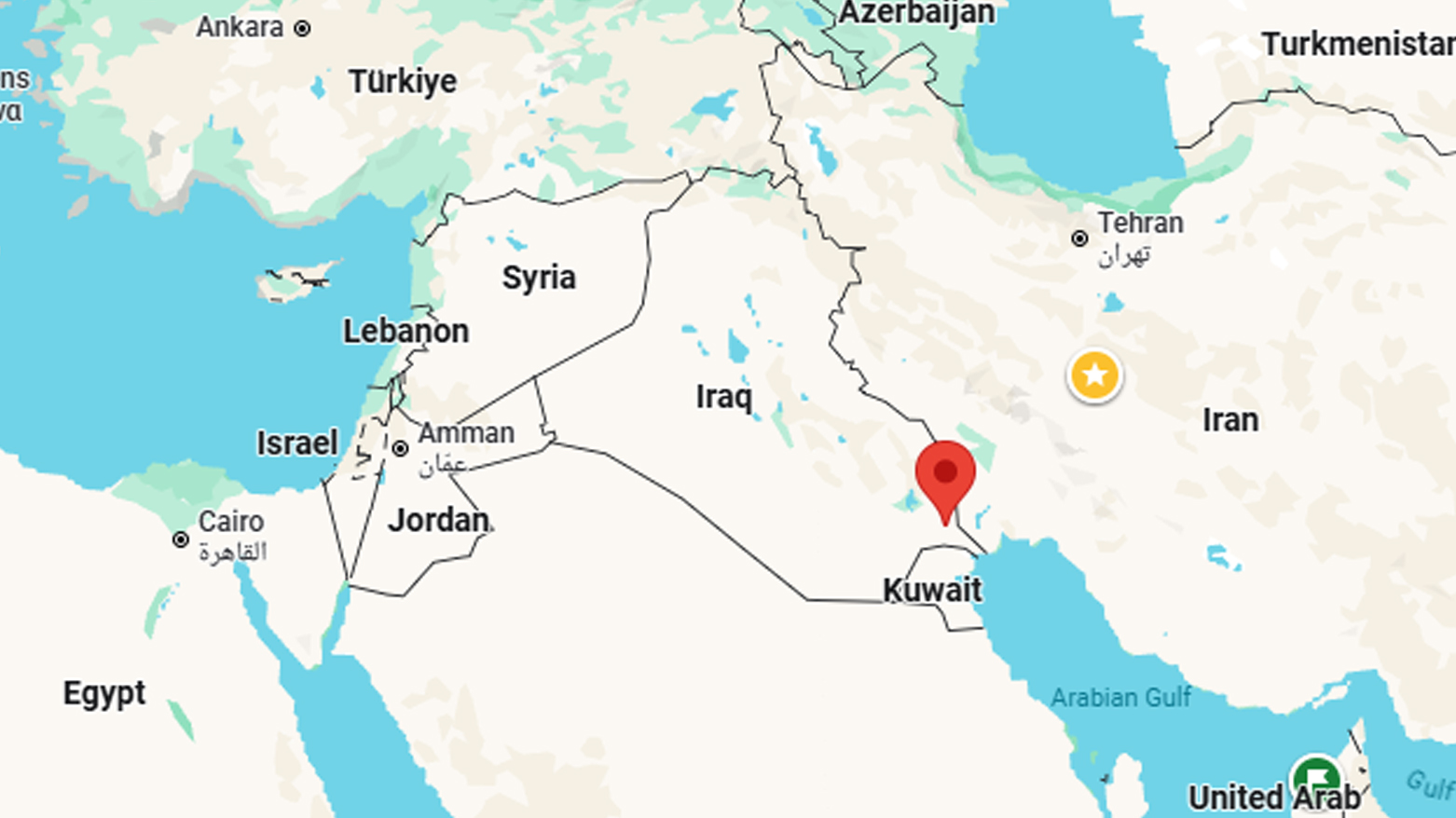
Basra, often termed the "Venice of the East," serves as Iraq's economic lung and its sole maritime outlet to the Persian Gulf. Situated on the Shatt al-Arab waterway, where the Tigris and Euphrates rivers converge, the city has historically functioned as a distinct geostrategic entity, looking outward toward the Indian Ocean trade networks as much as inward toward the Mesopotamian heartland.
This unique maritime orientation has fostered a historical sense of autonomy and regional identity that underpins contemporary calls for administrative regionalization similar to the Kurdistan Region.
Basra was established in 636 CE (14 AH) by the Arab commander Utbah ibn Ghazwan under the orders of Caliph Umar ibn al-Khattab. Originally designed as a misir (garrison city) to support Islamic expansion into Persia, it rapidly evolved into a premier intellectual and commercial metropolis.
During the Abbasid Caliphate, Basra reached its zenith as a global trade entrepôt—the real-world setting for the voyages of Sinbad the Sailor.
It became a melting pot of cultures and the birthplace of Arabic grammar, hosting pivotal theological schools (such as the Mu'tazila) and renowned scholars like Al-Jahiz. Its prosperity was tied to its ability to connect the riverine traffic of Baghdad with the maritime routes to India, China, and East Africa.
The Struggle for Control: Portuguese and Ottoman Rivalry (16th Century)
The early modern history of Basra is defined by the struggle between local Arab powers, the Ottoman Empire, and European colonial expansion. As detailed in the International Journal of Sociology and Humanities (2025), the arrival of the Portuguese in the Indian Ocean and the Gulf in the early 16th century fundamentally altered the region's geopolitics.
- Portuguese Encirclement: Following their capture of Hormuz (1515) and fortification of Muscat and Bahrain, the Portuguese sought to monopolize the spice trade and blockade the Red Sea and Gulf routes. This directly threatened the commercial lifelines of Basra.
- Ottoman Intervention (1546): While the Ottomans captured Baghdad in 1534, they initially left Basra under the suzerainty of local Arab rulers, specifically Sheikh Rashid bin Maghamis. However, recognizing Basra's critical role as a naval frontier against the Portuguese, the Ottomans launched a direct campaign in 1546. They subdued the city, expelled Sheikh Rashid, and formally annexed Basra as a directly administered Ottoman province.
- Basra as a Naval Base: According to Al-Jubouri (2022), Basra subsequently became the launchpad for Ottoman naval operations in the Gulf. Notable commanders like Piri Reis, Murat Reis, and Sidi Ali Reis utilized Basra’s shipyards to build fleets intended to break the Portuguese stranglehold on the Hormuz Strait. Despite these efforts—including a major naval battle near Khor Fakkan in 1554—the Ottomans struggled to permanently dislodge the Portuguese from the southern Gulf, leaving Basra as a frontier city constantly navigating the pressures of distant imperial capitals.
The Era of Autonomy: The Afrasiyab Dynasty (1596–1668)
A crucial historical precedent for modern regionalization occurred in the 17th century. With Ottoman central authority weakening, an effective local dynasty known as the Afrasiyabs took control of Basra in 1596.
For nearly 70 years, the Afrasiyab emirs ruled Basra as a de facto independent state (hereditary eyalet). They maintained their own diplomatic and commercial relations with European powers (including the English and Portuguese) and protected the city from Safavid Persian expansion.
This period is often cited by historians as evidence of Basra’s capacity for self-governance and its distinct economic interests, which frequently diverged from those of Istanbul or Baghdad.
Modern History and the Roots of Federalism
British Occupation and Statehood (1914–1921): During World War I, the British captured Basra weeks after declaring war on the Ottomans, managing it separately from Baghdad for much of the conflict. When the modern state of Iraq was formed in 1921, there was significant debate among Basra’s merchant elite regarding their status; some factions advocated for a separate status or British protectorate akin to Kuwait, fearing that integration into a centralized, Baghdad-dominated state would diminish their global trading status.
Marginalization and Conflict (1980–2003): Under the Ba'athist regime, Basra suffered disproportionately. It was the primary theater of the Iran-Iraq War (1980–1988), which destroyed its infrastructure and severed the Shatt al-Arab waterway.
Following the 1991 Gulf War, Basra was the center of a mass uprising (Intifada) against Saddam Hussein, which was brutally suppressed, leading to decades of deliberate political and economic neglect by the central government.
The Contemporary Drive for a Region
Since the US-led liberation in 2003, Basra has been the focal point of Iraq’s federalism debate. Despite generating the vast majority of Iraq's oil revenue, the province suffers from chronic infrastructure failures, high salinity in its water supply, and high unemployment.
Drawing on the constitutional framework (Article 119) and the precedent of the Kurdistan Region, local leaders—most notably during the 2008 petition drive led by Wael Abdul Latif and renewed protests in 2018—have argued that Basra’s unique historical identity and economic weight necessitate administrative autonomy.
This modern movement is not a new phenomenon but a continuation of Basra’s centuries-old struggle to leverage its maritime wealth and strategic location for the benefit of its local population, independent of Baghdad’s centralization.
A Campaign Moves Into the Public Arena
With signature collection underway, the question of Basra’s regional status has once again entered public life. Supporters say the issue is no longer confined to political elites but has become a matter of widespread civic discussion, reflecting accumulated grievances and aspirations.
Whether the current effort will lead to a referendum remains uncertain, but activists say the procedural step taken by the electoral commission marks a significant development in a campaign that has spanned decades.
Kurdistan24 correspondent Hemn Delo contributed to this report.