Kurdish Director Bilal Shakir Wraps Decade-Long Film Project “Shamaran”
Director Bilal Shakir completes "Shamaran," a film on war trauma, targeting festivals first. The title evokes the Kurdish myth of the wise snake-woman.
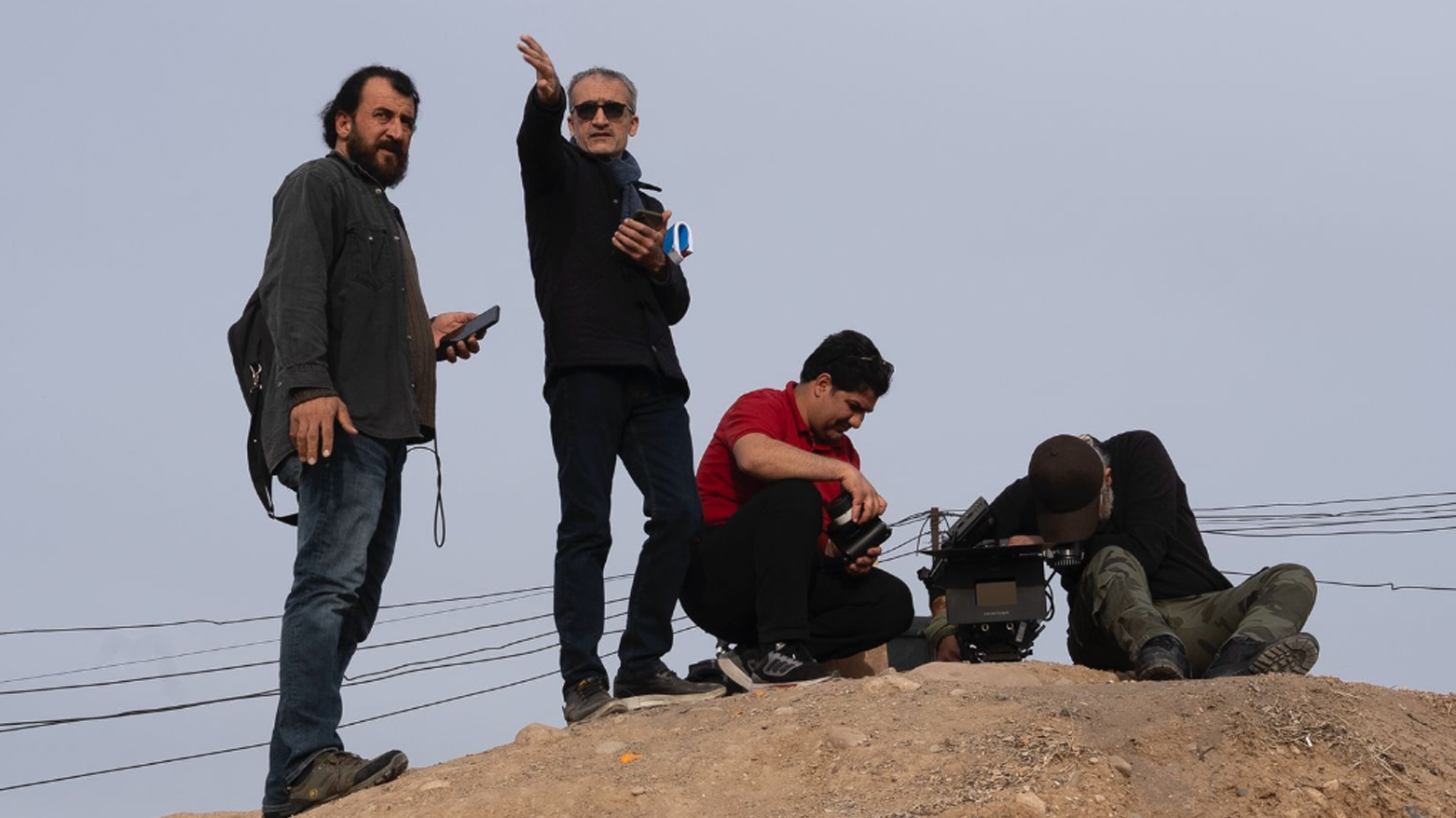
ERBIL (Kurdistan24) — Kurdish filmmaker Bilal Shakir announced on Wednesday the completion of his latest feature film, "Shamaran," a psychological drama exploring the aftermath of war through the lens of a female protagonist. In a statement to Kurdistan24 on Wednesday, Shakir detailed the years-long development of the project, the financial challenges facing the regional film industry, and a strategic distribution plan that prioritizes international film festivals over an immediate domestic theatrical release.
The production marks a significant milestone for Shakir and the local production house Docudrama, bringing to fruition a script that has been in development for nearly a decade.
According to the director, the initial narrative for "Shamaran" was drafted in 2017. The screenplay underwent a rigorous creative process, subjected to four distinct revisions by 2024 to refine its thematic depth and narrative structure. Principal photography commenced at the end of 2024, following the finalization of the script.
The film centers on a character named Dunya, portrayed by Diman Zandi, a woman who has been victimized by war and violent attacks.
Shakir described the plot as a psychological journey in which the protagonist attempts to confront the traumatic events that plague her mind upon her return. The narrative arc intensifies when Dunya travels to a specific house where she encounters an "unpleasant incident," a pivotal moment that generates the film's central dramatic tension.
Starring alongside Zandi is Hamid Yusuf, with a supporting cast comprised largely of actors from Erbil. The production is notable for its cross-regional collaboration, employing technical staff from both Southern and Eastern Kurdistan to execute the project.
"Shamaran" is produced by Docudrama, a company with an established track record in the Kurdistan Region.
Shakir highlighted the company’s experience in supporting major projects, noting that a large portion of feature films produced in Kurdistan have received backing from the entity. Docudrama is also known for producing the drama series "Charkh u Falak."
However, the road to completion was fraught with the systemic economic challenges that characterize the region's cinema sector.
Shakir spoke candidly about the difficulties of producing a feature-length film in the current climate, specifically pointing to the lack of institutional support. "As we know, in the last few years, the Ministry of Culture has been unable to produce a feature film," Shakir told Kurdistan24.
He emphasized that in the absence of government funding, the burden falls on the private sector and individual initiative.
Shakir argued that high-quality cinema capable of competing on the global stage requires substantial financial backing. "If someone wants to produce a film, they need good financial support to be able to produce a good film," he said. He warned that without such resources, filmmakers are forced into a compromise, either producing "a weak film" or enduring a protracted production timeline to maintain quality standards.
Regarding the film’s release, Shakir outlined a strategy focused on global exposure. "I have decided to first enter the feature film 'Shamaran' into festivals," he stated, expressing hope for success on the international circuit.
This decision is driven by the eligibility requirements of major international film festivals, many of which enforce strict premiere conditions stipulating that a submitted film must not have been released theatrically elsewhere. Consequently, the director plans to screen the film in Kurdistan's cinemas only after its festival run has concluded.
Echoes of Ancient Folklore
While the film’s plot focuses on a contemporary narrative of war and trauma, its title, "Shamaran," evokes one of the most potent and enduring symbols in Kurdish folklore. The name references a mythical creature—half-woman, half-snake—that serves as a cultural touchstone for resilience, wisdom, and the duality of life across the region.
In the cultural tapestry of the Kurdish people, particularly in Northern Kurdistan and cities like Mardin, Shamaran (also known as Şamaran in Kurdish) is revered as the "king of snakes" and a goddess of wisdom. As reported by Kurdistan24 in a background profile on the legend, the figure is omnipresent in local art and tradition.
Artisans in Mardin, such as Nurrettin Cakmak, continue to craft sculptures of the creature, describing her as a "goddess of abundance" and a "guardian against evil spirits," though she is also viewed by some as a symbol of betrayal.
The legend of Şamaran, which provides the cultural backdrop for the film’s title, stems from a folktale passed down through generations.
The myth recounts the story of Tahmasp, a young woodcutter who is betrayed by friends and trapped in a well. In his desperation, he discovers a passage to a subterranean city ruled by Şamaran. Despite her initial caution, the Queen of Snakes spares the intruder and imparts her vast wisdom to him.
The myth explores complex themes of sacrifice and the cost of knowledge. According to the lore, Tahmasp eventually returns to the surface, keeping Şamaran's existence a secret until a king falls ill.
A sorcerer, seeking a cure that requires Şamaran’s head, forces Tahmasp to reveal her location. Resigned to her fate, Şamaran instructs Tahmasp to facilitate her sacrifice to save the king and destroy the sorcerer. In the resolution of the tale, the sorcerer dies after consuming her poison, the king recovers, and Tahmasp drinks a cup infused with her wisdom, inheriting her knowledge.
This ancient narrative remains a vibrant part of daily life in parts of Kurdistan. In regions such as Kermanshah and Dersim, communities continue to honor the figure with offerings.
A specific ceremonial tradition involves the preparation of "Dakulaney Şamaran," a porridge made of wheat, lentils, and spices, which women distribute among neighbors to invoke protection against scorpion stings and snake bites. The figure also holds a sacred place in the Yarsan religion, where she is venerated in poetic verses as an embodiment of mysticism and the natural world.
Contemporary Kurdish literature has also preserved the legend, with authors like Abdulsamad Yegit exploring the myth in novels. For the broader population, Şamaran represents resilience and the idea that "knowledge has a price, but it is also a gift."
By adopting this charged title for a film about a woman surviving the brutality of war, Shakir taps into a deep reservoir of cultural meaning. Just as the mythical Şamaran embodies wisdom gained through suffering and sacrifice, the film’s protagonist, Dunya, must navigate her own harrowing journey of survival and confrontation with the past.
Kurdistan24 correspondent Garmian Gilli contributed to this report.