US Envoy to Iraq Vows a 'Different Iraq' in 2026, Issues Blunt Warning to Corrupt Actors
US envoy vows 2026 brings a "different Iraq", warning "corrupt actors" their time is over. Pledges partnership for stability, sovereignty & ending militia arms, amid fierce resistance from some factions.
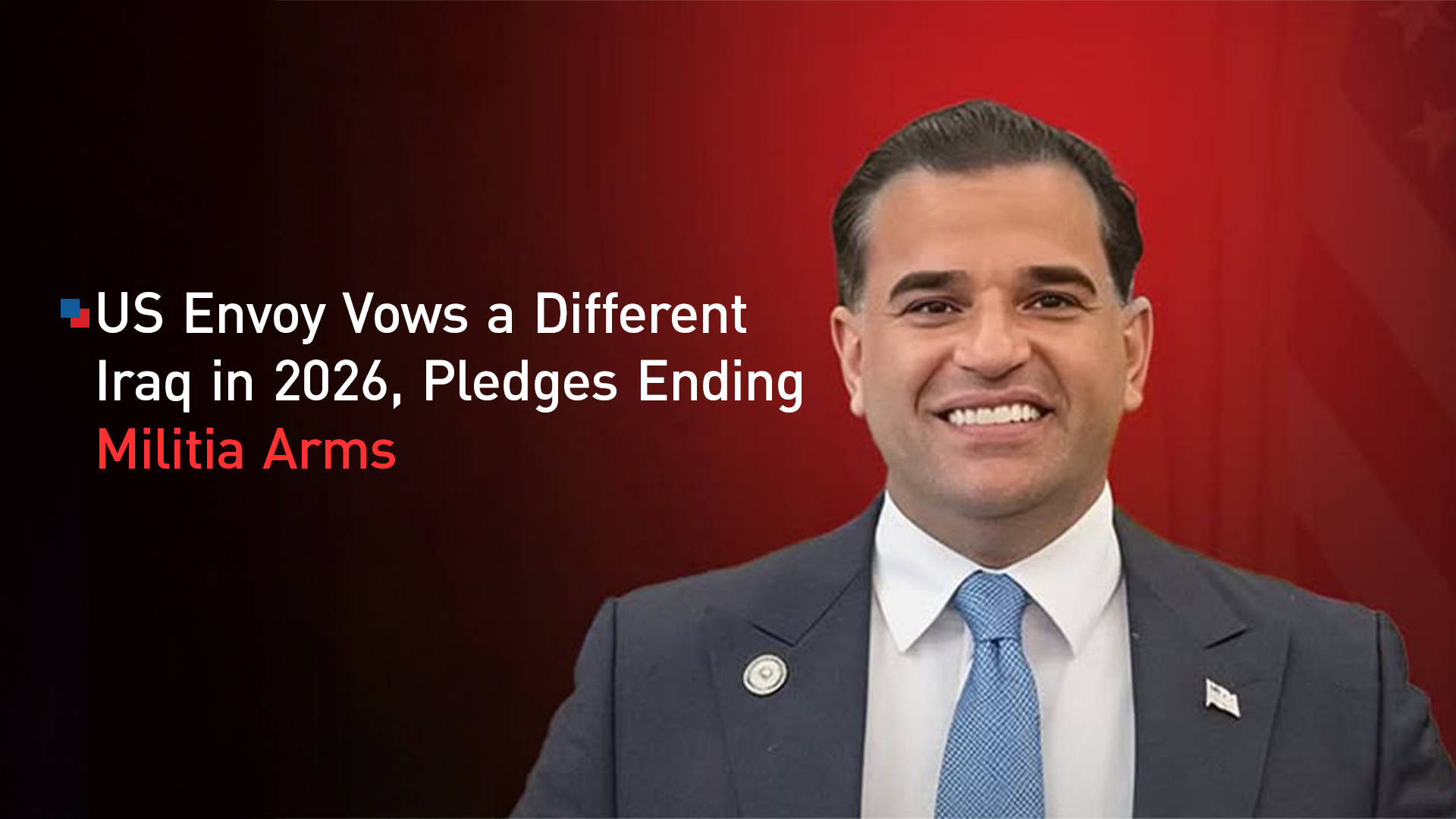
ERBIL (Kurdistan24) - As Iraq steps into 2026, New Year messages this year carried more than congratulations. Mark Savaya, the United States special representative to Iraq, used the occasion to deliver a firm warning to "corrupt actors", pledging that the coming year would mark a turning point toward stability, sovereignty, and accountability.
With the arrival of the New Year 2026, Mark Savaya addressed a message of congratulations and caution to the Iraqi people and various political and social actors. In his message, Savaya emphasized the beginning of a new phase focused on stability, ending corruption, and confronting uncontrolled weapons and armed groups.
In a post published on his official X account, Savaya wrote:
“Happy New Year 2026. To the people of Iraq, as we welcome the year 2026, I extend to you my sincerest wishes for peace, unity, and renewed hope. Your strength and resilience are an inspiration to the world. The new year will bring better opportunities, stability, and a brighter future for all Iraqis. We will work with the government of the Republic of Iraq, within the framework of the Iraqi constitution and laws, to secure a bright future for Iraq and its people.”
In the same message, Savaya said the year 2026 is intended to mark the end of a long list of challenges facing Iraq. He stated that efforts are underway to make 2026 the year that ends instability, uncontrolled weapons, militias, internal tensions, foreign interference, corruption, the plundering of resources, smuggling, money laundering, bogus contracts, embezzlement, the circumvention of the law, poor services, unemployment, ignorance, poverty, inequality, and injustice.
Savaya concluded his message with a direct warning, saying:
“This message is directed to those who have spread corruption throughout the land of Iraq. Your time is over, and the time of Iraq and the Iraqi people has begun. Iraq and its flag will remain high and flying proudly, a source of pride for all Iraqis. And we are just getting started.”
Happy New Year 2026!
— Mark Savaya (@Mark_Savaya) December 31, 2025
And we are just getting started! pic.twitter.com/rE7ZeW7Z1H
Savaya has repeatedly emphasized the issue of disarming militias in Iraq and limiting weapons exclusively to the authority of the Iraqi state. In recent weeks, calls to restrict weapons to state institutions have intensified, sparking wide political and social debate between supporters and opponents of the move.
Three armed factions publicly rejected calls to surrender weapons and place them under state control. These factions, among the most active in Iraq, included Kataib Hezbollah, which stated that any understanding with the government regarding weapons would only occur after the withdrawal of US forces, NATO forces, and Turkish forces, and after assurances related to what it described as threats linked to the governing system in Syria.
The factions stated to local media: “Those entrusted with weapons to protect their people, land, sovereignty, and holy sites, and then seek to strip those weapons without achieving sovereignty or safeguarding people and sanctities, that is their personal decision. They must return the weapon to its source, because it does not belong to them. Trust must be returned to its owners, and it is better to leave the door open for those who believe in steadfastness on this honorable path.” The statement added that achieving national sovereignty and removing foreign presence are among the primary conditions for restricting weapons to the state.
In the same context, Abdul Qader al-Karbalaei, the military deputy of the al-Nujaba Movement, expressed a similar position. He said that what he described as US disregard for the alleged troop withdrawal agreement, insistence on remaining in Iraq despite demands for departure, and ongoing interference in internal affairs — including arming separatist militias and terrorist groups and training them to destabilize the country — constitute a violation of Iraqi sovereignty and an occupation that must be ended by all legitimate means of resistance.
Meanwhile, Kataib Sayyid al-Shuhada, led by Abu Alaa al-Walai, described statements about the presence of uncontrolled weapons as “empty.” His remarks came in response to calls for disarmament issued by leaders of armed factions and political forces within the Coordination Framework, most notably Shibl al-Zaidi, leader of Kataib Imam Ali, and Haider al-Gharawi, secretary-general of the Ansar Allah al-Awfiyaa Movement.
As Iraq enters 2026 amid renewed political tension and debate over state authority and weapons control, Savaya’s New Year message underscores an escalating confrontation between international calls for reform and entrenched armed actors, placing the coming year at the center of Iraq’s struggle between competing visions of sovereignty and governance.