IS-Linked Militia Kills at Least 14 in Coordinated Congo Attacks
The ADF, an IS-linked militia, killed at least 14 people in simultaneous attacks on three DRC villages, burning homes and clashing with soldiers despite joint Congolese-Ugandan military efforts.
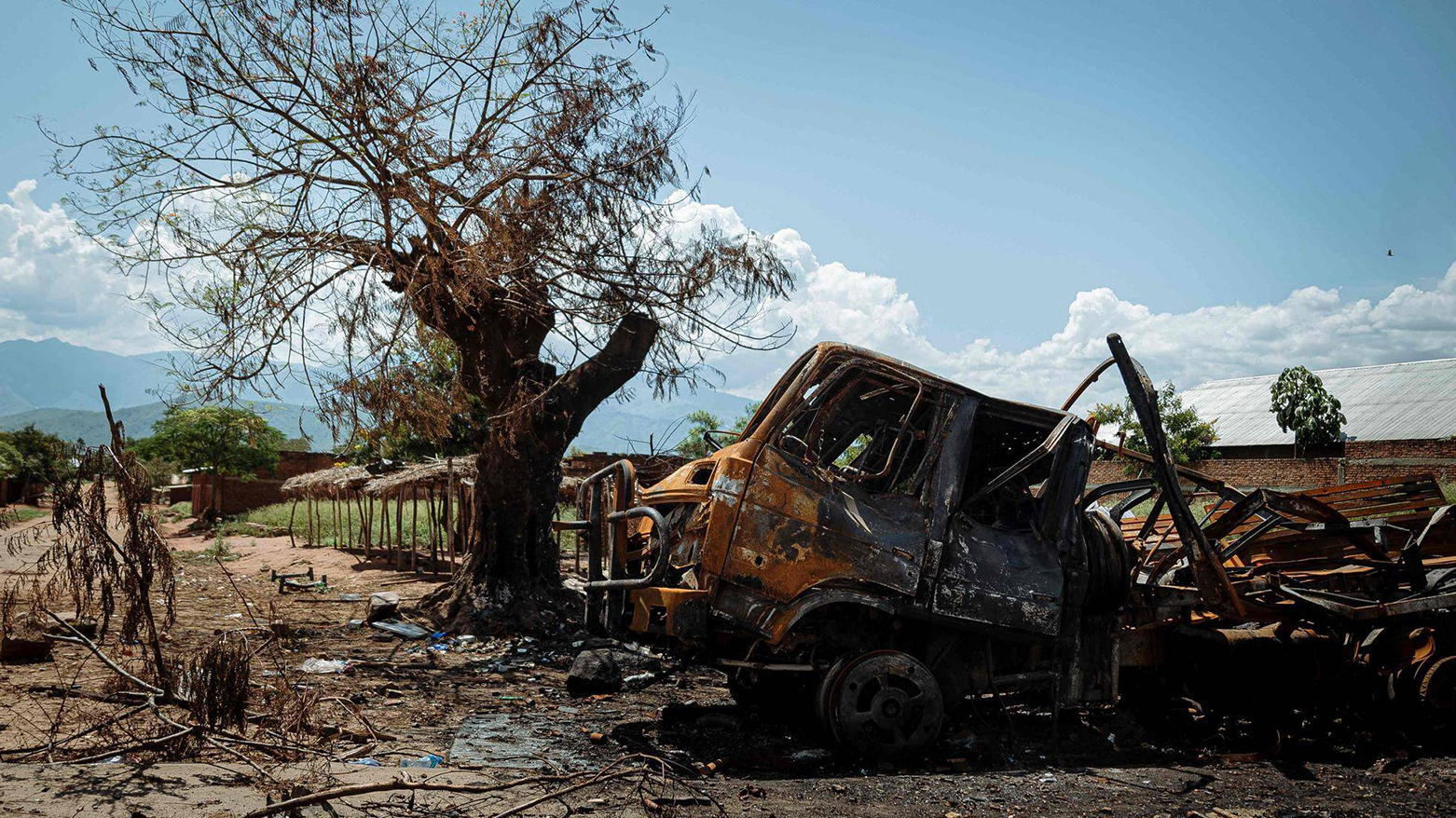
ERBIL (Kurdistan24) — At least 14 people were killed when a militia linked to the Islamic State group staged a simultaneous, coordinated assault on three villages in the Democratic Republic of Congo, according to military and local sources cited by AFP on Friday.
The attacks, carried out overnight in the volatile North Kivu province, underscore the persistent insecurity plaguing the region despite ongoing joint military operations aimed at neutralizing insurgent groups.
The Allied Democratic Forces (ADF), a militia with historical roots in Uganda that has pledged allegiance to the Islamic State, was identified as the perpetrator of the violence.
According to reports provided by local officials and military spokespersons, the fighters executed a synchronized offensive targeting civilian settlements within a seven-kilometer (4.3-mile) radius in the northwest of North Kivu.
Local leader Macaire Sivikunula described the event as a deliberate "ADF incursion," characterizing the assault as a simultaneous strike on three separate villages.
The coordination of the attacks suggests a tactical capability that continues to threaten rural communities in the region. According to Mr. Sivikunula, the violence unfolded during the evening hours, with gunfire ringing out between 8:00 p.m. and 10:00 p.m.
The intensity of the assault sparked widespread panic among the villagers, who found themselves under fire in the darkness. Mr. Sivikunula provided a grim accounting of the toll on the local population, stating that 15 people were killed in the violence.
In addition to the loss of life, significant property damage was reported, with the local leader confirming that 13 houses were burned during the incursion. Residents who spoke with AFP corroborated reports of the deadly attack, reflecting the terror that gripped the communities as the gunmen advanced.
The Congolese army confirmed the attack but provided a slightly different casualty count. Lieutenant Marc Elongo, the army spokesperson for the region, told AFP that the military had engaged with the attackers. "There was an incursion by ADF terrorists in the Bapera sector," Lt. Elongo said.
He reported a total death toll of 14 individuals. According to the military's assessment, this figure included 12 civilians and two members of the Congolese armed forces who were killed during the hostilities.
The Bapera sector, where the violence occurred, has become the latest flashpoint in a decades-long conflict involving the ADF.
The group, which was originally composed of former Ugandan rebels, has been entrenched in the northeastern Democratic Republic of Congo since the mid-1990s. Over the course of nearly three decades, the militia has been accused of killing thousands of civilians, establishing a reputation for brutality in the region.
The continued ability of the ADF to launch simultaneous, multi-village attacks highlights the challenges facing regional security forces.
Since 2021, Ugandan soldiers have been deployed alongside the Congolese army in a joint military operation designed to combat the ADF insurgency. However, despite the cross-border military cooperation and the presence of foreign troops, the operation has largely failed to end the violence or dislodge the group permanently.
The tactical modus operandi of the ADF complicates these counter-insurgency efforts.
Reports indicate that the group primarily targets defenseless civilians in rural areas, launching raids before quickly retreating. The fighters utilize the vast, dense forests that cover the region as cover, withdrawing into the difficult terrain before government reinforcements can arrive to engage them.
This strategy of "hit-and-run" attacks on soft targets, followed by a retreat into inaccessible wilderness, has allowed the group to sustain its campaign of violence despite the military pressure applied by Congolese and Ugandan forces.
Friday’s confirmation of the attack serves as a stark reminder of the security vacuum that persists in North Kivu, where the convergence of dense geography and entrenched militia networks continues to exact a heavy toll on the civilian population.