Clashes Intensify in Yemen’s Hadramawt as Riyadh Urges Dialogue Between Rival Factions
Saudi Arabia urges dialogue as clashes rock Mukalla and Seiyun; STC pushes for independence following deadly coalition strikes on separatist camps.
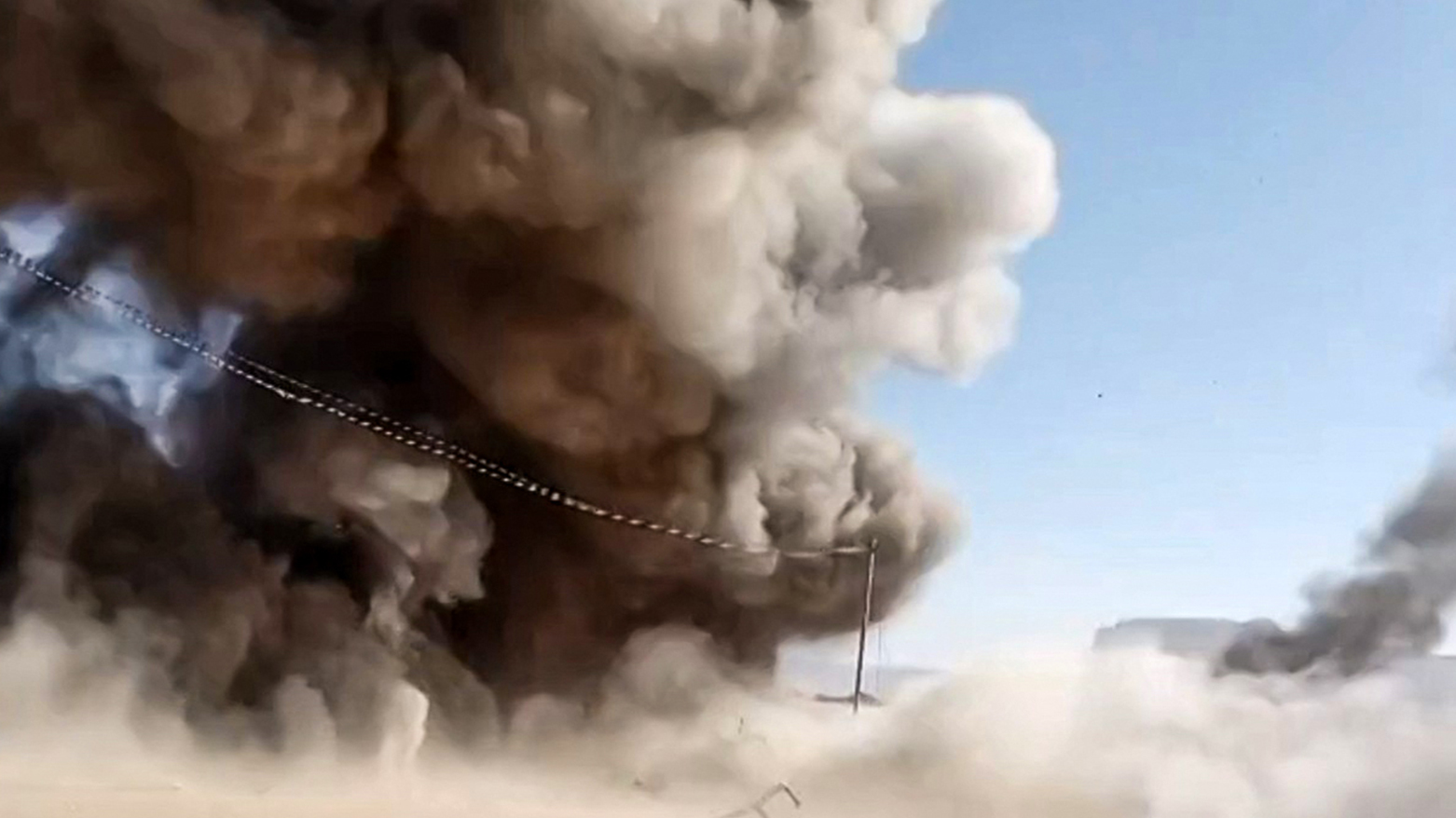
ERBIL (Kurdistan24) — Heavy gunfire and clashes erupted across Yemen’s resource-rich Hadramawt province on Saturday, spreading from the capital of Mukalla to the interior city of Seiyun, as Saudi Arabia urgently called for a comprehensive dialogue to halt the escalating conflict between its local allies and separatists.
According to an Agence France-Presse (AFP) journalist on the ground, gunfire rocked Mukalla, the provincial capital, on Saturday morning. The unrest quickly widened to Seiyun, a key city in the province’s interior, where residents reported hearing clashes early in the day.
The fighting follows a series of coalition airstrikes on Friday that targeted the city's airport and a military base, intensifying the struggle between the "National Shield" forces and the Southern Transitional Council (STC).
The Saudi-led coalition launched a wave of attacks on Friday in response to the STC’s seizure of vast swathes of territory in Hadramawt and neighboring Mahra province over recent weeks.
According to the separatist group, airstrikes on the Al-Khasha military camp in Hadramawt left at least 20 people dead. AFP reported on Saturday that these strikes followed repeated warnings and earlier attacks on an alleged UAE weapons shipment this week, signaling Riyadh’s willingness to use significant military force to check the expansion of the separatists.
Riyadh Calls for “Just Solutions”
Amid the kinetic escalation, Saudi Arabia attempted to steer the crisis back toward a political track on Saturday.
In a statement posted to social media, the Saudi Foreign Ministry called for "a comprehensive conference in Riyadh to bring together all southern factions to discuss just solutions to the southern cause." The ministry noted that the invitation for talks had been issued at the behest of the Yemeni government.
The statement echoes recent reporting by Asharq Al-Awsat, which detailed Riyadh’s support for a request by Rashad al-Alimi, the President of the Yemeni Presidential Leadership Council, to convene such a forum.
The Saudi diplomatic push aims to unify the fractured anti-Houthi front, urging all southern factions to participate "without distinction" to develop a vision that fulfills legitimate southern aspirations while maintaining state cohesion.
However, the political gap appears to be widening. On Friday, the STC announced the commencement of a two-year "transitional period" aimed at declaring an independent state.
The group stated that this process would include dialogue and a referendum on independence, a move that would effectively split the Arabian Peninsula’s poorest nation in two.
Ground Offensive and Mutual Accusations
The violence in Mukalla and Seiyun coincides with a broader ground offensive by government forces. Hadramawt Governor Salem Al-Khanbashi, recently appointed commander of the National Shield forces, has mobilized troops to regain control of military sites seized by the STC.
While Governor Al-Khanbashi stated on Friday that the operation was "not a declaration of war" but a measure to "peacefully and systematically hand over military sites," the reality on the ground has been combat.
Field sources confirmed to Asharq Al-Awsat that National Shield forces have taken control of the 37th Brigade camp in Al-Khasha and are advancing toward Seiyun. Abdulhadi al-Tamimi, assistant undersecretary of Hadramawt governorate, stated that STC forces refused to withdraw, leading to clashes supported by Saudi air power.
The diplomatic fallout has been sharp. Saudi Ambassador to Yemen Mohammed Al-Jaber has publicly blamed STC leader Aidrous al-Zubaidi for the escalation.
In statements reported by Asharq Al-Awsat, Ambassador Al-Jaber accused al-Zubaidi of taking "dangerous unilateral decisions" and rejecting weeks of Saudi de-escalation efforts, including refusing air clearance for a Saudi delegation and shutting down Aden’s airport.
The fracturing of the coalition comes after a brutal, decade-long civil war that has left the Houthi rebels firmly in control of Yemen's north and capital, Sanaa. As the conflicting factions turn their weapons on each other in the south, fears are mounting that the conflict has entered a new, chaotic phase that could further destabilize the region.
The article was updated on Saturday, Jan. 3, 2026, at 12:13pm.