Trump Says U.S. May Reimburse Oil Firms for Rebuilding Venezuela’s Energy Sector
U.S. President Donald Trump told NBC News the U.S. government may reimburse oil companies for rebuilding Venezuela's infrastructure. He claims operations could restart in 18 months despite industry skepticism over past asset seizures.
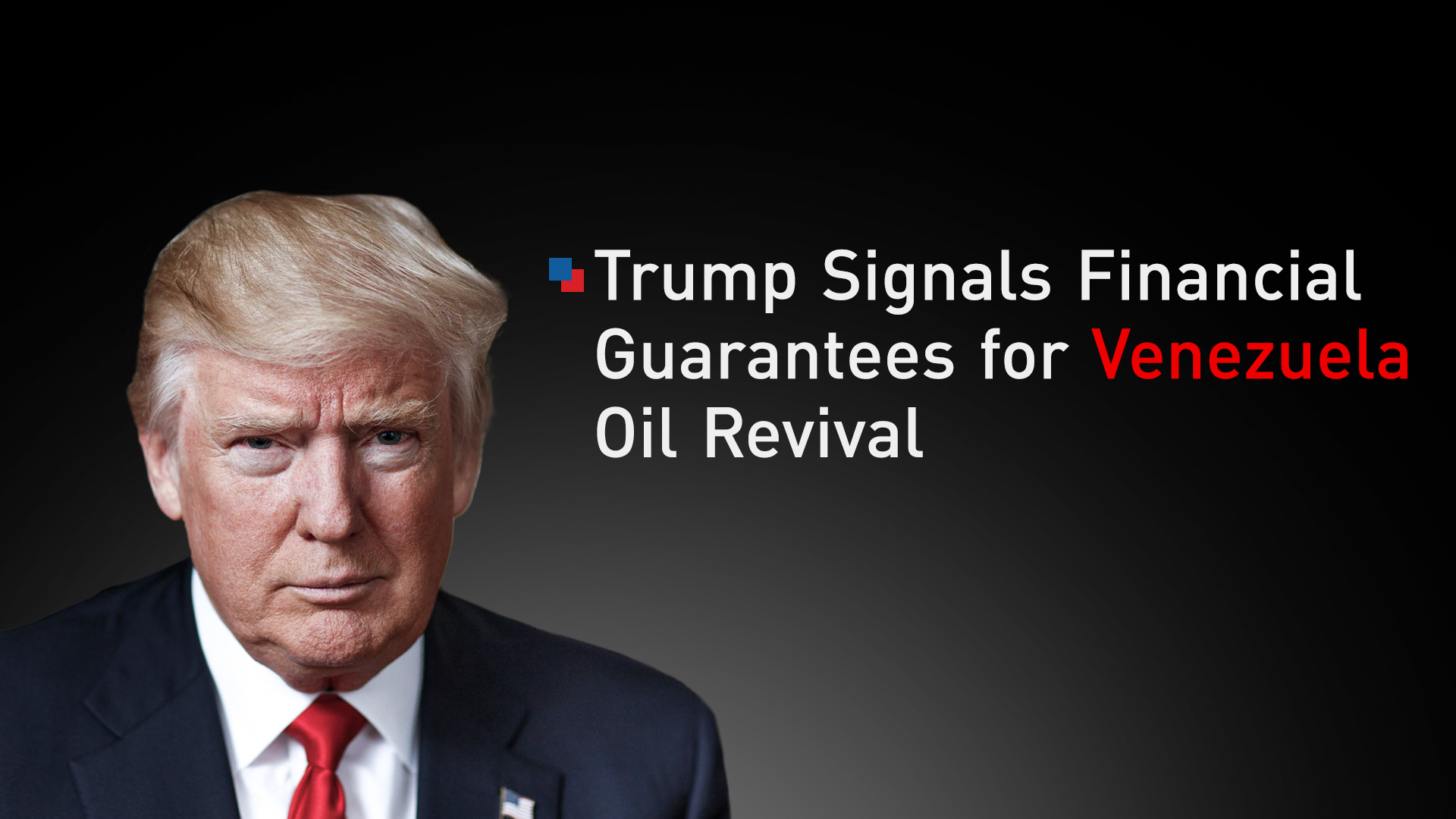
ERBIL (Kurdistan24) — U.S. President Donald Trump signaled on Monday that the United States government may act as the financial guarantor for American oil conglomerates should they engage in the massive undertaking of rehabilitating Venezuela’s deteriorated energy infrastructure. In an exclusive interview with NBC News, the president suggested that major U.S. energy firms could be reimbursed directly by the U.S. Treasury for their capital expenditures, a proposal aimed at accelerating the restoration of the South American nation’s oil output following the U.S. military’s capture of deposed leader Nicolás Maduro.
The president’s comments introduce a significant new variable into the administration’s post-intervention strategy, addressing the hesitation of an industry that has weathered decades of asset seizures and geopolitical volatility in Venezuela.
Speaking to NBC News on Monday, Trump outlined a dual-track possibility for how companies might recoup the billions of dollars required to modernize the sector.
"A tremendous amount of money will have to be spent, and the oil companies will spend it, and then they’ll get reimbursed by us or through revenue," President Trump said.
This statement marks the first explicit indication that the administration is considering using U.S. public funds to underwrite the entry of private American corporations into Venezuela, should the revenue generated from oil sales prove insufficient or too slow to materialize.
Timelines and Investment Scale
During the interview, the president expressed a bullish outlook on the logistical timeline for revitalizing Venezuelan production. While industry analysts have often cited years or decades as necessary for full recovery, Trump asserted that the U.S. oil industry could expand operations and get the sector "up and running" in fewer than 18 months.
"I think we can do it in less time than that, but it’ll be a lot of money," President Trump told NBC News.
He declined to offer a specific dollar figure regarding the cost of repairs and upgrades to the country's aging infrastructure, acknowledging only that it would require a "very substantial amount of money" from the oil companies.
Despite the high costs, he predicted that the participating firms "will do very well," and that Venezuela "will do well" as a result of the intervention.
The administration’s urgency appears driven by a desire to impact global energy markets.
Trump argued that tapping into Venezuela’s vast oil reserves—the largest in the world—is "going to reduce oil prices." He noted that having Venezuela function as a reliable oil producer is advantageous for the United States specifically because "it keeps the price of oil down."
This economic rationale comes at a time when American consumers are already seeing relief at the pump. According to data from AAA cited in the report, the average retail gas price on Monday stood at $2.81, the lowest level recorded since March 2021.
However, the NBC News report highlighted a potential conflict in this logic: while lower oil prices benefit consumers, they could suppress the very revenues Trump is counting on to repay the oil majors for their multi-billion dollar investments, potentially making the option of government reimbursement more critical.
Administration Outreach and Coordination
The White House is moving quickly to formalize discussions with the energy sector. A White House official confirmed on Monday that Energy Secretary Chris Wright has been designated as the point person for the administration's broader campaign to rebuild Venezuela's oil infrastructure.
According to a Bloomberg News report cited by NBC News, Secretary Wright plans to meet with executives from Exxon Mobil and ConocoPhillips later this week. These high-level discussions suggest that the administration is moving from conceptual planning to operational logistics following Saturday’s military operation.
Regarding the raid itself, Trump clarified the extent of his prior communication with the energy sector.
When asked if he had briefed oil companies ahead of the operation to capture Maduro, Trump said, "No." However, he acknowledged that his administration had been "talking to the concept of, 'what if we did it?'"
"The oil companies were absolutely aware that we were thinking about doing something," Trump said. "But we didn’t tell them we were going to do it."
When pressed on whether he had personally spoken to top executives at America’s three largest oil producers—Exxon Mobil, Chevron, and ConocoPhillips—Trump told NBC News it was "too soon" to say, though he added, "I speak to everybody."
Industry Skepticism and Historical Context
Despite the president’s assertion to reporters on Sunday evening that U.S. oil companies "want to go in so badly," the industry has publicly maintained a posture of caution. This reticence is rooted in a tumultuous history of expropriation and financial loss in Venezuela.
As the NBC News report detailed, the Venezuelan government nationalized energy assets in the 1970s, affecting holdings owned by Exxon Mobil and ConocoPhillips.
Decades later, under the leadership of then-President Hugo Chávez, the government initiated another wave of nationalizations in 2006 and 2007.
During that period, foreign oil firms were permitted to remain in the country only under less favorable terms. This shift led to the full departure of both Exxon and ConocoPhillips, who have since tried unsuccessfully to recover billions of dollars in lost assets.
Chevron stands as an exception among the American majors, having accepted the terms during the Chávez era. The company remains in Venezuela to this day, operating largely due to a limited waiver that exempts it from certain U.S. sanctions on Venezuelan oil.
This history of state asset seizures, combined with ongoing U.S. sanctions and the fresh political instability caused by the recent military operation, feeds into the current wariness.
Whether the U.S. government ultimately agrees to reimburse costs—or if companies must rely on future revenue—will likely be the "key factor" for oil companies considering their options, according to the report.
Executives have been guarded in their public statements.
Exxon Mobil CEO Darren Woods, speaking to Bloomberg News in November 2025, expressed significant caution about the prospect of re-entering the market. "We’ve been expropriated from Venezuela two different times," Woods said at the time. "We’d have to see what the economics look like."
Corporate and Market Reactions
In the immediate aftermath of the president’s comments, the major oil companies offered limited responses. ConocoPhillips declined to comment on Monday regarding Trump's plans for Venezuela’s reserves.
Chevron told NBC News that it does not comment "on commercial matters or speculate on future investments." Exxon Mobil did not immediately respond to questions.
However, the financial markets reacted to the potential opening of Venezuela's reserves. Energy stocks rose on Monday on hopes that the Trump administration would facilitate access to the country's resources.
Oil prices also experienced swings following the news of Maduro's capture, reflecting the market's uncertainty about the speed at which Venezuelan supply might return to the global market.
The administration continues to frame the initiative as a mutually beneficial arrangement for both the companies and the country. Yet, the path forward rests on whether the administration can convince skeptical executives that this time, their investments will be secured—either by the flow of oil or by the guarantee of the U.S. Treasury.