Shiite State of Law Coalition Reaffirms Maliki as Prime Ministerial Nominee
The State of Law Coalition said Nouri al-Maliki remains its and the Coordination Framework’s prime ministerial nominee, pending further bloc discussions.
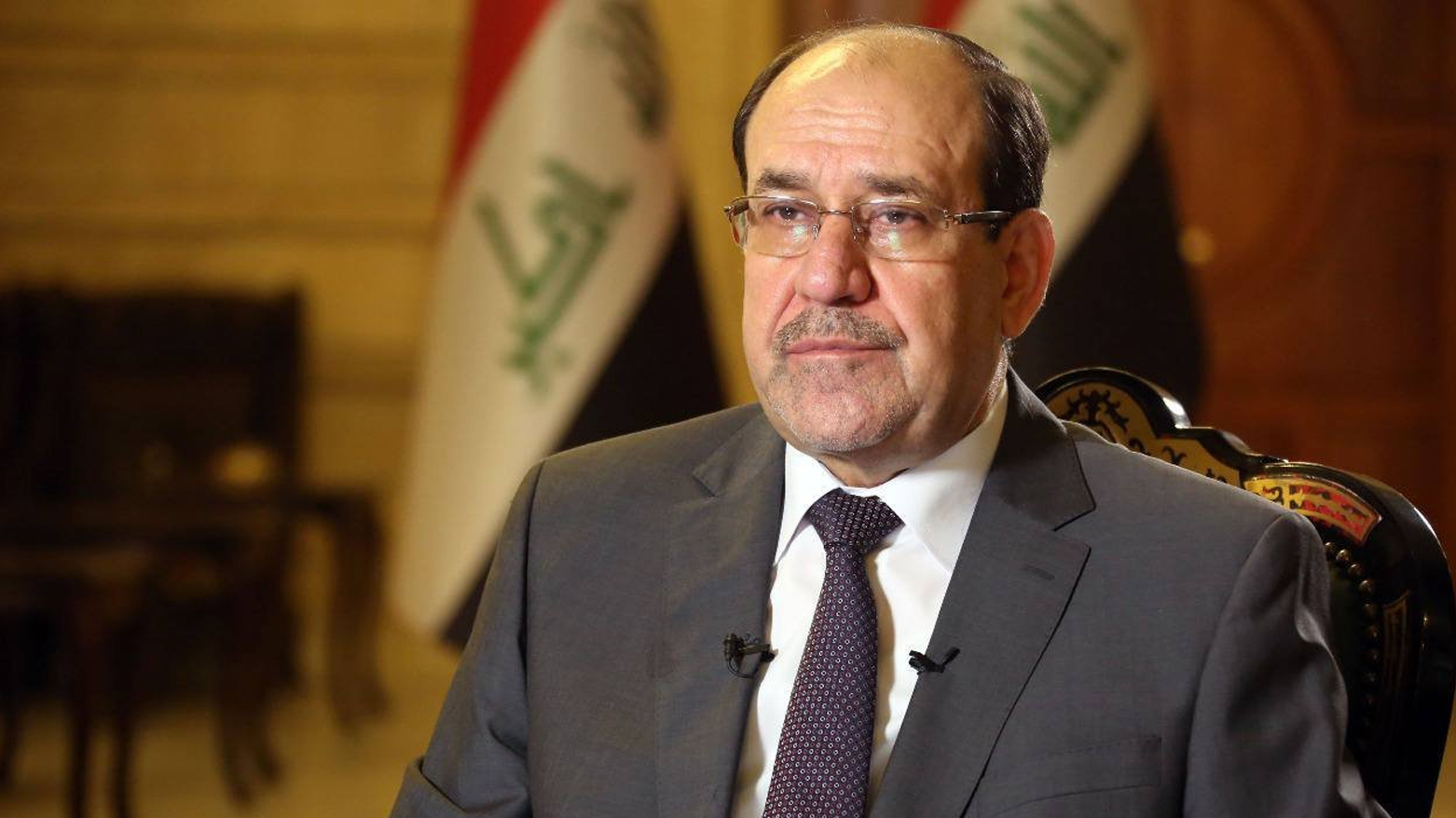
ERBIL (Kurdistan24) - The State of Law Coalition on Monday reaffirmed that Nouri al-Maliki remains its candidate for prime minister and, it said, the nominee of the broader Coordination Framework, despite growing divisions within the Shiite alliance and calls from some factions to reconsider his candidacy.
Aqeel Fatlawi, spokesperson for the State of Law Coalition, told Kurdistan24 that the coalition insists on retaining Maliki as its nominee and that no decision to withdraw his candidacy will be made under any circumstances. Fatlawi said that, despite internal disagreements, Maliki’s continued candidacy “remains, up to this moment, the decision of the Coordination Framework and not just the State of Law Coalition alone.”
His remarks came as internal disputes within the Coordination Framework intensified ahead of a scheduled meeting expected to address whether Maliki will remain the alliance’s nominee for the premiership.
According to Fatlawi, only two leaders within the Coordination Framework currently oppose Maliki’s continued candidacy: Ammar al-Hakim, leader of the Hikma (Wisdom) Movement, and Qais al-Khazali, leader of the Sadiqoun bloc. However, he emphasized that their opposition has not led the Coordination Framework to abandon its nominee.
Fatlawi also addressed reports of suspended meetings within the alliance, stating that a regular session of the Coordination Framework will be held in the coming days, with all Shiite leaders in attendance.
The reaffirmation by the State of Law Coalition follows statements earlier in the day by Aqeel al-Rudaini, spokesperson for the Nasr (Victory) Alliance, who said the Coordination Framework lacks consensus on Maliki’s candidacy. Al-Rudaini stated that future meetings would focus on whether Maliki remains the nominee or another candidate is designated, adding that “any decision made must be by the consensus of the parties within the Coordination Framework.”
Internal disputes have reportedly led to a series of smaller tripartite and quadripartite discussions among leaders, rather than full alliance meetings. According to al-Rudaini, the Coordination Framework had traditionally convened regular Monday sessions, but last week’s meeting was canceled after multiple postponements due to disagreements within the bloc.
He described the current level of discord as unprecedented and said the next full meeting remained unscheduled as internal negotiations continued among several leaders, including Humam Hamoudi, head of the Islamic Supreme Council of Iraq.
The disagreement over Maliki’s candidacy has been further complicated by political reactions following a message from U.S. President Donald Trump. Trump stated that if Maliki returns to the premiership, the United States would no longer provide assistance to Iraq. Following that message, some Shiite parties within the Coordination Framework reportedly backed away from supporting Maliki for the post.
On Sunday, Maliki wrote on the social media platform X: “Any decision we make will be in the interest of the Iraqis,” without mentioning any withdrawal from the race.
The Hikma Movement, led by Ammar al-Hakim, has publicly rejected reports suggesting the existence of a four-way agreement to withdraw support for Maliki. Fahd al-Jubouri, a senior member of Hikma, said at a press briefing that claims al-Hakim was negotiating to abandon Maliki’s candidacy were “untrue and fabricated.”
Al-Jubouri stated that any withdrawal of support must be sanctioned by the majority of Coordination Framework members and conducted in a manner that preserves the unity of the alliance. He outlined three possible outcomes under consideration: Maliki could voluntarily withdraw; the majority of the Coordination Framework could formally revoke his nomination; or Maliki could continue as a candidate, with the bloc collectively assuming responsibility for the political consequences.
He emphasized that al-Hakim would not act unilaterally or enter side agreements, underscoring the importance of maintaining cohesion within the alliance.
Sources within the Reconstruction and Development Alliance, led by Mohammed Shia’ al-Sudani, have indicated that Maliki’s candidacy faces significant opposition both within the Coordination Framework and from regional and international actors.
According to those sources, the alliance has called for a reassessment of candidate designation mechanisms to reduce reliance on personal or partisan considerations. Sudani has reportedly conveyed a direct message to Maliki urging him to withdraw and has signaled that if Maliki insists on continuing, he will formally declare his non-support.
In parallel with the political discussions, Iraq’s National Security Advisor, Qasim al-Araji, oversaw an urgent security meeting under the direction of the Prime Minister. The session focused on evaluating regional and international developments and their potential impact on Iraq’s internal stability. Officials emphasized the importance of adopting a preemptive and flexible approach to security in order to balance national interests with broader stability.
Al-Rudaini clarified that no new message had emerged from Grand Ayatollah Ali al-Sistani regarding Maliki’s candidacy, noting that references to Sistani relate to guidance issued in 2014 against Maliki returning to the premiership. He described the invocation of Sistani’s position as part of efforts to clarify the historical context and prevent misinterpretation.
The dispute over Maliki’s nomination is unfolding against a backdrop of heightened internal deliberations within Iraq’s Shiite political sphere. The Coordination Framework, which represents a significant bloc in parliament, is tasked with designating a prime ministerial candidate capable of securing broad support.
The alliance’s internal divisions have led to increasing reliance on smaller-scale meetings rather than full plenary sessions. According to al-Rudaini, these tripartite and quadripartite discussions reflect broader fragmentation within the alliance and have complicated efforts to present a unified position.
The Reconstruction and Development Coalition has framed its review of candidate designation mechanisms as an effort to remove personal interests from the decision-making process. According to sources, Sudani’s engagement with Maliki reflects a tactical effort to align the bloc’s broader priorities while managing internal dissent.
The Coordination Framework’s internal discussions are taking place under close scrutiny from regional and international observers. The approach to candidate selection and the method of resolving disputes are seen as carrying significant implications for Iraq’s political trajectory.
Despite the divisions, leaders within the alliance have emphasized that any final decision will require careful coordination to avoid fracturing the bloc. Al-Jubouri reiterated that the majority of the Coordination Framework must determine the outcome, whether that involves maintaining Maliki’s candidacy, designating a replacement, or endorsing a voluntary withdrawal.
Fatlawi’s statement on behalf of the State of Law Coalition underscored that, as of now, Maliki remains the official nominee of both the coalition and the Coordination Framework. He maintained that opposition from individual leaders has not altered the bloc’s formal position.
The upcoming Coordination Framework meeting is expected to serve as the primary forum for clarifying the alliance’s stance. While the timing of subsequent sessions remains uncertain, leaders continue to explore pathways to reach a consensual outcome.
As discussions proceed, the question of Maliki’s candidacy remains central to the formation of Iraq’s next government. The Coordination Framework’s deliberations will determine whether he remains the nominee or whether an alternative candidate is put forward.