Maliki Won’t Withdraw PM Bid, Vows Protection of Diplomatic Missions If Elected
Maliki said Monday he will not withdraw from the premiiership race and pledged to protect diplomatic missions and maintain balanced foreign relations if appointed.
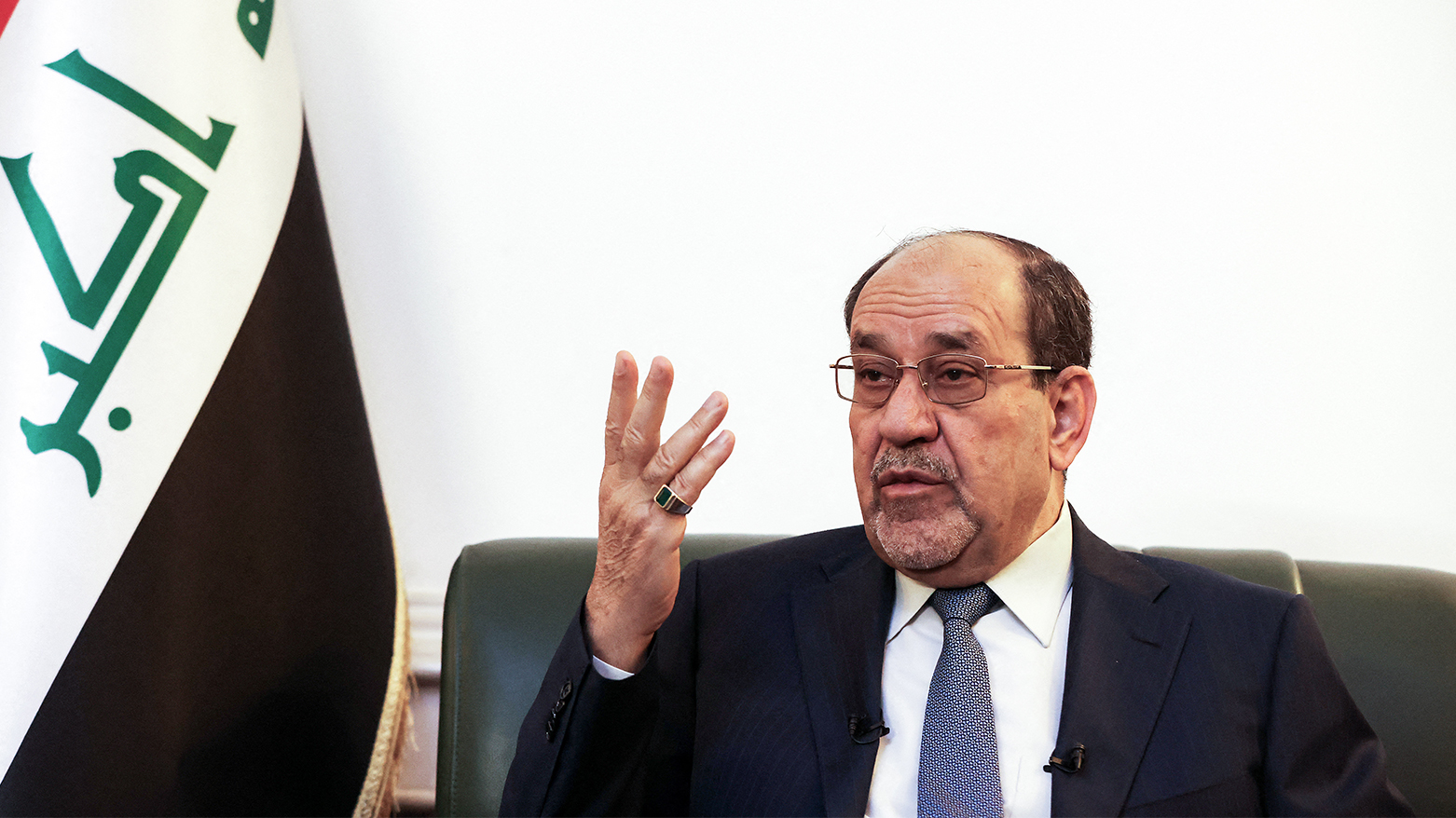
ERBIL (Kurdistan24) - Former Iraqi Prime Minister Nouri al-Maliki said Monday that he has no intention of withdrawing his candidacy for Iraq’s premiership, reaffirming his position as the nominee of the State of Law Coalition and the Coordination Framework, while outlining commitments on diplomatic security and Iraq’s foreign relations.
In an interview with Agence France-Presse (AFP) on Monday, Maliki denied reports suggesting he might step aside from the race. “All countries can be assured that we will prevent any violation against their embassies or officially recognised interests in Iraq,” Maliki said. “We will not allow any party to target any country that maintains a diplomatic presence — such as embassies — in Iraq.”
His remarks come amid political debate within Iraq’s Shiite Coordination Framework over his candidacy and against the backdrop of regional tensions following U.S. threats of strikes on Iran.
Maliki’s statements to AFP addressed both domestic security and foreign policy considerations. Referring to potential attacks on diplomatic facilities, he said that if he becomes prime minister, his government would not permit assaults on embassies or officially recognized foreign interests operating in Iraq.
The interview was conducted in Baghdad on February 23, 2026, according to AFP. Maliki’s comments followed reports of heightened tension after the United States threatened strikes on Iran, raising concerns about the security of diplomatic missions in Iraq.
In a separate interview published minutes later, Maliki emphasized the importance of maintaining constructive relations with the United States. “I believe that a relationship with the American side is essential for Iraq’s progress,” he said, according to AFP. He rejected claims that his relationship with Washington had been negative during his previous terms in office from 2006 to 2014.
Maliki also addressed Iraq’s ties with Iran, stating that the relationship “rests on the principle that Iraq’s sovereignty is respected” and that “shared interests define this relationship.”
His comments come as internal discussions continue within the Coordination Framework regarding his nomination. Earlier on Monday, the State of Law Coalition reaffirmed that Maliki remains its candidate for prime minister and, it said, the nominee of the broader Coordination Framework.
Aqeel Fatlawi, spokesperson for the State of Law Coalition, said the coalition insists on retaining Maliki as its nominee and that no decision to withdraw his candidacy would be made under any circumstances. Fatlawi stated that Maliki’s continued candidacy “remains, up to this moment, the decision of the Coordination Framework and not just the State of Law Coalition alone.”
According to Fatlawi, only two leaders within the Coordination Framework have expressed opposition to Maliki’s continued candidacy: Ammar al-Hakim, leader of the Hikma (Wisdom) Movement, and Qais al-Khazali, leader of the Sadiqoun bloc. He said their opposition had not led the alliance to abandon its nominee.
The reaffirmation followed statements by Aqeel al-Rudaini, spokesperson for the Nasr (Victory) Alliance, who said the Coordination Framework lacks consensus on Maliki’s candidacy. Al-Rudaini said future meetings would focus on whether Maliki remains the nominee or another candidate is designated, adding that “any decision made must be by the consensus of the parties within the Coordination Framework.”
Internal disagreements have reportedly led to smaller tripartite and quadripartite discussions among leaders rather than full alliance sessions. According to al-Rudaini, the Coordination Framework traditionally held regular Monday meetings, but the previous week’s session was canceled after multiple postponements due to disputes within the bloc.
Al-Rudaini described the current level of discord as unprecedented and said the next full meeting remained unscheduled as negotiations continued among leaders, including Humam Hamoudi, head of the Islamic Supreme Council of Iraq.
The debate over Maliki’s candidacy has been further complicated by political reactions following a message from U.S. President Donald Trump. Trump stated that if Maliki returns to the premiership, the United States would no longer provide assistance to Iraq. Following that message, some Shiite parties within the Coordination Framework reportedly withdrew support for Maliki’s candidacy.
On Sunday, Maliki wrote on the social media platform X: “Any decision we make will be in the interest of the Iraqis,” without indicating any intention to withdraw from the race.
The Hikma Movement has publicly rejected reports suggesting the existence of a four-way agreement to abandon support for Maliki. Fahd al-Jubouri, a senior member of Hikma, said at a press briefing that claims Ammar al-Hakim was negotiating to withdraw backing for Maliki were “untrue and fabricated.”
Al-Jubouri said any withdrawal of support must be sanctioned by a majority of Coordination Framework members and carried out in a way that preserves the alliance’s unity. He outlined three possible scenarios: Maliki could voluntarily withdraw; the majority of the Coordination Framework could formally revoke his nomination; or Maliki could remain a candidate, with the bloc collectively assuming responsibility for the political consequences.
Sources within the Reconstruction and Development Alliance, led by Mohammed Shia’ al-Sudani, have indicated that Maliki’s candidacy faces opposition both within the Coordination Framework and from regional and international actors.
According to those sources, the alliance has called for reassessing the mechanisms used to designate candidates, seeking to reduce reliance on personal or partisan considerations. Sudani has reportedly conveyed a direct message to Maliki urging him to withdraw and has indicated that if Maliki continues, he will formally declare his non-support.
Parallel to the political deliberations, Iraq’s National Security Advisor, Qasim al-Araji, oversaw an urgent security meeting under the direction of the Prime Minister. The session evaluated regional and international developments and their potential impact on Iraq’s internal stability. Officials stressed the need for a preemptive and flexible security approach to safeguard national interests.
Al-Rudaini clarified that no new message had emerged from Grand Ayatollah Ali al-Sistani regarding Maliki’s candidacy, stating that references to Sistani relate to guidance issued in 2014 against Maliki returning to the premiership. He said the invocation of Sistani’s position was intended to clarify historical context and prevent misinterpretation.
Maliki’s statements to AFP represent his most direct public response to reports of a possible withdrawal. By declaring that he will not step aside and by outlining commitments related to diplomatic security and balanced foreign relations, he sought to address both domestic political concerns and international apprehensions.
His pledge to prevent attacks on diplomatic missions follows prior incidents in Iraq in which embassies and foreign interests have faced security threats. In the AFP interview, he stated that any party attempting to target a country maintaining a diplomatic presence in Iraq would not be permitted to do so under his government.
Maliki’s emphasis on maintaining essential ties with the United States while defining relations with Iran through shared interests reflects his stated position that Iraq’s sovereignty would remain central to foreign policy decisions.
The Coordination Framework is expected to convene in the coming days to clarify its position on the premiership nomination. Until such deliberations conclude, Maliki remains the officially reaffirmed candidate of the State of Law Coalition and, according to coalition representatives, of the Coordination Framework.
This was updated on Monday, Feb. 23, 2026, at 03:50pm.