Egypt Aligns with Saudi Arabia on Yemen, Sudan, and Somaliland Amid Rising Gulf Tensions
Al-Sisi and Prince Faisal stress unified regional positions as rivalries with the UAE intensify.
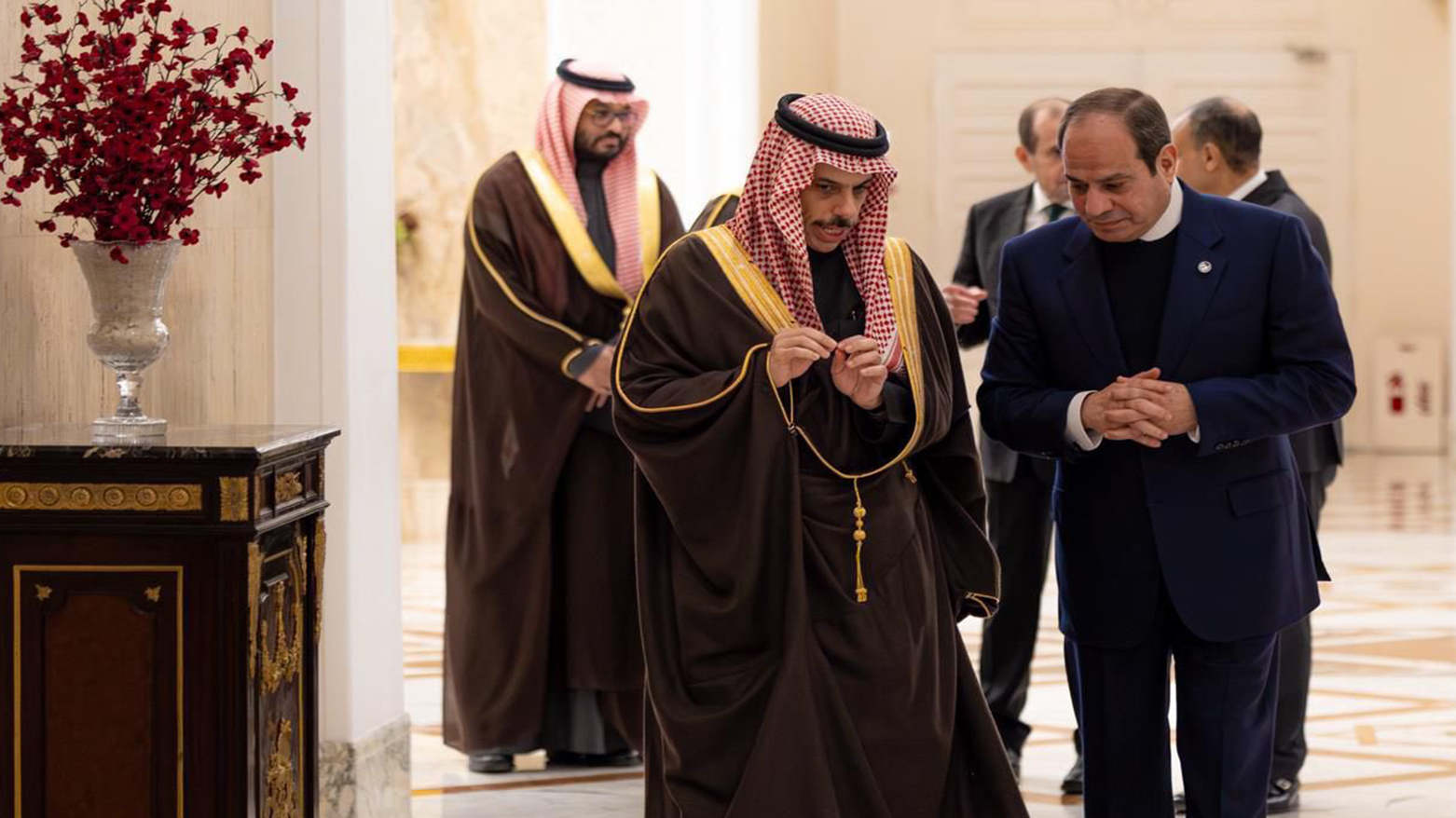
ERBIL (Kurdistan24) — Egypt said on Monday it is closely aligned with Saudi Arabia on major regional crises, including the conflicts in Yemen and Sudan, as well as the disputed status of Somaliland, signaling Cairo’s support for Riyadh amid growing tensions with Abu Dhabi.
During talks in Cairo, Egyptian President Abdel Fattah al-Sisi and Saudi Foreign Minister Prince Faisal bin Farhan emphasized their countries’ “identical” positions on “reaching peaceful solutions to the region’s crises,” according to a statement from the Egyptian presidency.
They stressed that any resolution must “preserve the unity, sovereignty and territorial integrity of states,” highlighting Sudan, Yemen, Somalia, and the Gaza Strip as key areas of concern.
The meeting comes against a backdrop of widening divergences between Saudi Arabia and the United Arab Emirates, two Gulf powers that were previously close partners in regional politics. In Yemen, the UAE and Saudi Arabia have long supported rival factions within the internationally recognized government, united largely by opposition to Iran-backed Houthi forces.
Tensions escalated in December when the UAE-backed Southern Transitional Council (STC) captured two strategic southern provinces, prompting Riyadh to call for restraint.
President Sisi welcomed Saudi Arabia’s proposal to host an “inclusive conference” for southern Yemeni groups, while Egyptian Foreign Minister Badr Abdelatty stressed the need for de-escalation and a Yemeni-led political settlement.
In Sudan, both Cairo and Riyadh back the country’s de facto leadership, in contrast to the UAE, which has been accused of supporting the paramilitary Rapid Support Forces (RSF).
Competition between the Gulf rivals has also extended to the Horn of Africa, a strategically vital region along key global shipping routes. Saudi Arabia has cultivated closer ties with Somalia’s federal government, whereas the UAE has developed relationships with Ethiopia and Somaliland, a self-declared republic that broke away from Somalia in 1991.
Israel’s recent recognition of Somaliland, welcomed by Abu Dhabi but condemned by Riyadh, has further amplified sensitivities in the region.
Egypt’s alignment with Saudi Arabia reflects broader geopolitical calculations amid escalating Gulf rivalries and regional instability. The UAE and Saudi Arabia, despite being longtime partners, have increasingly found themselves supporting competing actors in Yemen, Sudan, and the Horn of Africa.
In Yemen, the STC, backed by the UAE, has challenged Riyadh’s preferred government-aligned forces, complicating coalition efforts against the Houthis and threatening regional security.
In Sudan, competing Gulf interests have influenced the country’s post-coup power struggle, with the UAE accused of supporting the RSF while Egypt and Saudi Arabia back the transitional military leadership.
These rivalries extend to the Horn of Africa, where control over shipping routes, ports, and strategic bases has made countries like Somaliland, Somalia, and Ethiopia key arenas of influence.
Cairo’s statements signal a deliberate effort to consolidate alliances with Riyadh while presenting itself as a stabilizing actor in regional crises. By backing Saudi initiatives for political settlements in Yemen and emphasizing respect for sovereignty and territorial integrity, Egypt aims to strengthen its regional standing and counterbalance the influence of Abu Dhabi in key conflict zones.
The alignment also underscores Egypt’s broader strategic priorities of safeguarding security along the Red Sea corridor, maintaining influence in the Horn of Africa, and projecting leadership in Arab and regional diplomatic forums.