Saudi-Led Coalition Bombs Separatist Stronghold in Yemen After Leader Accused of Treason
Air strikes hit Alzubidi's home region as the rift deepens between Saudi Arabia and the UAE-backed southern separatists.
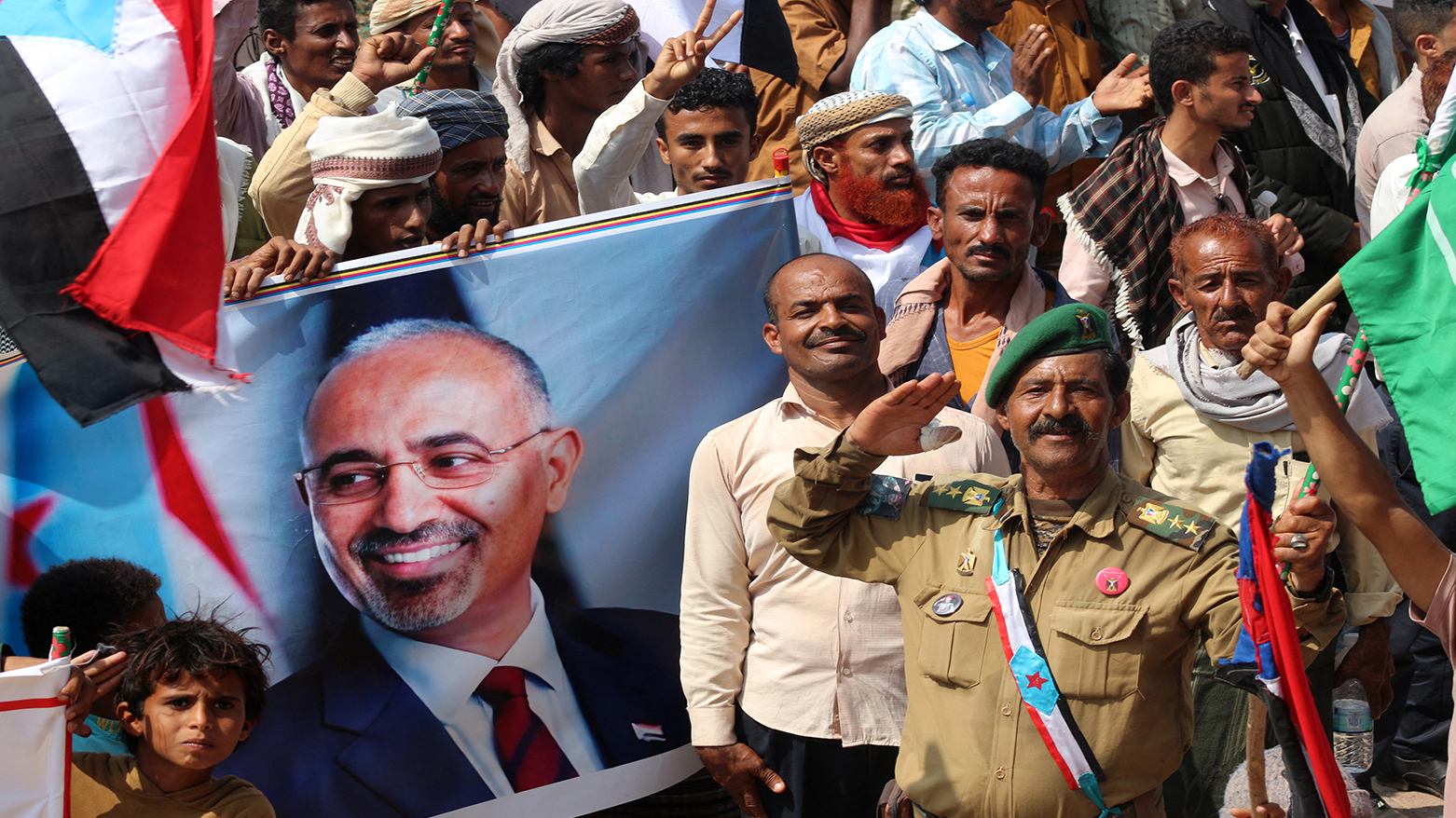
ERBIL (Kurdistan24) — The Saudi-led coalition carried out deadly air strikes on Wednesday in Yemen’s southwestern Dhale province, the home region of the UAE-backed separatist leader, after the country’s divided leadership removed him from office and accused him of treason amid escalating internal conflict.
The strikes targeted areas linked to Aidaros Alzubidi, head of the Southern Transitional Council (STC), which last month seized large swathes of territory before being pushed back by Saudi-backed forces loyal to Yemen’s internationally recognized government. Hospital sources told AFP that more than 15 air strikes hit Dhale, killing at least four people.
The escalation followed Alzubidi’s failure to attend talks in Riyadh aimed at de-escalating the violence. Although he was scheduled to travel to Saudi Arabia, his plane was delayed and departed without him on board.
The Saudi-led coalition later accused Alzubidi of fleeing and mobilizing “large forces” in Dhale after skipping the negotiations.
Yemen’s Presidential Leadership Council (PLC), which holds executive authority and includes rival political factions, subsequently announced Alzubidi’s removal, accusing him of “high treason” and armed insurgency.
Violence between the UAE-supported STC and pro-Saudi forces has intensified in recent weeks around the southern port city of Aden, which has served as the seat of Yemen’s internationally recognized government since it was ousted from the capital Sanaa by Iran-backed Houthi rebels in 2014.
Coalition spokesman Major General Turki al-Maliki said Alzubidi had “fled to an unknown location” after distributing weapons and ammunition to dozens of fighters inside Aden.
He said the air strikes were conducted to prevent the separatist leader from “escalating the conflict” and spreading it further into Dhale governorate.
An STC official, however, told AFP that Alzubidi chose not to join the delegation flying to Riyadh after learning he would be asked to dissolve the STC, which itself forms part of the Presidential Leadership Council.
The STC later said it had lost contact with its delegation upon arrival in Riyadh, expressing “grave concern” and calling for urgent clarification.
Despite the air strikes, the group said Alzubidi “continues his duties” in Aden, urged the Saudi-led coalition to halt the bombing campaign, and reiterated that it remains open to dialogue.
In a strongly worded statement, the Presidential Leadership Council accused Alzubidi of committing “grave crimes,” including exploiting “the just cause of the South” to carry out violence against civilians in southern governorates.
According to officials, more than 100 people have been killed in coalition air strikes and ground clashes with separatist forces in recent weeks.
The crisis has further strained relations between Saudi Arabia and the United Arab Emirates, longtime allies who have increasingly backed rival factions in Yemen despite initially joining forces against the Houthis.
A security official in Aden told AFP that responsibility for securing the city has been handed to forces and police units controlled by STC Vice President Abdulrahman Al-Mahrami, himself a deputy chairman of the Presidential Leadership Council.
These forces have been deployed across streets and key government sites, including the presidential palace.
Another security source said the STC evacuated its headquarters in Aden two days ago and moved operations of its television channel to an undisclosed location amid fears of Saudi air strikes.
The latest escalation follows a bold move by separatist forces last week to seize parts of the resource-rich Hadramawt province, which borders Saudi Arabia, as well as neighboring Mahra on the frontier with Oman.
Shortly afterward, Alzubidi announced a two-year transition plan toward establishing a new state, dubbed “South Arabia,” in southern Yemen—an announcement that has further inflamed an already volatile political and security landscape.