Aleppo’s Kurdish Districts Face 'Dangerous Escalation,' Warn Syrian Kurdish Council
The Kurdish National Council in Syria warns that classifying Aleppo’s Kurdish neighborhoods as military zones amid heavy shelling risks mass civilian displacement, rising casualties, and deepening the humanitarian crisis, calling for an immediate halt to military operations and a political solution.
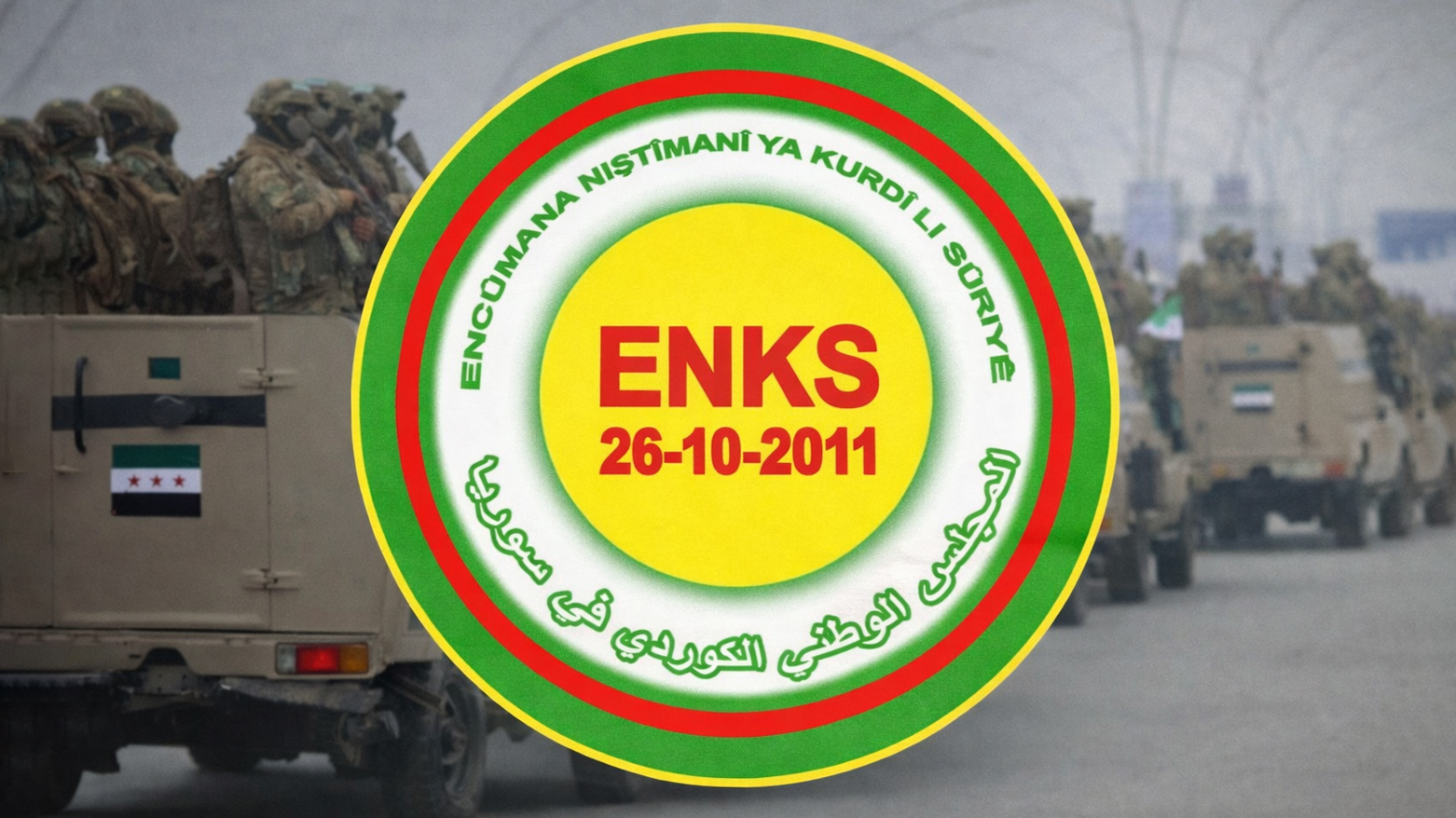
ERBIL (Kurdistan24) - Heavy shelling, forced displacement, and the formal designation of civilian neighborhoods as “military zones” have pushed Aleppo’s Kurdish districts to the brink, prompting a stark warning from the Kurdish National Council in Syria (KNCS) over what it describes as a dangerous escalation that threatens the lives of tens of thousands of civilians.
In a statement issued Wednesday, the KNCS expressed deep concern over intensified military operations and sustained bombardment targeting Kurdish-majority neighborhoods in Aleppo, particularly Sheikh Maqsoud and Ashrafieh. The council warned that the Syrian government’s decision to classify these densely populated districts as military areas could pave the way for large-scale civilian displacement and further humanitarian catastrophe.
According to the KNCS statement, Sheikh Maqsoud and Ashrafieh—home to tens of thousands of civilians—have come under intense artillery and rocket fire, resulting in civilian deaths and injuries, widespread destruction of homes, and a growing wave of forced displacement as families flee under the pressure of ongoing military operations.
The council described the move to militarize residential neighborhoods and issue evacuation demands as an “extremely dangerous indicator,” stressing that it would inevitably increase civilian casualties and could set a precedent for similar actions elsewhere in Syria, exacerbating the country’s already dire security and humanitarian conditions.
The KNCS called on the international community and relevant parties to act urgently to halt the escalation. It demanded an immediate cessation of military operations, the lifting of the siege imposed on Sheikh Maqsoud and Ashrafieh, and the opening of safe corridors to allow the delivery of humanitarian and medical aid to affected civilians. The council also urged all sides to shield residential areas from armed conflict and prioritize dialogue over military and media escalation.
Political call for inclusive process
On the political front, the KNCS renewed its appeal to Damascus to initiate a comprehensive political process that addresses outstanding issues and guarantees the rights of all Syrian components, with particular emphasis on the constitutional rights of the Kurdish people. The council reiterated that a political solution remains the only viable path toward stability and lasting peace in Syria.
The statement followed a high-level meeting held prior to its release between the Kurdistan Region representation of the KNCS and the Kurdistan Region representation of the Democratic Union Party (PYD). The meeting took place in Erbil on, where KNCS officials received a PYD delegation led by Dr. Jawidan Kamal, a member of the party’s General Council and its representative in the Kurdistan Region.
Discussions focused on the current political situation and rapidly evolving regional and international developments, as well as the challenges facing the Kurdish cause amid shifting geopolitical dynamics in the Middle East.
Both sides emphasized the importance of joint action to secure legitimate Kurdish national rights within Syria’s future constitutional framework, the need to unify Kurdish political discourse, and the necessity of overcoming exclusionary and chauvinistic policies that Kurds have endured throughout Syria’s modern history.
The warning from the KNCS comes against the backdrop of sustained military escalation in Aleppo. Thursday at 12:10 a.m., armed groups affiliated with the Damascus shelled the al-Shaqif area of Aleppo with five artillery rounds, causing material damage to property. No confirmed reports of casualties were immediately available.
Aleppo’s Internal Security Forces said Damascus affiliated factions later shelled residential areas in the eastern part of Sheikh Maqsoud using tanks and Grad rockets, resulting in further material damage. In additional statements, the forces reported that, under chants of “Takbir,” the same factions used heavy artillery to target the densely populated neighborhood, deliberately striking civilian areas.
According to documented information and video evidence cited by SDF, the attacking factions include armed formations implicated in previous massacres in Sweida and Syria’s coastal regions and are listed under international sanctions. These groups reportedly include Division 62, known as the Suleiman Shah Brigade (al-Amshat); Division 72, known as the Sultan Murad Division; Division 76, known as the Hamza Division; and Division 80, known as the Nour al-Din al-Zenki Movement.
Despite their record, the factions are described as operating under the direct cover and endorsement of the Syrian government’s Ministry of Defense. The attacks have so far resulted in the deaths of eight civilians, injuries to fifty-two others, and damage to at least three hundred homes, as well as dozens of service and medical facilities.
As shelling continues and civilian neighborhoods remain under siege, the KNCS warned that the militarization of residential areas in Aleppo risks pushing the crisis into an even more dangerous phase, underscoring that only civilian protection and a genuine political process can prevent further tragedy.