Yemen Separatist Leader Flees to UAE After Failed Power Grab in the South
Al-Zubidi fled Aden by boat to Somaliland, then flew via Mogadishu to Abu Dhabi under UAE supervision, the Saudi-led coalition said on Thursday.
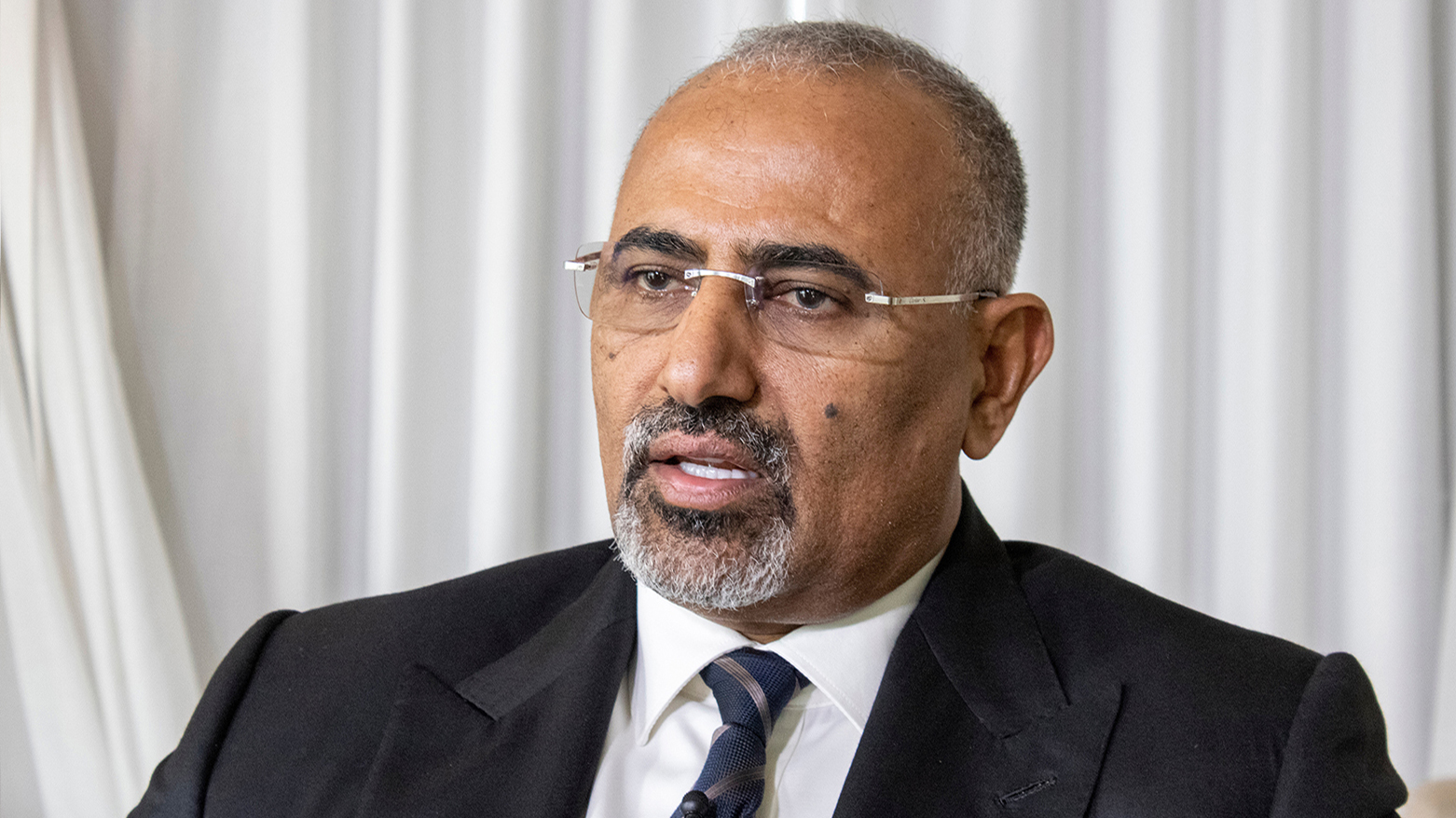
ERBIL (Kurdistan24) — Yemen’s southern separatist leader Aidaros al-Zubidi has fled to the United Arab Emirates after a failed bid to seize territory and push toward independence, the Saudi-led coalition said on Thursday, marking a dramatic escalation in internal divisions within the anti-Houthi alliance.
Al-Zubidi, head of the UAE-backed Southern Transitional Council (STC), was removed from Yemen’s Presidential Leadership Council (PLC) on Wednesday and charged with high treason after refusing to attend talks in Riyadh. The coalition also carried out airstrikes in his home province following his absence.
In a statement, the coalition said “reliable intelligence indicates that Aidaros al-Zubidi and others escaped in the dead of night,” outlining an elaborate route from Yemen to the UAE involving both sea and air travel.
According to the statement, al-Zubidi departed Aden by boat shortly after midnight on Wednesday, sailing to Berbera in Somaliland. From there, he boarded a Russian-made Ilyushin aircraft to Mogadishu “under the supervision of UAE officers,” before continuing on to a military airport in Abu Dhabi, where he arrived later that evening. The UAE foreign ministry did not immediately comment on the report.
Renewed Turmoil in Fragmented Yemen
Al-Zubidi’s flight follows weeks of renewed instability in Yemen, the Arabian Peninsula’s poorest country, and has laid bare growing fractures between Saudi Arabia and the UAE—once the twin pillars of the coalition formed to counter Iran-backed Houthi rebels.
The Houthis overran the capital, Sanaa, in 2014 and continue to control much of northern Yemen. While the coalition’s stated objective has been to restore Yemen’s internationally recognized government, recent developments have highlighted competing agendas among its members.
Last month, the STC launched an offensive in southern Yemen, advancing into the oil-rich Hadramout and Mahra provinces near the Saudi and Omani borders.
The move broke an uneasy ceasefire among coalition partners and triggered a sharp response from Riyadh, including Saudi airstrikes and a counter-offensive by pro-Saudi ground forces that ultimately pushed the STC back.
Competing Forces and Escalating Rivalries
The STC is the most powerful separatist force in southern Yemen and controls large areas, including strategic ports and islands, with backing from the UAE. It seeks the restoration of an independent South Yemen, a goal that clashes with Saudi Arabia’s support for a unified Yemeni state under the PLC.
Tensions intensified when a shipment of UAE arms destined for the STC reportedly arrived in the port city of Mukalla, prompting Saudi airstrikes and regional alarm over the state of Saudi-UAE relations.
Shortly afterward, the anti-Houthi coalition announced it had asked the UAE to withdraw its forces from Yemen, a move the coalition said Abu Dhabi had carried out over the weekend.
Other actors have also played key roles in the recent fighting. The Saudi-backed Hadramout Tribes Confederacy seized the PetroMasila oil facility in November, demanding a greater share of oil revenues and improved services for local residents.
The STC appeared to use that seizure as justification to advance into Hadramout and take control of the oil infrastructure itself. Meanwhile, the Saudi-backed National Shield Forces were instrumental in rolling back the STC’s latest advances and regaining territory seized by the separatists.
Political Fallout in Aden
Yemen’s internationally recognized government, the Presidential Leadership Council, is based in the south, with the military reporting directly to it. PLC members fled to Riyadh last month after STC forces briefly took over the Presidential Palace in Aden.
On Wednesday, the council formally expelled al-Zubidi and accused him of treason after he reportedly declined to travel to Saudi Arabia for negotiations. The STC, for its part, said it had lost contact with its delegation sent to Saudi Arabia after it landed, expressing “deep concern” over their fate.
Al-Zubidi’s removal and escape underscore the fragile nature of Yemen’s anti-Houthi coalition and raise fresh questions about the future of the country’s political order, as rival regional powers back competing factions on the ground.