Murshid Khaznawi Says Aleppo Kurds Face Existential Threat as SDF Repels Major Assault
Khaznawi also underscored the importance of President Masoud Barzani’s role at what he described as a critical moment, saying President Barzani’s international standing could help exert pressure to halt the fighting and prevent further harm to Kurdish civilians in Aleppo.
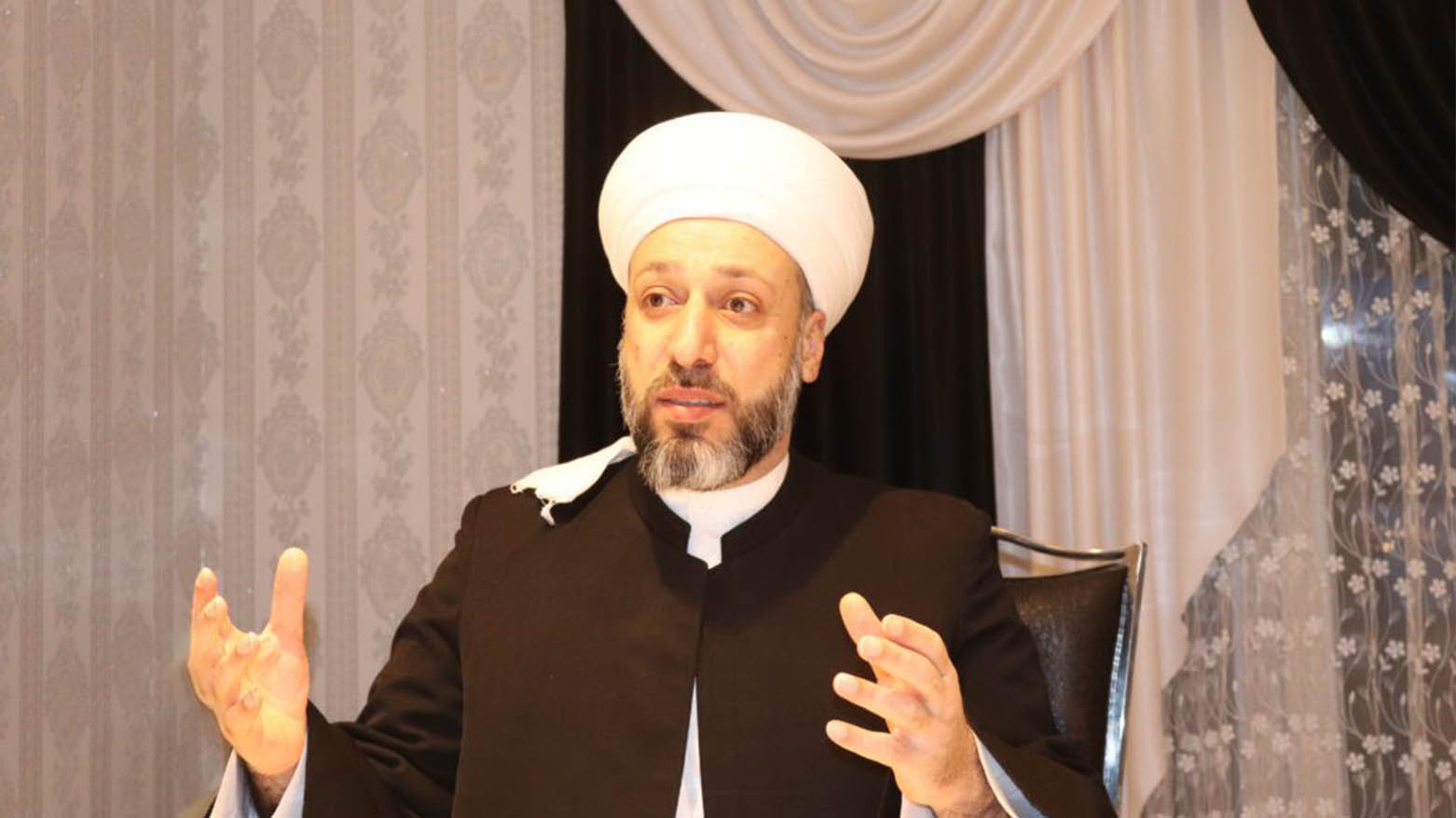
ERBIL (Kurdistan24) – Murshid Khaznawi, a prominent religious and public figure from West Kurdistan (southeastern Syria), said on Wednesday that the Kurdish population in Aleppo’s Sheikh Maqsud and Ashrafiyeh neighborhoods is engaged in a historic struggle against what he described as a planned attempt to eradicate their national identity.
Speaking to Kurdistan24, Khaznawi said the ongoing attacks are aimed at breaking Kurdish will but have instead reinforced resistance among both civilians and security forces. He stressed that morale remains high despite sustained shelling, citing widespread support from Kurds across all four parts of Kurdistan.
Khaznawi praised the Syrian Democratic Forces (SDF), highlighting what he described as acts of heroism by fighters who return to the front lines even after being wounded to defend their communities. He added that the persistence of resistance reflects a broader determination to protect Kurdish dignity and existence.
His remarks came after the SDF’s internal security forces, known as Asayish, announced they had repelled a large-scale land and air assault launched by Damascus government factions against Sheikh Maqsud and Ashrafiyeh. According to Asayish, the offensive followed three consecutive days of heavy shelling using tanks and BM-21 Grad missiles and involved more than 60 tanks and armored vehicles, thousands of fighters, and support from suicide drones.
Asayish said security forces mounted strong resistance on the Ashrafiyeh front, inflicting significant losses on the attackers, including the destruction of a tank and five military vehicles, the downing of seven suicide drones, and dozens of casualties, ultimately forcing the attacking forces to retreat. The forces described the assault as lacking any legal or military justification and held the Syrian government responsible for the escalation and its consequences for civilians, adding they remain on high alert to counter any further attempts to seize populated areas by force.
In his comments, Khaznawi criticized the political trajectory of Syria, saying that the country envisioned by its people has not materialized. He argued that the current government in Damascus lacks independence and is heavily influenced by neighboring states. He also accused Ahmed Sharaa (known as Jolani) of holding an extremist ideology that rejects pluralism and diversity.
“Rather than representing Syria, Jolani is carrying out the directives of a neighboring country’s president against the Kurds,” Khaznawi said, adding that while the Kurds have repeatedly called for peace and dialogue, continued pressure would only deepen their resolve.
Khaznawi also underscored the importance of President Masoud Barzani’s role at what he described as a critical moment, saying President Barzani’s international standing could help exert pressure to halt the fighting and prevent further harm to Kurdish civilians in Aleppo.
He called on political parties in North, South, and East Kurdistan, as well as the Kurdish diaspora, to support West Kurdistan with a unified stance, arguing that such unity would have a tangible impact on all global decision-making centers.
The situation in northern Aleppo remains tense, with residents of Sheikh Maqsud and Ashrafiyeh continuing to endure the effects of ongoing military developments amid fears of a further escalation.