Israeli Military Hits Hezbollah Sites Across Lebanon, Citing Incomplete Disarmament
Israel struck Hezbollah weapons sites in Lebanon Friday, calling rearmament a truce violation. This followed Lebanon's claim of finishing phase one of disarming the group south of the Litani River.
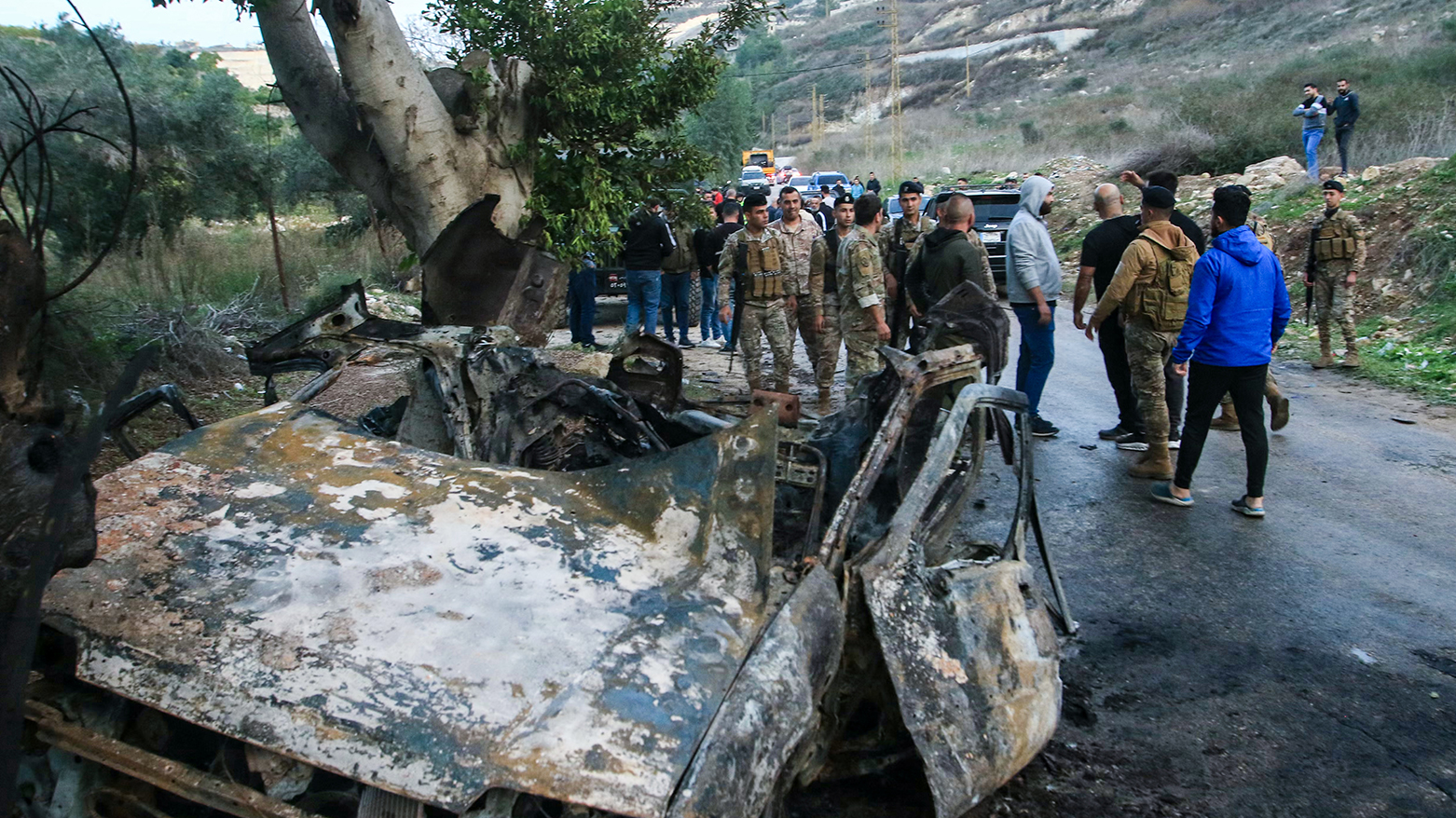
ERBIL (Kurdistan24) — The Israeli military announced on Friday that it had conducted airstrikes against Hezbollah targets across multiple regions of Lebanon, an operation launched just one day after the Lebanese Armed Forces declared the completion of the initial phase of a plan to disarm the militant group in the country’s south.
According to a report by Agence France-Presse (AFP), the Israeli military confirmed in a statement on Friday that its air force had struck "several areas in Lebanon."
The operation specifically targeted infrastructure that Israel claims contributes to the military capabilities of the militant group.
The military statement detailed that the strikes were aimed at "weapons storage facilities and a weapons production site that were used for the rehabilitation and military build-up of the Hezbollah terrorist organisation."
The Israeli military added that "several launch sites and rocket launchers, along with military structures, were struck" during the Friday operations. The strikes were described by Israeli officials as a direct response to violations of the security arrangements currently in place.
"The targets that were struck, and Hezbollah's reestablishment activity in these sites, constitute a violation of the understandings between Israel and Lebanon, and pose a threat to the State of Israel," the military statement said, as cited by AFP.
The locations of the strikes extended beyond the immediate border region.
Lebanon’s official National News Agency (NNA) reported that the bombardment affected areas in southern Lebanon situated far from the Israeli border, as well as locations in the eastern Bekaa Valley, a region where Hezbollah maintains a significant presence.
As of Friday afternoon, there were no immediate reports of casualties resulting from these specific strikes.
These military actions occur against a backdrop of heightened diplomatic and security maneuvering following a ceasefire established in November 2024.
That truce concluded two months of all-out war and more than a year of hostilities that, according to AFP, significantly weakened Hezbollah. Despite the cessation of full-scale combat, Israel has maintained a troop presence in five areas of southern Lebanon it deems strategic and has continued to carry out regular airstrikes, accusing the group of attempting to rearm.
The timing of Friday’s strikes is significant, coming less than 24 hours after the Lebanese army announced progress in its obligations to neutralize the threat posed by Hezbollah.
On Thursday, the Lebanese army stated that it had "achieved the objectives of the first phase" of its disarmament plan.
This initial phase covered the territory south of the Litani River, a strategic boundary located approximately 30 kilometers (20 miles) from the Israeli border. The Lebanese military indicated its intention to extend these disarmament efforts to the rest of the country in subsequent phases.
Lebanon has committed to disarming Hezbollah amidst heavy pressure from the United States and concerns regarding the potential expansion of Israeli military operations.
However, the group has reportedly refused to surrender its weapons, complicating the implementation of the ceasefire terms, which mandated that Hezbollah withdraw its forces north of the Litani River and dismantle its military infrastructure in the evacuated zones.
The Israeli government offered a guarded response to the Lebanese army's announcement.
A statement from the office of Prime Minister Benjamin Netanyahu, quoted by AFP, acknowledged the developments but insisted that more comprehensive action is required.
"Efforts made toward this end by the Lebanese government and the Lebanese armed forces are an encouraging beginning, but they are far from sufficient," the Prime Minister's office stated. The statement reiterated Israel’s stance that "the ceasefire agreement... states clearly, Hezbollah must be fully disarmed."
Tensions remain high as incidents continue to challenge the fragility of the truce.
On Thursday, prior to the widespread strikes on Friday, Lebanese official media reported that an Israeli strike killed one person near the southern city of Sidon. The Israeli army confirmed that operation, stating it had targeted a Hezbollah operative.
The situation underscores the fragile nature of the security landscape in Lebanon, where diplomatic commitments to disarm militants are testing the endurance of a ceasefire marred by mutual accusations of violations and continued military engagement.