Trump Orders Military Chiefs to Draft Greenland 'Invasion Plan'
Trump reportedly ordered special forces to plan a 'Greenland invasion,' facing resistance from U.S. generals over legality and feasibility. The move alarms NATO allies and risks a major transatlantic crisis.
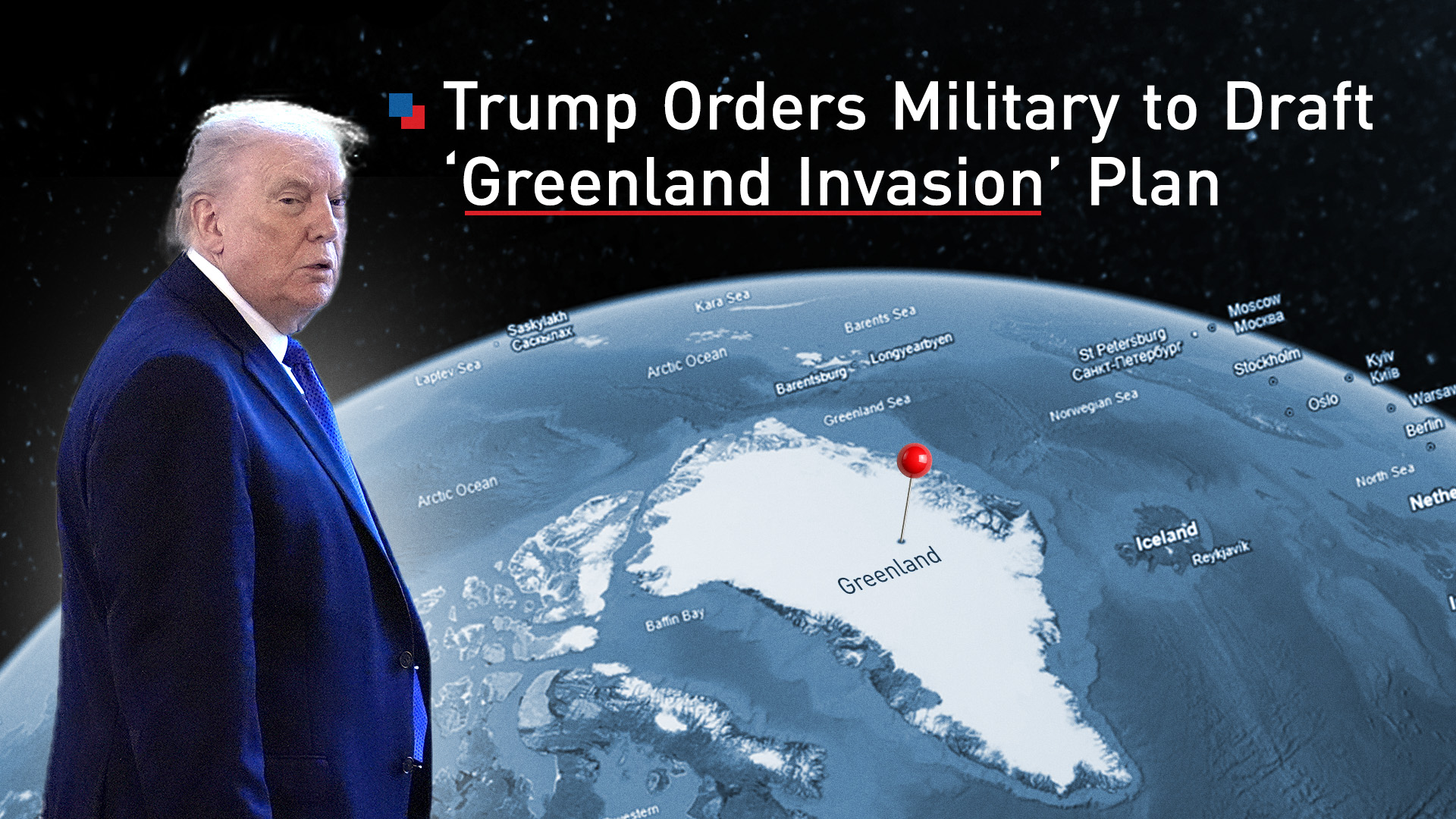
ERBIL (Kurdistan24) - The U.S. President Donald Trump has formally ordered his special forces commanders to prepare a detailed plan for the invasion of Greenland, a directive that has reportedly met with fierce resistance from senior military leadership who question its legality and feasibility. According to a report by the Daily Mail on Sunday, the President’s insistence on military action is driven by a circle of policy "hawks," led by adviser Stephen Miller, who have been emboldened by the recent successful operation to capture Venezuelan President Nicolás Maduro.
The revelation marks a significant escalation in the standoff over the Danish territory, moving beyond rhetoric into active military planning.
Sources cited by the Daily Mail indicate that the President has tasked the Joint Special Operations Command (JSOC) with developing the invasion strategy. However, the Joint Chiefs of Staff are reportedly resisting the order, arguing that such an operation would be illegal under international law and would lack the necessary authorization from Congress.
This internal friction highlights the deepening divide between the White House’s aggressive foreign policy stance and the established military hierarchy.
"The generals think Trump's Greenland plan is crazy and illegal," a diplomatic source told the Daily Mail. "So they are trying to deflect him with other major military operations. They say it's like dealing with a five-year-old."
Motivations: Domestic Politics and Global Strategy
The push to seize Greenland is reportedly motivated by a convergence of domestic political pressures and perceived geopolitical threats. British diplomats believe that President Trump is seeking to distract American voters from the performance of the U.S. economy ahead of the crucial mid-term elections later this year.
With the potential loss of congressional control to the Democrats looming, the administration appears to be calculating that a bold, nationalist move could rally voter support.
Furthermore, the administration’s hawks argue that prompt action is necessary to preempt potential moves by Russia or China in the Arctic.
"We are going to do something on Greenland, whether they like it or not," President Trump told oil executives on Friday. He explicitly framed the issue as a zero-sum game, warning that failure to act would result in Russia or China becoming America's neighbor.
However, European officials and some diplomatic cables suggest an ulterior motive that aligns with the President's long-standing skepticism of trans-Atlantic alliances.
One diplomatic cable describes a "worst-case" scenario in which the invasion leads to "the destruction of NATO from the inside."
The analysis posits that while Congress would not permit a formal withdrawal from the alliance, occupying the territory of a NATO member could force European nations to abandon the pact themselves. "If Trump wants to end NATO, this might be the most convenient way to do it," the cable notes.
Military Resistance and Alternative Options
Faced with the President’s demands, military leaders have reportedly attempted to steer him toward alternative courses of action.
Sources told the Daily Mail that commanders have proposed "less controversial measures" to satisfy the President’s desire for assertive action. These alternatives include intercepting Russian "ghost" ships—a clandestine fleet used by Moscow to evade sanctions.
Despite these efforts, the focus remains on Greenland. Diplomats have war-gamed an "escalatory scenario" where the U.S. uses force or political coercion to sever the island's ties to Denmark.
The ultimate goal, driven by what the Daily Mail describes as the "most extreme views coming from Stephen Miller," appears to be full control rather than mere access.
A potential "Compromise Scenario" has also been outlined in diplomatic circles. Under this arrangement, Denmark would agree to grant the U.S. full military access to Greenland while explicitly denying access to Russia and China.
Although the U.S. already enjoys significant access under existing treaties, this deal would formalize Washington's primacy on a new legal basis. The upcoming NATO summit on July 7 is seen as a likely deadline for reaching such a compromise.
Repercussions for NATO and Europe
The prospect of a U.S. invasion of a NATO ally’s territory has sent shockwaves through European capitals.
Leaders from the UK, France, Germany, and other nations have already issued joint statements defending Danish sovereignty.
The latest developments suggest that the UK’s position will be pivotal. British Prime Minister Sir Keir Starmer faces the challenge of either sticking closely with European allies or breaking ranks to sanction the U.S. approach.
The Daily Mail report underscores that for European officials, the window of opportunity to prevent conflict is narrowing as the U.S. mid-term elections approach in the summer.
The fear is that President Trump, driven by domestic political necessities, will opt for the escalatory path sooner rather than later.
While the President has previously claimed that his actions are defensive measures against foreign encroachment, his dismissal of Danish sovereignty—stating that a boat landing 500 years ago does not confer ownership—signals a fundamental rejection of the current international order.
With military planners now drafting invasion contingencies at the request of the Commander-in-Chief, the crisis over Greenland has moved from diplomatic dispute to a potential flashpoint for armed conflict within the Western alliance.