Kurdistan Region Pushes for Stronger UNESCO Engagement as PM Barzani Meets Iraq’s Representative
Prime Minister Barzani emphasizes UNESCO engagement as part of a broader strategy to deepen the Kurdistan Region’s global cultural and educational integration.
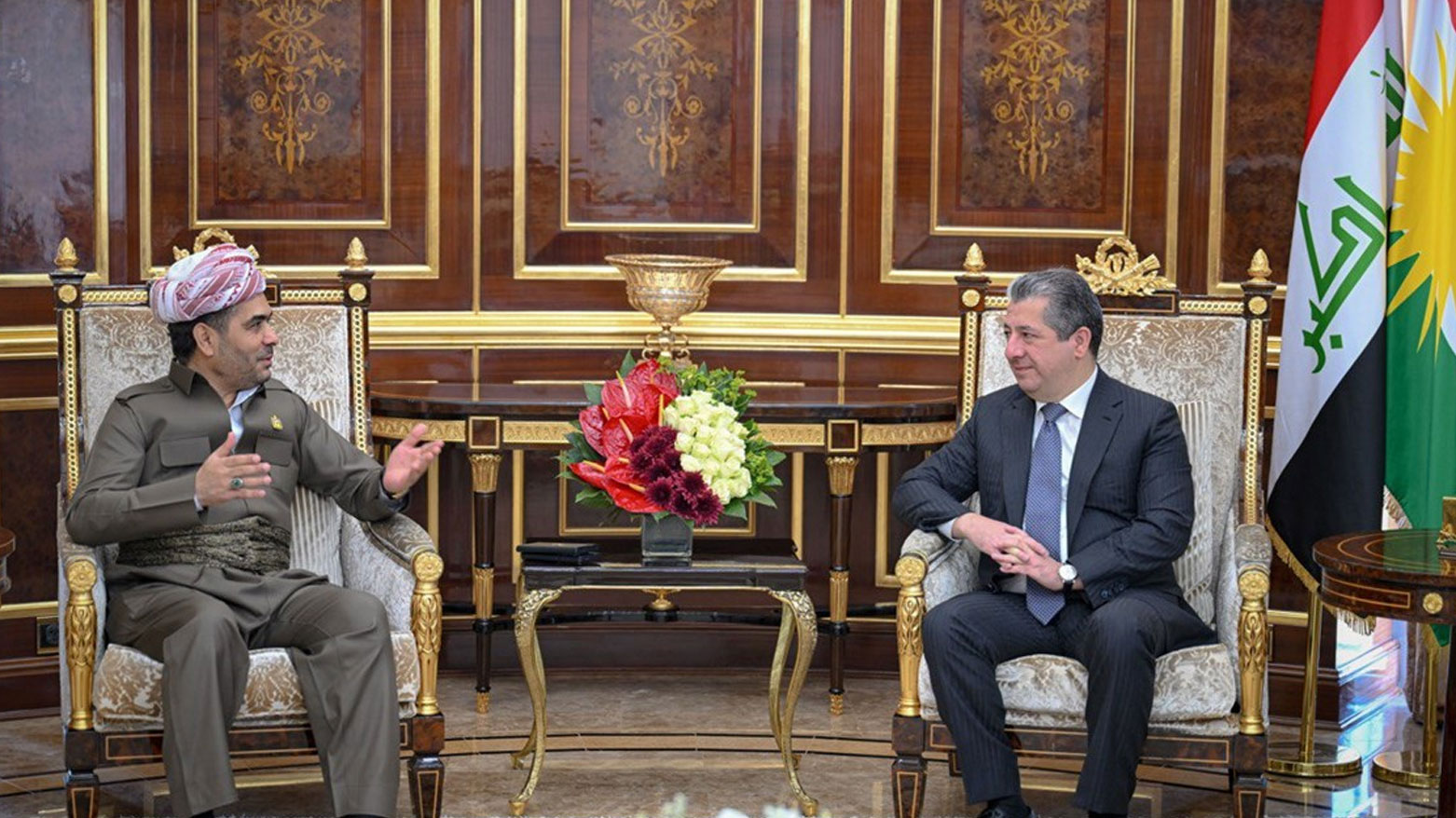
ERBIL (Kurdistan24) — Kurdistan Region Prime Minister Masrour Barzani on Sunday received Assad Turki Swari, Iraq’s Permanent Representative to the United Nations Educational, Scientific and Cultural Organization (UNESCO), in a meeting that highlighted the Kurdistan Region’s growing focus on cultural diplomacy and international heritage protection.
In the meeting, Swari briefed the prime minister on Iraq’s activities and engagement within UNESCO, stressing the importance of inclusive representation that reflects all components of the country, including the Kurdistan Region.
He underlined that effective participation requires acknowledging Iraq’s cultural and historical diversity and ensuring that the Kurdistan Region’s heritage and contributions are adequately represented on the international stage.
Prime Minister Barzani expressed his appreciation for the efforts of Iraq’s UNESCO mission and wished Swari success in his work. He also emphasized the strategic importance of the Kurdistan Region becoming a participating member of UNESCO, describing it as a key step toward safeguarding cultural heritage, advancing education and science, and enhancing international cooperation.
Since taking office, Prime Minister Barzani has consistently highlighted culture, education, and heritage preservation as pillars of sustainable development and identity-building in the Kurdistan Region. His government has prioritized strengthening ties with international organizations, viewing cultural diplomacy as a tool to promote stability, pluralism, and global engagement.
Within this framework, closer cooperation with UNESCO is seen as particularly significant. UNESCO membership and active participation would provide the Kurdistan Region with technical expertise, international visibility, and access to global mechanisms aimed at protecting cultural heritage, especially in a region that has suffered decades of conflict, neglect, and deliberate destruction of historical sites.
The Kurdistan Region is widely regarded as one of Iraq’s richest areas in terms of archaeological, cultural, and historical heritage, spanning ancient civilizations from the Neolithic era to Assyrian, Median, and Islamic periods.
The region is home to thousands of archaeological sites, historic citadels, religious landmarks, and cultural traditions that reflect its multi-ethnic and multi-religious character.
Several sites in the Kurdistan Region have gained international recognition through UNESCO. Most notably, the Citadel of Erbil, one of the oldest continuously inhabited settlements in the world, was inscribed on UNESCO’s World Heritage List in 2014. The citadel stands as a powerful symbol of the region’s deep historical roots and its commitment to preservation and rehabilitation.
In addition, other sites and cultural elements from the Kurdistan Region are included on UNESCO’s Tentative List or are being prepared for future nomination, reflecting ongoing efforts by regional authorities to document, protect, and promote their heritage in line with international standards.
The meeting comes amid broader discussions about Iraq’s engagement with international cultural institutions and the need to ensure equitable representation of all regions. Kurdish officials have repeatedly argued that greater visibility within UNESCO would not only benefit the Kurdistan Region but also enhance Iraq’s overall cultural profile by showcasing its diversity.
By calling for the Kurdistan Region to become a participating member of UNESCO, Prime Minister Barzani signaled a continued push to integrate the region more deeply into global cultural and educational networks—an approach that aligns with his government’s broader vision of openness, institutional development, and international partnership.
As the Kurdistan Region seeks to rebuild and protect its cultural heritage, closer cooperation with UNESCO is increasingly viewed as both a practical necessity and a strategic investment in preserving history for future generations.