German Minister Condemns Attacks on Kurdish Districts in Aleppo
German Minister of State for Migration, Refugees and Integration, Reem Alabali Radovan, condemned attacks on Aleppo's Kurdish districts, calling for minority protection. This follows a ceasefire ending a deadly government-affiliated offensive.
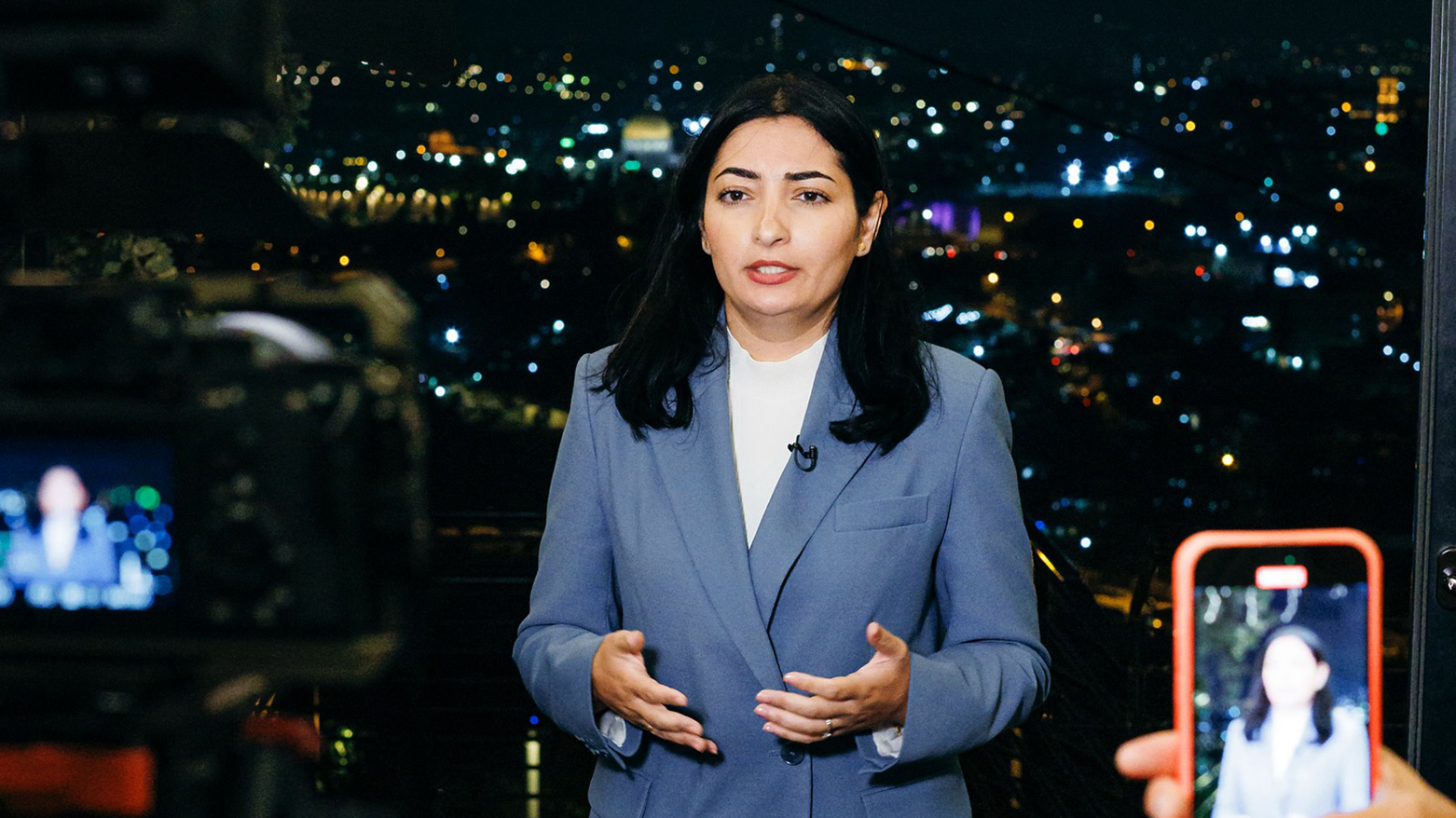
ERBIL (Kurdistan24) – Reem Alabali Radovan, German Minister of State for Migration, Refugees and Integration, issued a statement on Sunday condemning the recent military assaults on Kurdish neighborhoods in Aleppo, asserting that the protection of ethnic and religious minorities remains a non-negotiable obligation for authorities in Syria. Writing on her official social media account, the minister called upon the government in Damascus to halt the violence immediately and to guarantee the rights of all population groups involved in the conflict.
In her statement, Alabali Radovan addressed the deteriorating security situation following days of intense urban warfare.
She wrote that she condemned the attacks "in the strongest possible terms," specifically citing the operations targeting Kurdish neighborhoods as well as other ethnic and religious minorities. The minister emphasized that those responsible for the violence bear a duty to end it and to ensure that the civil rights of the affected populations are respected.
Alabali Radovan linked the cessation of hostilities to the broader stability of the nation.
"A lasting stabilization of Syria can only succeed if violence is ended, minorities are protected, and political solutions are achieved through dialogue," she wrote.
She concluded her assessment by noting that the country has a viable future only if all its diverse communities can live freely and with self-determination, "without persecution, discrimination, or violence."
The German MP's intervention comes amid a volatile shift in the security landscape of Aleppo.
The Internal Security Forces operating in the Sheikh Maqsud and Ashrafiyeh neighborhoods recently accused paramilitary units affiliated with the Syrian government of launching a systematic offensive.
In a statement released Sunday, these local security forces alleged that the military operation, which began on January 6, 2026, was aimed at the "extermination" of the local population and the permanent alteration of the districts' demographic structure.
According to the account provided by the Kurdish-led security forces, the assault involved thousands of fighters described as "mercenaries affiliated with the Syrian government."
These units were reportedly supported by a substantial array of heavy military hardware, including drones, tanks, artillery, and armored vehicles.
The security forces asserted that the objective of the incursions extended beyond establishing territorial control, aiming instead to violate the dignity of residents and dismantle the long-standing Kurdish majority in these areas.
The humanitarian impact of the offensive has been severe, particularly regarding civilian infrastructure. The Internal Security Forces detailed repeated attacks on the Khalid Fajr Hospital, identifying it as the sole medical facility in the neighborhood capable of treating the wounded.
The statement alleged that government-affiliated forces struck the hospital "dozens of times" with heavy weapons and drones, an action the security forces described as an attempt to commit a "massacre" against patients and medical staff.
The bombardment reportedly rendered the hospital out of service, a critical factor that influenced the subsequent decision to agree to a ceasefire.
The toll on the civilian population has been significant. Reports emerging from the week-long conflict indicate that at least 60 civilians were killed and nearly 100 others were wounded. The violence has also precipitated a mass displacement event.
Aleppo Governor Azam al-Gharib reported that approximately 155,000 people had fled their homes.
The Barzani Charity Foundation provided corroborating data, documenting the displacement of more than 27,000 families. The foundation’s daily report noted that the majority of these families have sought refuge in the Afrin district and surrounding villages, where they face harsh winter conditions and shortages of shelter and basic necessities.
The ceasefire that halted the main thrust of the fighting was confirmed earlier on Sunday by Mazloum Abdi, the General Commander of the Syrian Democratic Forces (SDF). In a statement on the social media platform X, Abdi announced that an understanding had been reached through international mediation to stop the attacks and protect civilians.
The agreement facilitates the evacuation of Kurdish fighters, wounded individuals, and besieged civilians from Sheikh Maqsud and Ashrafiyeh to areas administered by the Autonomous Administration of North and East Syria.
The diplomatic activity surrounding the ceasefire involved direct engagement by Western powers. The European Union had previously called for an immediate end to hostilities. Furthermore, the United States engaged directly with Syrian leadership to contain the crisis.
On Saturday, U.S. Ambassador to Türkiye and Special Envoy for Syria Tom Barrack met with Syrian President Ahmed al-Sharaa in Damascus. Reports following the meeting indicated that Barrack conveyed warnings from President Donald Trump and Secretary of State Marco Rubio, cautioning that continued violence in Aleppo could jeopardize Syria's political transition following the fall of the Assad government.
During these high-level talks, Barrack reportedly urged a return to the terms of the "March 2025 integration agreement" between Damascus and the SDF, which outlines a framework for incorporating SDF forces into national institutions.
Implementation of the withdrawal began on Sunday, with Syrian state media reporting that buses were transporting surrendering Kurdish fighters toward northern Syria.
An Agence France-Presse correspondent witnessed convoys leaving the area under the escort of Syrian security forces. However, tensions remained high as reports surfaced of security forces separating young men from crowds of evacuating civilians, raising fears among residents about detentions.
The Internal Security Forces in Sheikh Maqsud stated that they accepted the "partial ceasefire" to prevent further massacres and to evacuate the hospital, while vowing to continue their struggle for the dignity of their people. The withdrawal marks the end of years of autonomous administration by Kurdish forces in these strategic Aleppo neighborhoods.