Rights Group Cites Mass Detentions in Aleppo; Civil Organizations in Diyarbakir Call for Turkish Mediation
SOHR reports 300+ civilians detained and abused in Aleppo as Diyarbakir civil groups urge Türkiye to mediate and ensure Kurdish rights in Syria.
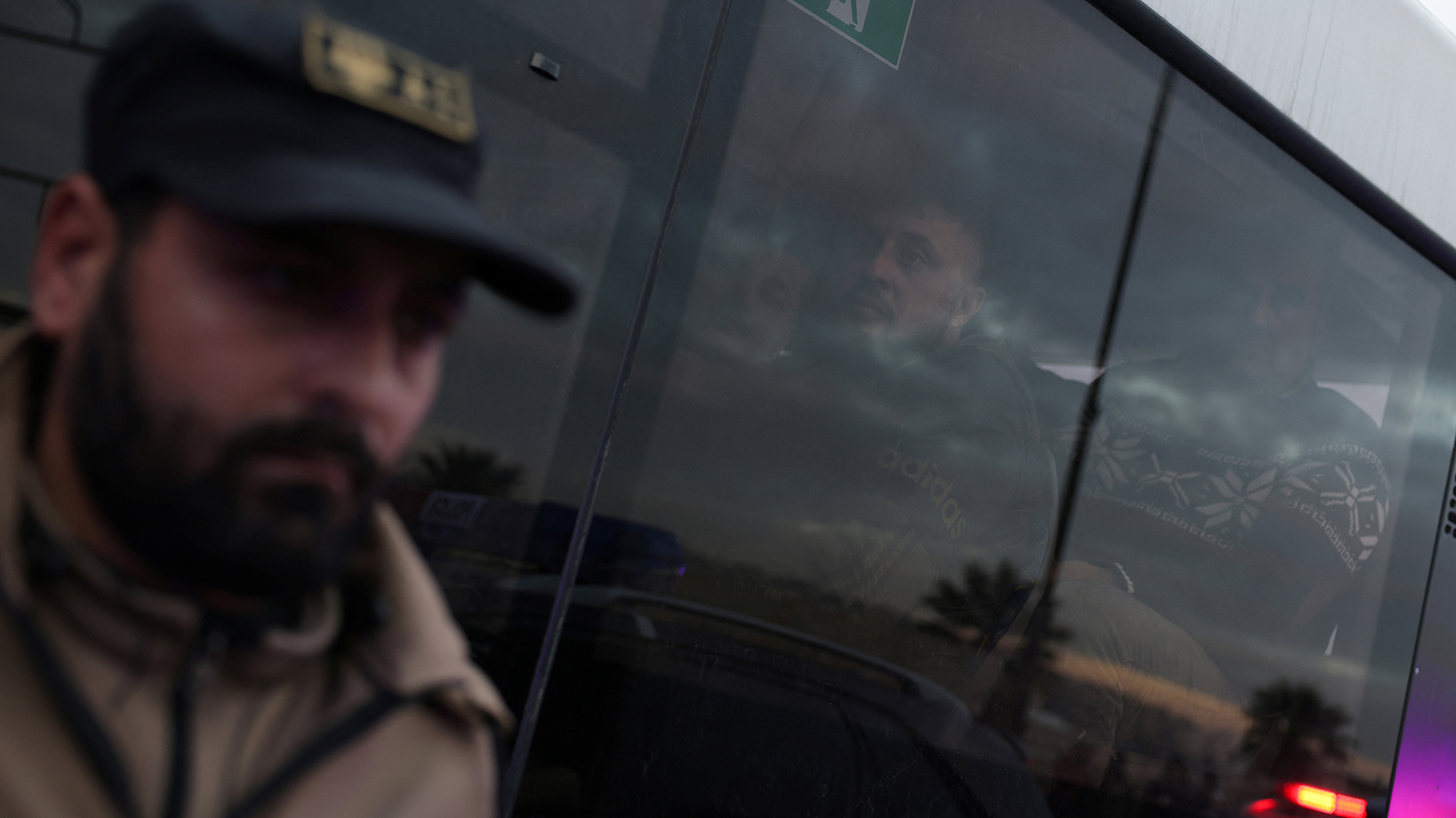
ERBIL (Kurdistan24) – A deepening humanitarian and security crisis in the Kurdish-majority neighborhoods of Aleppo has drawn sharp condemnation from civil society organizations in neighboring Türkiye, coinciding with new reports of mass detentions and alleged abuses by armed groups affiliated with the Syrian opposition’s Interim Government.
The Amed City Protection and Solidarity Platform, a coalition of civil and professional institutions based in Diyarbakir (Amed), issued a comprehensive statement on Monday calling for immediate international intervention to halt the hostilities.
The appeal came as the United Kingdom-based Syrian Observatory for Human Rights (SOHR) reported that more than 300 civilians have been detained in the Sheikh Maqsud and Ashrafiyeh districts following the entry of opposition forces, raising concerns over potential demographic shifts and systemic rights violations.
Allegations of Brutality and Mass Arrests
According to data released by the Syrian Observatory for Human Rights, the security situation in Sheikh Maqsud and Ashrafiyeh has deteriorated rapidly since forces affiliated with the "Interim Government" established control over the areas.
SOHR reported that these armed groups have initiated extensive arrest operations targeting the local population.
The monitoring group stated that at least 300 civilians are currently being held under "severe conditions," with reports emerging that their dignity has been routinely violated.
The Observatory’s report detailed a pattern of conduct by the gunmen that includes the infliction of "severe and racist insults" upon Kurdish civilians, allegedly in an attempt to humiliate residents of the captured neighborhoods.
Visual evidence circulating on social media platforms, which was cited by the Observatory, appears to corroborate these accounts. The footage reportedly depicts groups of civilians gathered against walls by armed personnel, with their subsequent fate remaining unclear.
The Observatory highlighted a particular concern regarding the status of vulnerable populations within the districts.
While the arrest campaigns initially focused on men following the takeover of the neighborhoods, SOHR indicated that the whereabouts of hundreds of women and children remain unknown. This uncertainty has created a climate of "great fear and terror" among families who have lost contact with their relatives.
In its assessment of the events, the Syrian Observatory for Human Rights characterized the actions of the armed groups not as isolated incidents of indiscipline, but as a calculated strategy.
The organization stated that the systematic nature of the violations suggests a broader plan designed to intimidate the civilian population and force a demographic change in the historically Kurdish districts.
The Observatory further criticized international institutions for maintaining silence in the face of these developments.
Civil Society in Diyarbakir Mobilizes
Reacting to the developments across the border, the Amed City Protection and Solidarity Platform convened a press conference at the Amed Bar Association building to address the escalating violence.
The gathering included representatives from numerous civil and professional institutions who sought to draw attention to the "dire humanitarian situation" unfolding in Aleppo.
Yildiz Ok Orak, the Co-spokesperson of the Platform, delivered a statement that placed the current violence within the broader context of the Syrian conflict.
She noted that the civil war has been a source of destruction and grave human rights violations for years, emphasizing that the Kurdish population has played a critical role in stabilizing the region during that time.
Orak pointed out that Kurds were instrumental in the war against ISIS and other radical groups, an effort she said protected not only the Kurdish existence but "all faiths and components of the region."
Critique of the Interim Government
The Platform directed specific criticism toward the "Interim Government of Syria," the political body associated with the forces currently operating in Aleppo.
Orak challenged the legitimacy of the administration’s current military posture, arguing that its mandate should be focused on stability rather than expansion.
"The duty of this government is not to create new zones of war; but to establish a pluralistic and participatory administration that achieves peace," Orak stated.
She contended that the offensive operations in the Kurdish neighborhoods of Aleppo stand in direct contradiction to this responsibility.
The statement also included serious allegations regarding the conduct of the conflict, with Orak citing reports of "targeting hospitals with heavy weapons" and the mistreatment of the bodies of fighters. She condemned these actions as a "clear violation of the laws of war."
Strategic Call to Ankara
A significant portion of the Platform’s statement was addressed to the government of Türkiye, highlighting the country's influence over the Syrian Interim Government.
Yildiz Ok Orak asserted that Türkiye bears a "strategic responsibility" for the events in northern Syria due to its close relations with the opposition administration.
The Platform urged Ankara to recalibrate its involvement in the conflict. "Türkiye must not be a party to the war, but act as a constructive mediator," Orak said.
The statement suggested that a shift in Türkiye’s policy could have beneficial domestic implications.
Orak argued that an approach that acknowledges and does not exclude the "legitimate political demands of the Kurds" would serve to reduce regional tension.
Furthermore, she posited that such a stance would have a "positive impact on Türkiye's internal process as well," linking the treatment of Kurds in Syria to social cohesion within Türkiye.
Demands for Constitutional Guarantees
The Amed City Protection and Solidarity Platform outlined a specific set of demands aimed at resolving the crisis and establishing a framework for long-term stability. First and foremost, the organization called for an immediate halt to all attacks on the Kurds of Aleppo.
Looking toward the future political architecture of the country, the Platform demanded that in the establishment of a "new Syria," the Kurdish identity, language, and culture must be afforded constitutional guarantees.
Additionally, the group called upon the United Nations to assume an active role in ensuring the safety of civilians currently caught in the conflict zones.
Abdulkadir Guleç, the President of the Amed Bar Association, concluded the press conference with remarks underscoring the solidarity between the Kurds of Türkiye and those in Syria.
"The people of Rojava are our brothers," Guleç said, using the Kurdish name for the region. He framed the conflict not merely as a security issue but as a political question that requires a judicial and democratic solution.
"The Kurdish question exists in Syria as well and must be resolved through law and democracy," Guleç stated. "We call for the path to war to be blocked and for a lasting peace to be secured."
As reports of detentions continue to emerge from Sheikh Maqsud, the convergence of humanitarian alarms from monitoring groups and political pressure from civil society organizations highlights the precarious position of Aleppo’s Kurdish population amid the shifting frontlines of the Syrian conflict.