Why a Turkish Opposition MP Says Peace is Impossible Right Now
DEM Party MP Dilan Ayan told Kurdistan24 that peace in Türkiye cannot advance while attacks continue on Kurdish areas in Aleppo, outlining her party’s demands for rights recognition, legal reform, and a genuine peace process.
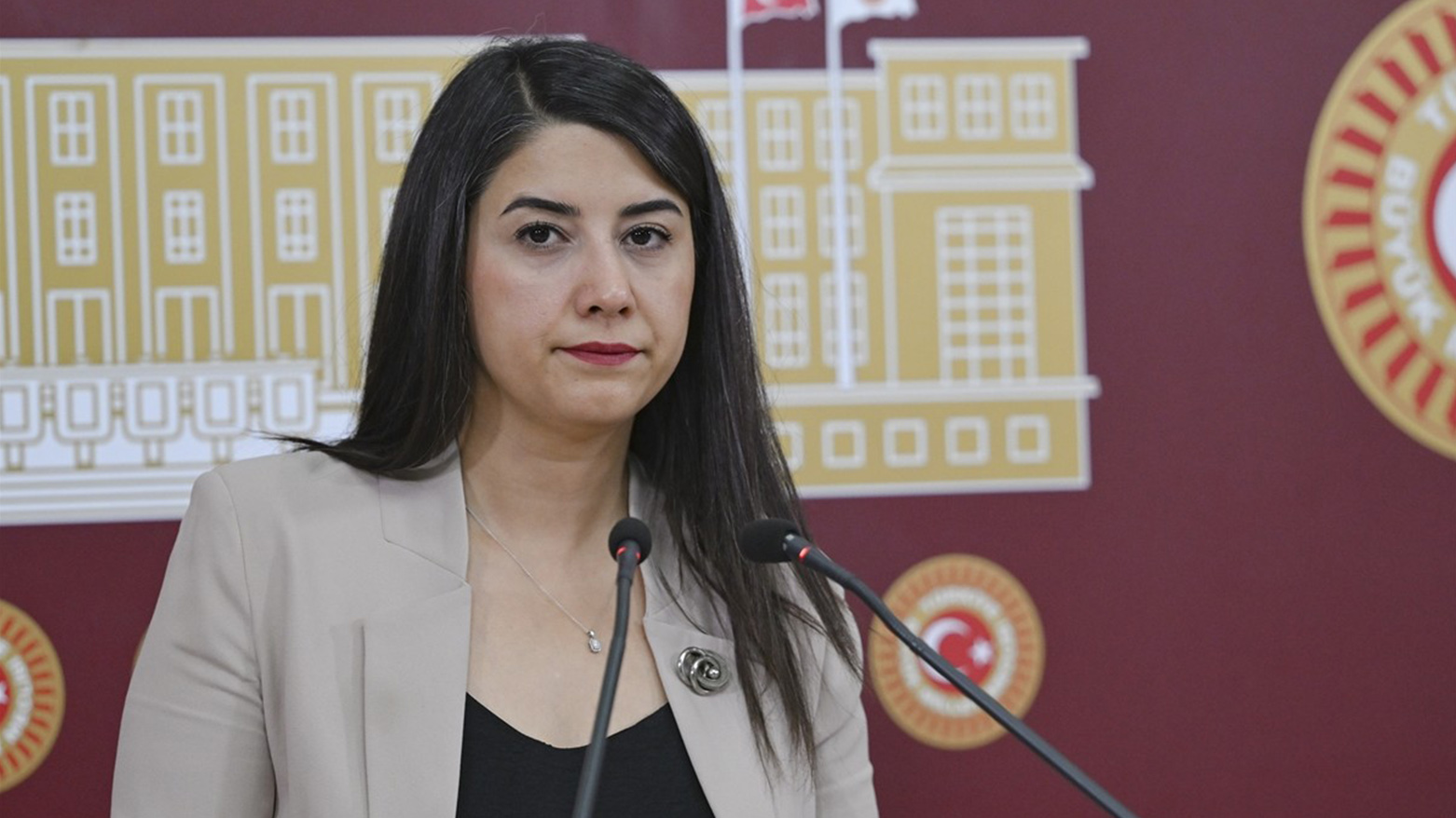
ERBIL (Kurdistan24) - As clashes persist in Aleppo’s Kurdish neighborhoods, a senior lawmaker from Türkiye’s DEM Party warned that calls for peace ring hollow when violence continues beyond the border, arguing that reconciliation and war cannot advance side by side.
DEM Party Member of Parliament Dilan Ayan told Kurdistan24 that her party remains ready to work toward resolving the Kurdish question, but said recent attacks on Kurdish areas in Aleppo and other parts of Rojava cast serious doubt on the government’s sincerity.
“Peace and War Cannot Move Together’,” Ayan said, stressing that peace and war cannot move together.
Speaking to Kurdistan24 about the work of the team that drafted the report titled “The Peace Process,” Ayan said the DEM Party has submitted its comprehensive report to the relevant commission and clearly outlined its core demands.
Ayan explained that the foundation of any solution lies in the formal recognition of Kurdish identity and the guaranteed right to education in the mother tongue. Within this framework, the DEM Party’s report calls for ending the policy of appointing trustees and respecting the political will of the Kurdish people and the outcomes of local elections. She described this demand as a central step toward democratizing the country and rebuilding trust between society and the state.
She added that the report also emphasizes the need for deep legal reforms, identifying the implementation of rulings by the European Court of Human Rights and the Constitutional Court as key requirements.
Ayan further stated that for a genuine and successful process, Abdullah Ocalan must be recognized as a fundamental actor in any resolution, and that appropriate conditions should be created to enable communication with him so he can play what she described as his historical role in building a lasting and dignified peace.
Ayan sharply criticized Türkiye’s policies toward Syrian Kurds, drawing attention to attacks on Sheikh Maqsud, Ashrafiyeh, and most recently Deir Hafir.
“You cannot speak of peace at home while supporting attacks on Kurds in Rojava Kurdistan and Aleppo,” she said. “This approach undermines public trust in the process. Kurdish rights across the four parts are interconnected. As long as Kurdish blood is being shed in Rojava, achieving a lasting peace in Türkiye will be difficult.”
The remarks come as new figures obtained by Kurdistan24 reveal the scale of the human toll in Aleppo’s Kurdish neighborhoods. According to the data, at least 216 people were killed during clashes between the Internal Security Forces in Aleppo (Asayish) and the Syrian Arab Army in Ashrafiyeh and Sheikh Maqsud, with the figure reflecting fatalities from both sides. More than 260 civilians remain missing.
A source from the Kurdish Red Crescent in the Kurdish neighborhoods told Kurdistan24 that the deaths of 216 individuals have been confirmed so far, warning the toll may rise as search operations continue. The source said teams have completed searches in Ashrafiyeh, while only about 60 percent of Sheikh Maqsud had been covered.
The same source said that on Tuesday afternoon the Syrian Arab Army allowed the first convoy of displaced residents who had been sheltering in Afrin to return to Ashrafiyeh.
Separately, Mustafa Sheikho, a member of Syrians for Truth and Justice, told Kurdistan24 that 260 Kurdish civilians have gone missing since the clashes, including 12 women and seven children whose fate remains unknown. He said the organization continues to track and investigate all missing cases.
According to the information provided, the Syrian Arab Army launched an assault following unrest earlier this month, and beginning on the tenth of the month more than 40,000 fighters, backed by heavy weapons, attacked the two Kurdish neighborhoods. After five days of fighting, both Ashrafiyeh and Sheikh Maqsud fell under Syrian control.