KRG Rejects Iraqi Accusations Over Port Revenues, Warns of Legal Action
KRG Ministry of Finance and Economy says claims by Iraq’s Border Ports Commission are “baseless,” citing corruption, double customs, and budgetary violations by Baghdad.
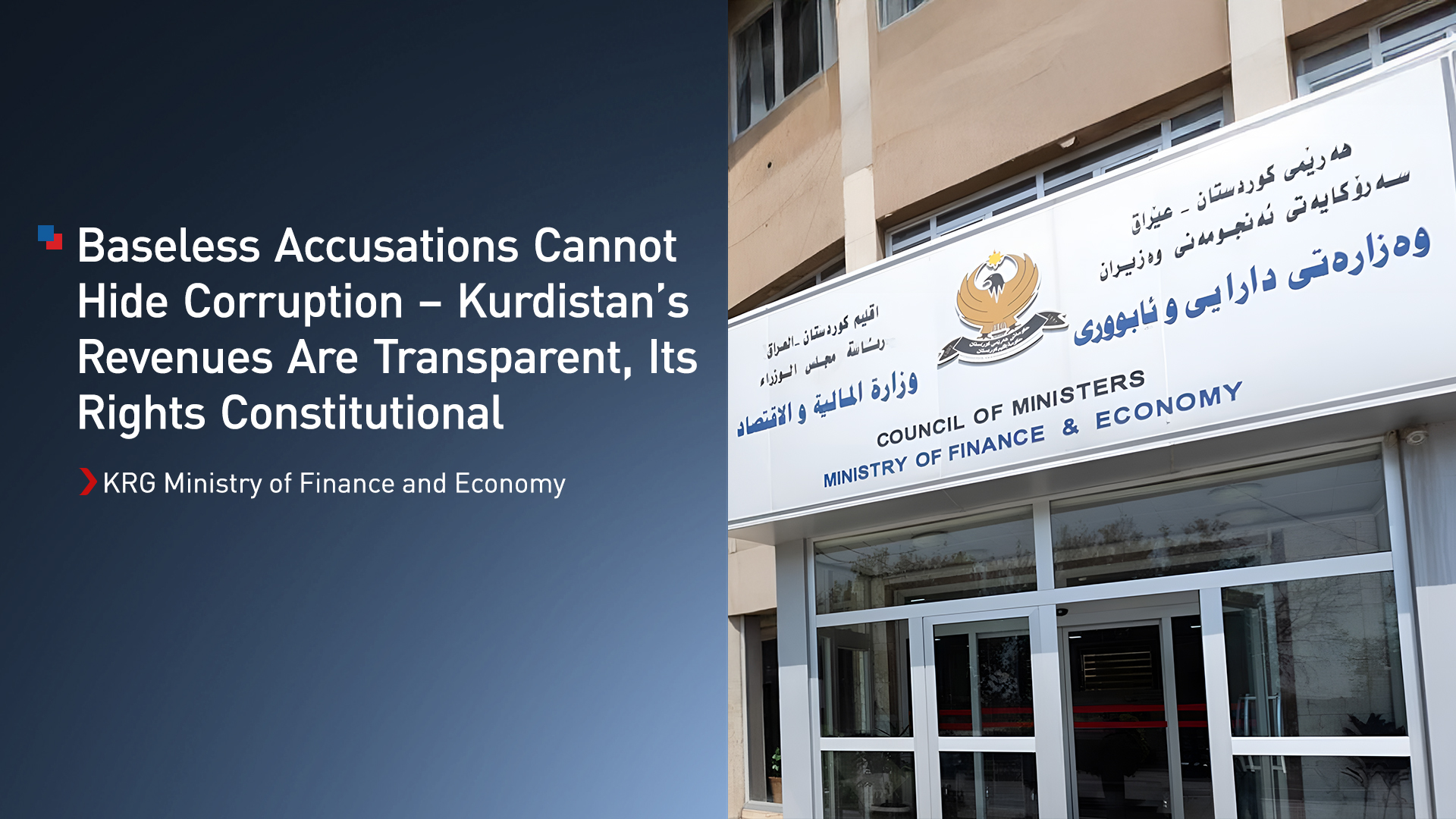
ERBIL (Kurdistan24) — The Kurdistan Regional Government’s (KRG) Ministry of Finance and Economy on Thursday strongly rejected accusations by Iraq’s Border Ports Commission that the Kurdistan Region was responsible for declining federal port revenues, describing the claims as misleading, legally unfounded, and politically motivated.
In a detailed statement issued on Thursday, the ministry responded to remarks made by Omar al-Waeli, head of the Iraqi Border Ports Commission, during a session of the Iraqi Council of Representatives on Sunday.
The KRG said the comments were delivered “in violation of all legal and administrative norms,” noting that no representative of the Kurdistan Regional Government was present during the session.
The ministry accused al-Waeli of overstepping his authority by addressing issues unrelated to his mandate, including public sector salaries and oil revenues, while leveling what it called “a series of baseless accusations” against customs and border crossings in the Kurdistan Region.
Addressing claims of declining revenues at federal border crossings, the ministry said that if such a decline exists, it is largely due to corruption and mismanagement within the federal system.
It cited administrative and financial corruption, collusion with smugglers and certain tribal figures, widespread “settlements” and exemptions granted to trucks, and the abrupt implementation of higher tariffs without a phased plan. The ministry also noted that customs revenues naturally fluctuate due to seasonal trade patterns.
The statement highlighted contradictions in al-Waeli’s own remarks, pointing out that he had previously claimed a 100% increase in revenues—an increase the KRG said was driven by a flawed “per-container” customs system that temporarily diverted trade away from Kurdistan Region border crossings to federal ones.
On accusations that goods were entering Iraq through the Kurdistan Region to avoid federal tariffs, the ministry said the claims were “entirely unfounded,” asserting instead that prohibited goods often enter through federal ports and are later smuggled into the Region.
It added that when goods enter through Kurdistan Region crossings at lower tariffs, federal internal customs checkpoints collect the difference, meaning merchants—not the Region—bear the cost.
The ministry also criticized Baghdad’s lack of seriousness in unifying customs tariffs, calling tariff unification a prerequisite for implementing joint systems such as ASYCUDA. It said technical integration is impossible under divergent tariff regimes and stressed that repeated KRG requests for joint committees had gone unanswered.
Regarding the status of border crossings, the KRG reiterated its call for formal federal recognition, noting that crossings described by Baghdad as “unofficial” are fully recognized by the Kurdistan Regional Government as well as by Iran and Turkey, and have completed all required procedures.
The statement further accused the federal government of undermining customs revenues by establishing internal customs checkpoints—such as those in Al-Sad, Chiman, and Dareman—between the Kurdistan Region and federal provinces.
The ministry said these checkpoints amount to double taxation, create barriers to trade, and have become centers of bribery and corruption, forcing merchants to relocate their trade routes and warehouses away from the Region.
Responding to al-Waeli’s remarks on salaries and oil revenues, the ministry stressed that the Kurdistan Region’s share of the federal budget is a constitutional right, not “a gift or charity.” It accused Baghdad of systematically withholding salaries over the past 12 years, including during the war against ISIS and the COVID-19 pandemic.
According to the statement, of approximately 94 trillion dinars owed to the Region over the past seven years, only 33 trillion dinars were transferred—covering just three years of salaries.
The ministry also rejected claims that the Kurdistan Region benefited from Basra’s oil, arguing that Iraq was historically built on oil from Kirkuk and Kurdistan. It said that when the Region independently exported oil, it was able to pay salaries and manage its finances for 21 months without Baghdad, before federal authorities halted those exports through proceeding legal actions.
The statement concluded by rejecting what it called attempts to use the issue of Kurdistan Region salaries to obscure federal administrative and financial failures, including major corruption scandals.
It emphasized that all customs revenue data from the Region is available to Iraq’s Ministry of Finance, while citing former Iraqi finance officials who have said that up to 90% of federal border revenues fail to reach the public treasury.
Reaffirming its position, the KRG Ministry of Finance and Economy said it was prepared to substantiate all its claims and reserved the right to pursue legal action against any individual or official who continues to level accusations against the Kurdistan Region.