U.S. Envoy to Iraq on Upcoming Visit: 'I Will Engage With the Right Decision-Makers'
U.S. envoy Mark Savaya met with War Secretary Pete Hegseth and Director Sebastian Gorka to finalize an Iraq strategy ahead of a visit to confront instability and engage decision-makers.
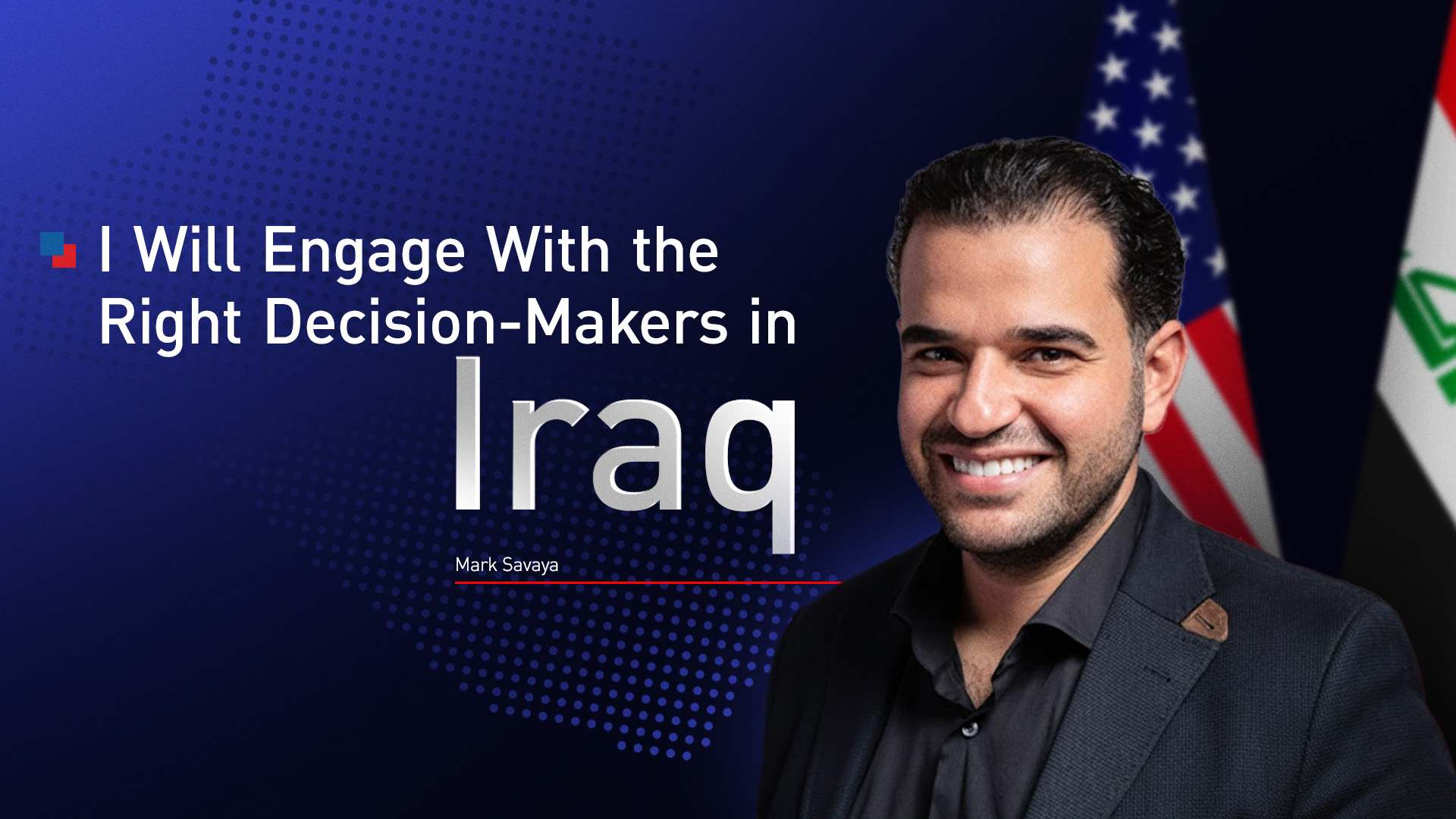
ERBIL (Kurdistan24) - Mark Savaya, the United States President’s representative for Iraqi affairs, announced on Friday that he has concluded high-level strategic discussions at the White House with senior administration officials, confirming plans for an imminent diplomatic mission to Iraq aimed at directly addressing the country's security and political challenges.
In a statement published on the social media platform X on Friday, Jan. 16, 2026, Savaya disclosed that he had met with Pete Hegseth, identified in the report as the U.S. Secretary of War, and Dr. Sebastian Gorka, the Director of the Counterterrorism Center within the Trump administration.
The meetings focused on solidifying a U.S. approach to the current situation in Iraq, with Savaya releasing several photographs documenting the sessions at the White House.
According to Savaya’s statement, the discussions resulted in a consensus on key policy issues that will form the agenda of his upcoming travel.
"Today, I finalized a meeting at the White House with Secretary of War Pete Hegseth and Dr. Sebastian Gorka, Director of Counterterrorism," Savaya wrote. He elaborated that the officials "agreed that the issues discussed will be addressed during my upcoming visit to Iraq."
The envoy emphasized that his forthcoming trip involves a specific mandate to interact with influential figures capable of shaping the country's trajectory.
"I will engage with the right decision makers to confront the situation on the ground for the benefit of the Iraqi people," Savaya stated in his post. He concluded his message with a declaration aligning his mission with the broader rhetoric of the administration, writing, "We will make Iraq great again."
Escalating Tensions and Policy Shifts
The White House meetings follow a series of assertive public declarations by Savaya regarding Washington’s policy toward Baghdad for the year 2026. On Jan. 1, the envoy issued a blunt New Year’s message that signaled a departure from previous diplomatic tones, explicitly warning "corrupt actors" that their influence would no longer be tolerated.
In that earlier address, Savaya characterized 2026 as a pivotal year intended to end a long list of systemic issues plaguing the state. He outlined an ambitious agenda to confront instability, uncontrolled weapons, militias, foreign interference, and the plundering of national resources.
He specifically targeted "bogus contracts, embezzlement, the circumvention of the law," as well as social grievances such as poor services and inequality. "Your time is over, and the time of Iraq and the Iraqi people has begun," Savaya warned in his New Year statement.
This aggressive stance on disarming militias and consolidating state authority has already triggered significant pushback from armed factions within Iraq, setting the stage for the contentious environment Savaya intends to navigate during his visit.
Factions Resist Disarmament Calls
The U.S. envoy’s focus on limiting weapons exclusively to the authority of the Iraqi state has sparked a fierce debate among Iraq’s political and paramilitary groups.
Three major armed factions have publicly rejected calls to surrender their weaponry, issuing statements that condition any disarmament on the total withdrawal of foreign forces.
Kataib Hezbollah, one of the most active factions, stated to local media that any understanding regarding weapons control would be contingent upon the departure of U.S., NATO, and Turkish forces.
The group also demanded assurances regarding what it described as threats linked to the governing system in neighboring Syria. In a statement addressing those calling for disarmament, the group asserted, "Those entrusted with weapons to protect their people... must return the weapon to its source, because it does not belong to them."
The faction argued that achieving national sovereignty and removing foreign presence are primary prerequisites for restricting weapons to the state.
Similarly, the al-Nujaba Movement has expressed firm opposition to the U.S. agenda. Abdul Qader al-Karbalaei, the movement's military deputy, accused the United States of disregarding withdrawal agreements and interfering in Iraq’s internal affairs.
Al-Karbalaei alleged that Washington was arming separatist militias and training terrorist groups to destabilize the country, characterizing the U.S. presence as an occupation that must be ended by "all legitimate means of resistance."
The resistance to Savaya’s policy is not uniform, however, revealing fissures within Iraq's political landscape. While Kataib Sayyid al-Shuhada, led by Abu Alaa al-Walai, dismissed statements about uncontrolled weapons as "empty," other leaders within the Shiite Coordination Framework have supported state control.
Figures such as Shibl al-Zaidi, leader of Kataib Imam Ali, and Haider al-Gharawi of the Ansar Allah al-Awfiyaa Movement, have issued calls for disarmament, highlighting the complex internal rivalries Savaya will face when he engages with "decision makers" in Baghdad.
As the U.S. envoy prepares for his mission following his consultations with Secretary Hegseth and Director Gorka, the divergence between Washington's push for stability and the entrenched positions of armed factions suggests a period of intensifying political confrontation in Iraq.