European Allies Deploy Forces to Greenland Following Stalled U.S. Talks Over Territory’s Future
European nations deployed troops to Greenland to support Denmark after talks with the U.S. failed to halt President Trump's bid to acquire the territory.
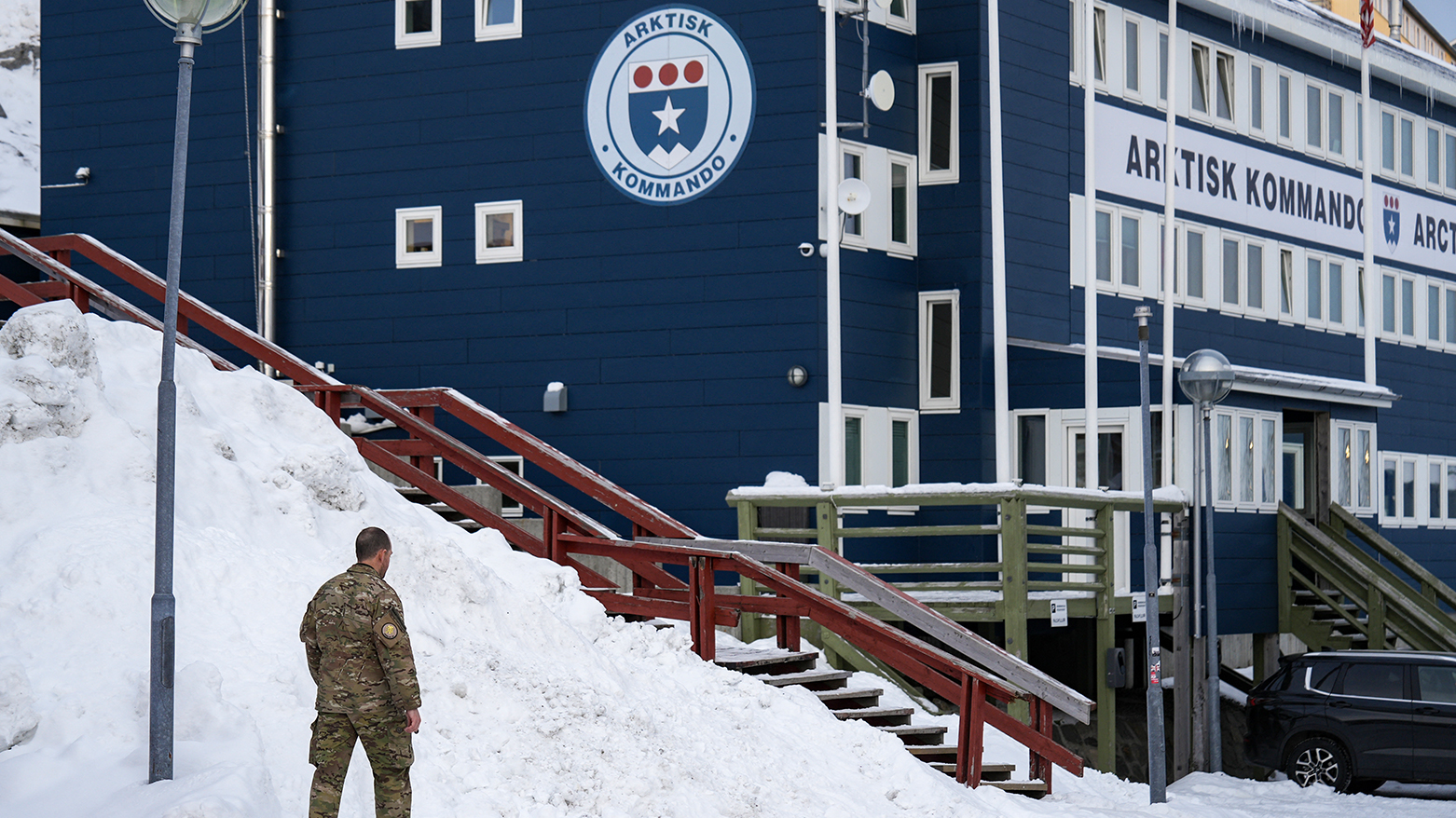
ERBIL (Kurdistan24) – European nations have initiated the deployment of military personnel to Greenland to support Danish sovereignty, signaling a unified front against United States President Donald Trump’s continued insistence on acquiring the autonomous territory. The maneuvers began Thursday, hours after high-level diplomatic talks in Washington failed to resolve the impasse between the United States and the Kingdom of Denmark regarding the island's future status.
According to reports from The Financial Times and Reuters, troops from Sweden, Norway, Germany, France, and the United Kingdom have arrived or are en route to Greenland at Copenhagen's request.
While the initial deployments are modest in number, officials describe the move as a symbolic warning that the North Atlantic Treaty Organization (NATO) views the defense of the Arctic island as a collective concern.
The deployment coincides with warnings from European leaders that unilateral U.S. action could fracture the transatlantic alliance.
Diplomatic Deadlock in Washington
The military mobilization follows a contentious meeting in Washington on Wednesday between the foreign ministers of Denmark and Greenland, Lars Løkke Rasmussen and Vivian Motzfeldt, and U.S. officials, including Vice President JD Vance and Secretary of State Marco Rubio.
The Guardian reported that the meeting, intended to smooth relations, concluded without a breakthrough. Instead, the parties agreed to establish a working group to discuss Arctic security, leaving the core dispute unresolved.
Following the talks, Danish Prime Minister Mette Frederiksen issued a statement acknowledging the friction. “It does not change the fact that there is a fundamental disagreement because the American ambition to take over Greenland is intact,” Frederiksen said, as cited by The Guardian.
She characterized the situation as serious, emphasizing that Denmark is continuing efforts to prevent a U.S. takeover from becoming reality.
The Financial Times reported that President Trump has maintained that the U.S. “has to have” Greenland, vowing to acquire it through purchase, military action, or other means. American officials have justified this stance by citing the necessity of enhancing Arctic security against competitors.
Allied Troop Movements and "Operation Arctic Endurance"
In response to the escalating rhetoric, two C-130J military transport planes landed at Greenland’s airports in Nuuk and Kangerlussuaq on Thursday carrying troops from allied countries.
The Financial Times noted that the deployment is part of a Danish-led exercise termed "Operation Arctic Endurance."
Reuters provided a breakdown of the international contributions, reporting that Germany deployed a reconnaissance team of 13 personnel to explore frameworks for maritime surveillance.
France sent approximately 15 soldiers from its mountain infantry unit, with French President Emmanuel Macron promising further reinforcement by land, air, and naval assets.
"If the sovereignty of a European and allied country were to be affected, the cascading consequences would be unprecedented," Macron told his cabinet, according to The Financial Times.
Additional personnel include three officers from Sweden, two from Norway, two military liaison officers from Finland, one navy officer from the Netherlands, and one British officer joining the reconnaissance group, making the total number of the troops sent to Greenland 37.
Denmark’s Defense Minister Troels Lund Poulsen told journalists that while final figures are not set, it is clear that NATO will plan for a "larger and more permanent presence throughout 2026," Reuters reported.
U.S. Dismisses Deployment as President Trump Cites Security Threats
Despite the show of European unity, the White House has publicly dismissed the military maneuvering. White House spokesperson Karoline Leavitt stated on Thursday that the presence of European troops would not alter President Trump’s objectives.
“I don't think troops in Europe impact the president's decision-making process, nor does it impact his goal of the acquisition of Greenland at all,” Leavitt said, according to ABC News.
President Trump has intensified his justification for the acquisition by claiming that Russian and Chinese military assets pose an imminent threat to the island. “If you take a look outside of Greenland right now, there are Russian destroyers, there are Chinese destroyers and, bigger, there are Russian submarines all over the place,” President Trump said, as quoted by ABC News.
However, independent experts and regional officials have disputed these claims.
ABC News cited Professor Andreas Østhagen of Norway's Fridtjof Nansen Institute, who dismissed the alleged presence of Russian and Chinese ships near the island as "insignificant."
Professor Østhagen noted that China's Arctic presence remains primarily in the North Pacific and Bering Sea, far from Greenland, while Russia’s activity is concentrated in the European Arctic near Norway.
Reuters reported that the Russian government also rejected the U.S. claims, with Moscow stating that talk of a Russian threat to Greenland was a "myth designed to whip up hysteria," though it warned that ignoring Russian interests in the region would not go unanswered.
Strategic Context and U.S. Presence
The dispute is complicated by the existing, significant U.S. military footprint on the island.
ABC News detailed the history of the U.S. presence, which dates back to a 1941 treaty allowing access to protect the territory during World War II. Today, the U.S. operates the Pituffik Space Base (formerly Thule Air Base) in northwestern Greenland.
According to ABC News, Pituffik is the U.S. military's northernmost installation, hosting missile warning and space surveillance missions with approximately 200 U.S. troops.
In June, the Trump administration shifted responsibility for Greenland from the U.S. European Command to the U.S. Northern Command to strengthen homeland defense capabilities.
Experts argue that this existing access renders a takeover unnecessary for security purposes.
"If you take that argument seriously about a wider security threat... you would imagine that the US would just utilize the opportunity it already has to station more troops," Professor Østhagen told ABC News.
Fears for NATO's Future
The escalating standoff has raised concerns regarding the stability of the NATO alliance, of which the U.S., Denmark, and the deploying European nations are members.
Reuters reported that prominent EU countries have warned that a U.S. military seizure of a territory within NATO could spell the end of the alliance.
Professor Østhagen echoed this assessment in his interview with ABC News, stating, "If the U.S. were actually to push this further, not only rhetorically, but also by other means, use of military force, then the downfall would be the break-up of the NATO alliance."
The sentiment of resistance was palpable in Copenhagen, where Greenland Premier Jens-Frederik Nielsen addressed a gathering on Thursday.
According to Reuters, Nielsen received a standing ovation after declaring, "We choose the Greenland we know today, as part of the Kingdom of Denmark."
Broader Shifts in European Defense
The tensions over Greenland are unfolding amidst a wider recalibration of European defense policies. The Financial Times reported that Austria, a militarily neutral state, announced amendments to its foreign trade law on Thursday to ease export controls on dual-use goods.
The changes, outlined in a government document, pledge to overhaul export controls under a "Europe First" section, aiming to digitalize and accelerate processes for industrial and tech companies.
The Financial Times noted that while Austria does not build tanks, it has a significant footprint in components used in weapon systems. The move reflects a quiet repositioning by neutral states to accommodate the continent's defense spending boom in response to the changing geopolitical environment.
As European troops arrive in Nuuk to participate in joint exercises, the diplomatic impasse remains.
A delegation of U.S. lawmakers is scheduled to meet with Prime Minister Frederiksen and Premier Nielsen in Copenhagen on Friday, Reuters reported, as officials attempt to navigate a crisis that challenges the foundational assumptions of transatlantic security.