SDF Withdraws From Deir Hafer as Syrian Arab Army Enters City
SDF forces withdrew from Deir Hafer, Syrian Arab Army units entered the city, and authorities urged civilians to stay out until security operations and mine clearance are completed.
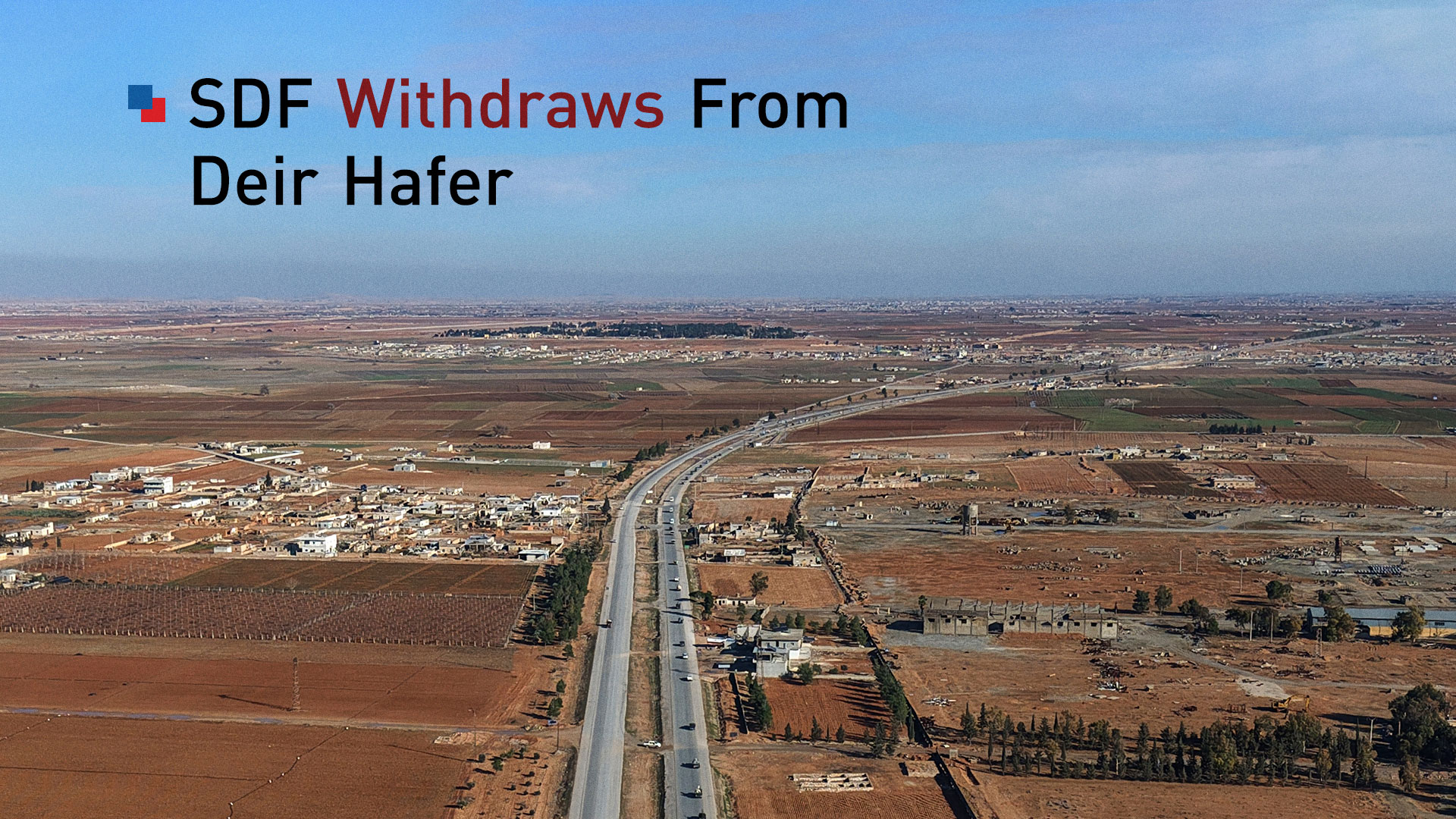
ERBIL (Kurdistan24) - The Syrian Democratic Forces withdrew from the city of Deir Hafer in eastern Aleppo province, and units of the Syrian Arab Army subsequently entered the city, according to information released minutes earlier and statements carried by Syrian state media.
The development was confirmed as the Operations Body of the Syrian Arab Army issued a public call urging civilians not to enter previously designated military zones in the eastern countryside of Aleppo until government forces complete security operations, including the removal of mines and remnants of war, according to a statement carried by SANA.
The withdrawal marks a significant change in control on the ground in Deir Hafer, a city that has been at the center of heightened military activity and competing claims in recent days.
The brief announcement stated that SDF forces had pulled out of the city, followed by the entry of Syrian government troops, without providing additional operational details or timelines.
In its statement, the Operations Body of the Syrian Arab Army emphasized civilian safety, calling on residents to remain outside the operations zone until the area is secured.
The statement said the measures are intended to allow army units to finish clearing mines and unexploded ordnance left from previous fighting, warning that premature civilian movement could pose serious risks.
The withdrawal follows public remarks made a day earlier by Mazloum Abdi, the general commander of the Syrian Democratic Forces, who announced that SDF units would withdraw from contact lines east of Aleppo as a goodwill gesture and in response to calls from mediators and friendly countries.
In a statement posted on his official X account, Abdi said the decision was tied to the SDF’s commitment to implementing the March 10 agreement and to redeploy forces to areas east of the Euphrates.
“Based on calls from friendly countries and mediators, and as a demonstration of our goodwill in completing the integration process and our commitment to implementing the provisions of the March 10 agreement, we have decided to withdraw our forces,” Abdi said, adding that the move would take place at 7:00 a.m. from the current contact areas east of Aleppo.
Abdi’s announcement came amid reports by the SDF Media Center of intense artillery shelling by Syrian government forces on Deir Hafer over several days.
In urgent statements issued on Jan. 16, the SDF said the city had been subjected to heavy and sustained artillery bombardment, describing the shelling as part of a broader escalation rather than an isolated incident.
According to those statements, SDF field sources said the use of heavy weapons and artillery posed a serious threat to the stability of Deir Hafer and the safety of its residents.
The SDF warned that continued escalation risked further complicating the situation on the ground, particularly as residential neighborhoods were affected.
The reported withdrawal and subsequent entry of Syrian Arab Army units into Deir Hafer also follow the army’s earlier declaration of several SDF-held areas in the Aleppo countryside as closed military zones. Syrian state media had reported that these areas were designated as such ahead of operations by government forces.
The eastern Aleppo front has seen repeated exchanges of statements from both sides over recent days, including reports of coalition involvement.
Kurdish officials previously said a delegation from the U.S.-led international coalition, accompanied by a large number of coalition forces, met with SDF commanders in Deir Hafer and nearby Maskanah as shelling and drone attacks continued in the area. A Syrian military source separately confirmed that a coalition convoy had entered the area.
Those meetings coincided with ongoing artillery fire, according to SDF statements, including claims that more than twenty shells struck Deir Hafer within one hour and that an explosive-laden drone was used in an attack targeting populated areas.
The SDF said at the time that its forces were monitoring developments closely and taking measures to protect residents.
The situation around Deir Hafer has unfolded against a broader political backdrop that includes recent statements by Syrian officials emphasizing national unity and the status of Kurdish citizens.
On Friday, Syrian Foreign Minister Asaad Shaibani issued a statement written in Kurdish, describing Kurds as an “authentic pillar” of the Syrian nation and stressing the unity of Syria’s people. His remarks echoed a newly issued presidential decree formally recognizing Kurdish identity, language, and citizenship rights.
That decree, issued by Syrian Interim President Ahmed al-Sharaa on Jan. 16, affirms that Kurdish citizens are an essential and authentic component of the Syrian people and recognizes their cultural and linguistic identity as an integral part of Syria’s unified national identity.
The decree commits the state to protecting cultural diversity, allows for the teaching of the Kurdish language in areas with significant Kurdish populations, annuls exceptional laws stemming from the 1962 census in Hasakah province, and grants citizenship to residents of Kurdish origin.
While the decree and Shaibani’s remarks addressed political and cultural issues, developments on the ground east of Aleppo have continued to be shaped primarily by military movements and security concerns. The SDF has repeatedly warned that instability in areas such as Deir Hafer could create conditions that threaten civilian safety and broader security.
In previous statements, the SDF also cautioned that deteriorating security conditions could be exploited by ISIS sleeper cells seeking to target detention facilities holding ISIS members. The force said its units remained on high alert and that prisons were secure, but warned that continued escalation could undermine overall stability.
The withdrawal from Deir Hafer appears to align with Abdi’s stated intention to reduce friction along contact lines east of Aleppo and to respond to mediation efforts. However, the brief announcement confirming the SDF’s withdrawal and the Syrian Arab Army’s entry into the city did not specify whether additional coordination mechanisms are in place or how long government forces are expected to maintain control.
The Syrian Arab Army’s call for civilians to stay out of the operations zone underscores ongoing concerns about unexploded ordnance and war remnants in the area. Such warnings are typically issued following changes in control or active military operations, as clearance efforts can take time and pose significant risks to returning residents.
For now, Deir Hafer joins a list of locations in eastern Aleppo where control and security arrangements have shifted rapidly in recent days. The sequence of shelling, mediation efforts, announced withdrawals, and subsequent troop movements highlights the volatility of the situation and the challenges facing all parties involved.
As of the time of publication, neither side had released further details on next steps, and no additional statements were issued regarding civilian returns or longer-term security arrangements in Deir Hafer. The Syrian Arab Army said only that securing the area and removing mines and war remnants would be completed before civilians are advised to return.