Trump Administration Names Blair, Kushner, and Senior U.S. Officials to Advise Gaza Reconstruction Body
The Trump administration named Blair, Kushner, and senior U.S. and international figures to advise a new Gaza reconstruction and governance framework, alongside plans for a security force and a Palestinian technocratic committee.
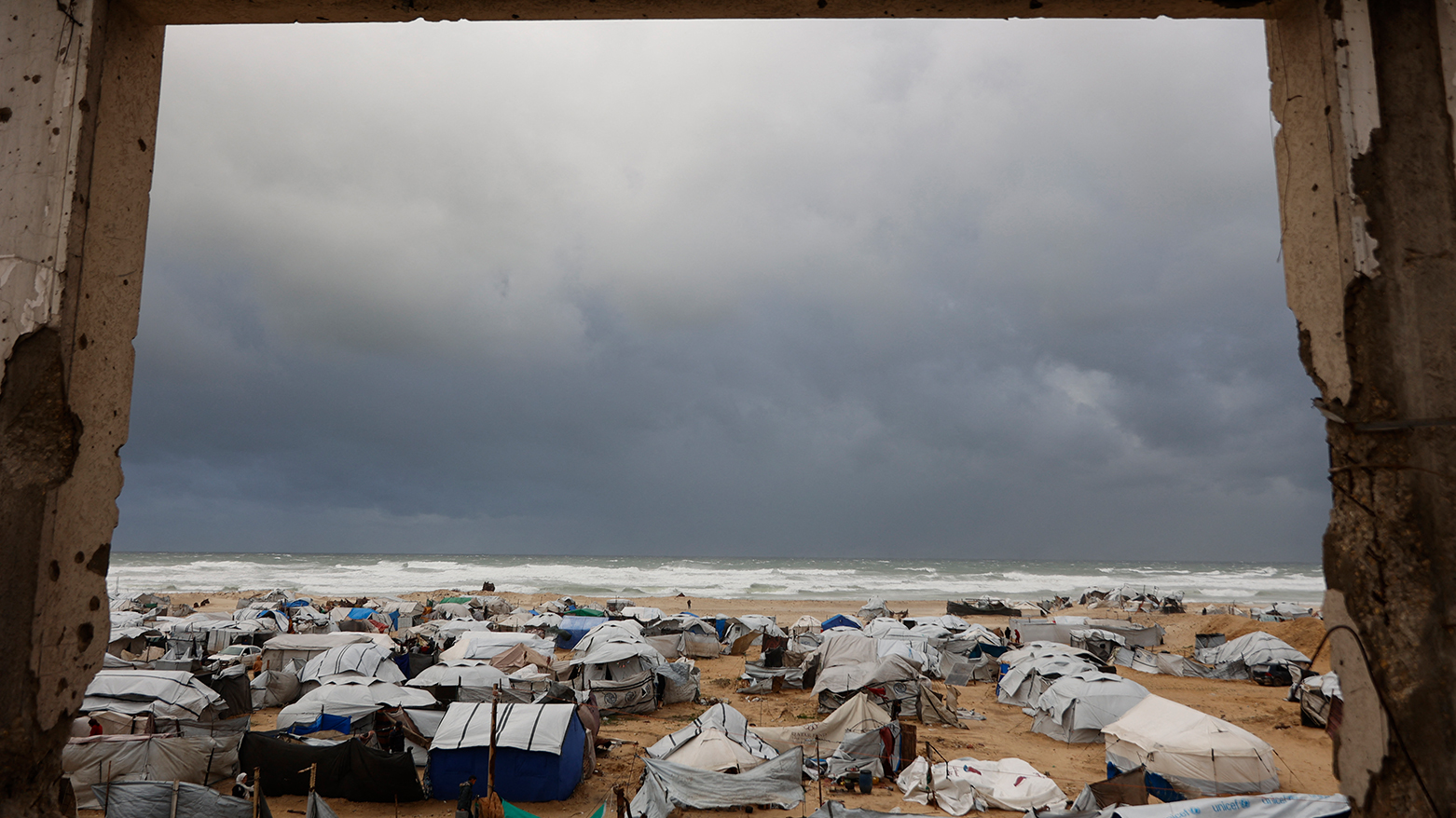
ERBIL (Kurdistan24) - The Trump administration has announced the formation of a new executive advisory structure to guide postwar reconstruction and governance in Gaza, naming former British prime minister Tony Blair, U.S. Secretary of State Marco Rubio, presidential adviser Jared Kushner, and several senior international figures to what the White House has called a “founding executive board,” according to reports by the Financial Times, The Guardian, and Agence France-Presse.
In a statement released late Friday, the White House said the new body would advise a broader “Board of Peace” for Gaza, an initiative proposed by President Donald Trump as part of a 20-point peace plan aimed at rebuilding and administering the Palestinian territory following the cessation of major hostilities.
Trump will chair the board, the administration said, with further appointments expected in the coming weeks.
According to the Financial Times, invitations have been sent to heads of state to participate in the Board of Peace, though its full membership has not yet been announced.
The White House confirmed that the founding executive board would play an advisory role to the larger body, overseeing defined portfolios linked to Gaza’s reconstruction and governance.
These include governance capacity-building, regional relations, reconstruction, investment attraction, large-scale funding, and capital mobilization.
In addition to Blair, Rubio, and Kushner, the White House said the founding executive board will include Steve Witkoff, Trump’s special envoy; Ajay Banga, president of the World Bank; Marc Rowan, chief executive of the private equity firm Apollo Global Management; and Robert Gabriel, a U.S. national security adviser.
Trump himself will serve as chair of the overarching Board of Peace, the administration said.
The Guardian reported that the executive board will initially comprise seven members and that the administration described it as central to steering Gaza through what it called the next phase of reconstruction and governance.
A White House statement cited by the newspaper said the United States remained “fully committed to supporting this transitional framework, working in close partnership with Israel, key Arab nations, and the international community.”
Blair and Kushner have both been previously involved in Trump administration initiatives related to the Israeli-Palestinian conflict.
The Financial Times noted that Blair and Kushner had engaged in earlier peace plans proposed by Trump, while Rowan has been active in philanthropic efforts in Israel.
Blair’s appointment, however, is likely to be contentious in the region, a point highlighted by both the Guardian and AFP, given his role in the 2003 U.S.-led invasion of Iraq.
Trump acknowledged that sensitivity last year, according to both outlets, saying he wanted to ensure Blair was an “acceptable choice to everybody.”
After leaving office in 2007, Blair served as a representative of the Quartet on the Middle East—comprising the United States, the European Union, Russia, and the United Nations—but stepped down in 2015 after criticism that he was perceived as too close to Israeli positions.
The announcement of the executive board follows the establishment of a separate Palestinian technocratic body intended to handle the day-to-day administration of Gaza.
According to the Financial Times, Ali Sha’ath, a former Palestinian Authority official and the only Palestinian so far named in Trump’s Gaza plan, will chair what the White House calls the National Committee for the Administration of Gaza. The committee, made up of 14 to 15 Palestinians, met in Cairo this week, a White House official said.
The White House said the committee would oversee the restoration of core public services, the rebuilding of civil institutions, and the stabilization of daily life in Gaza, while laying the groundwork for long-term, self-sustaining governance.
The Guardian reported that Sha’ath, a Gaza native and former deputy minister in the Palestinian Authority, was described by the administration as a pragmatic technocratic figure with experience in public administration and economic development.
To link the Palestinian committee with the Board of Peace, the administration appointed Nickolay Mladenov, a former Bulgarian defense minister and former United Nations envoy, as “High Representative for Gaza.”
According to the Financial Times, Mladenov is expected to serve as the on-the-ground conduit between the international advisory bodies and the Palestinian administration.
AFP reported that Mladenov attended the Cairo meeting of the Palestinian committee and will liaise between the governing body and Trump’s board.
The White House also outlined plans for a second advisory entity, described as a “Gaza Executive Board,” which will include members of the founding executive board along with additional international figures.
According to the Financial Times and AFP, those named include Turkish Foreign Minister Hakan Fidan, Sigrid Kaag, the United Nations special coordinator for the Middle East peace process, and Israeli-Cypriot billionaire Yakir Gabay.
AFP added that senior representatives from Egypt, Qatar, and the United Arab Emirates would also be included, though the precise roles of this body remain advisory.
In parallel, Trump announced the creation of an International Stabilisation Force to oversee security in Gaza.
The White House named U.S. Major General Jasper Jeffers, a special operations commander, to lead the force.
According to the Financial Times, the force is intended to lead security operations and support what the administration described as comprehensive demilitarization in Gaza. AFP reported that Jeffers would also be tasked with training a new police force to replace Hamas.
Despite earlier statements by Trump that the force would include troops from dozens of Middle Eastern and other partner nations, no country has yet committed personnel, according to the Financial Times.
Important U.S. allies in the region, including Saudi Arabia and Jordan, have said they would not deploy troops to Gaza under any circumstances.
An administration official cited by the Financial Times said it was not yet clear which nations might ultimately participate or to whom the force would formally report, though Mladenov was mentioned as a possible authority.
AFP reported that the United States has been seeking international contributions to the stabilization force, with Indonesia cited as an early volunteer, though diplomats expect difficulties in securing commitments as long as Hamas does not agree to full disarmament.
Israel has rejected a Turkish role in the security force, AFP noted, citing Ankara’s criticism of Israel’s conduct in Gaza.
The broader framework follows a U.S.-brokered ceasefire announced in October that ended more than two years of heavy bombardment in Israel’s war with Hamas.
According to the Financial Times, the ceasefire secured the release of Israeli hostages and increased the flow of humanitarian aid into Gaza.
The Guardian reported that the ceasefire plan has entered a second phase, although aid shortages and sporadic violence have continued to cast uncertainty over the process.
Trump has described the Board of Peace in expansive terms.
The Guardian reported that he referred to it as the “Greatest and Most Prestigious Board ever assembled,” while AFP noted that Trump has previously floated ambitious ideas for economic redevelopment in Gaza, though he has since backed away from proposals involving the displacement of the population.
The White House said additional members of both the executive board and the Gaza executive board would be named in the coming weeks, as the administration seeks to advance its plan for reconstruction, governance, and security in the territory.