Iran’s Supreme Leader Blames U.S. for Protest Casualties
Khamenei accuses the U.S. and Trump of orchestrating Iran's unrest and causing casualties. Vowing to crush "seditionists," the regime faces protests driven by economic collapse and political dissent.
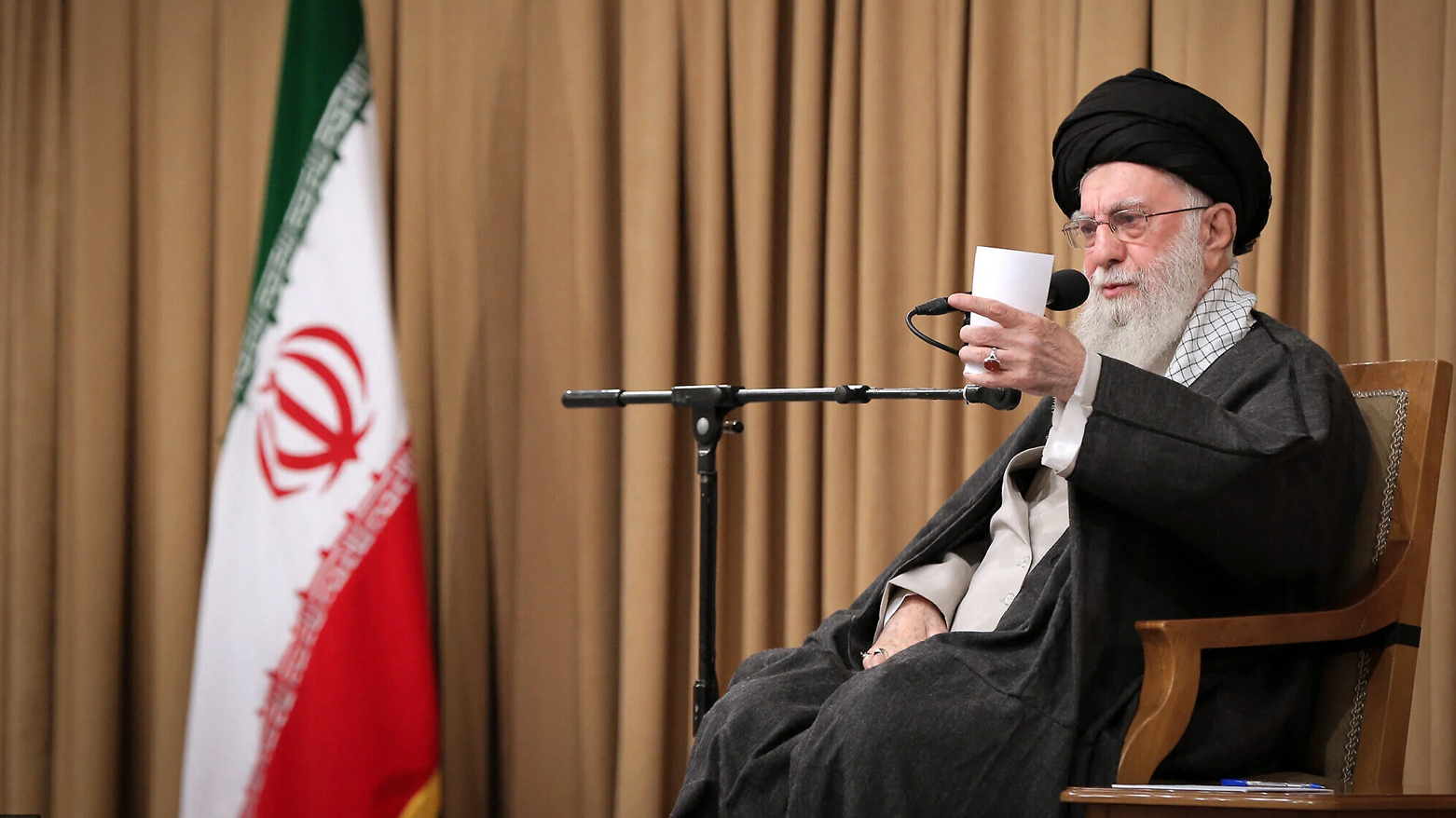
ERBIL (Kurdistan24) - Iran’s Supreme Leader Ayatollah Ali Khamenei explicitly accused the United States and President Donald Trump on Saturday of orchestrating the widespread unrest currently sweeping the nation, asserting that Washington bears responsibility for the casualties resulting from the government’s response. Speaking during an address marking a religious holiday, the Ayatollah framed the weeks-long demonstrations not as a domestic grievance but as a foreign conspiracy designed to subjugate the Islamic Republic.
According to reports from Agence France-Presse (AFP), Ayatollah Khamenei addressed a crowd of supporters on Saturday, delivering his most direct condemnation of American involvement since the unrest began.
"The recent sedition was orchestrated by the US. The US did the planning and took action. The US’s goal is to devour Iran," he stated in comments also published on the social media platform X.
The Supreme Leader emphasized that the ultimate objective of this alleged interference was to place Iran "back under military, political and economic domination."
The Supreme Leader’s remarks signaled a hardening of the state’s position regarding the internal dissent.
AFP reported that Ayatollah Khamenei told his supporters that Iranian authorities "must break the back of the seditionists," referring to those participating in the protest wave against the country's clerical authorities.
"We do not intend to lead the country to war, but we will not spare domestic criminals... worse than domestic criminals, international criminals, we will not spare them either," he said.
He added, "We hold the American president guilty for the casualties, damages and accusations he has levelled against the Iranian nation."
These statements come against a backdrop of severe economic deterioration and escalating violence.
The recent sedition was orchestrated by the US. The US did the planning and took action. The US’s goal is to devour Iran.
— Khamenei.ir (@khamenei_ir) January 17, 2026
Al Jazeera reported that the protests, which broke out in late December 2025, initially began with shopkeepers in Tehran’s Grand Bazaar demonstrating against soaring prices but have since snowballed into a broader challenge to the clerical rulers who have governed Iran since the 1979 Islamic Revolution.
The catalyst for the initial unrest was a dramatic collapse of the national currency.
Al Jazeera noted that the Iranian rial plunged to a record low against the United States dollar in late December. By Monday, the Rial was trading at more than 1.4 million to $1, a stark decline from approximately 700,000 in January 2025.
This devaluation has triggered steep inflation, with food prices averaging 72 percent higher than the previous year and annual inflation hovering around 40 percent.
The economic strain has been exacerbated by a convergence of geopolitical factors. Al Jazeera’s reporting highlights that Iran’s economy is reeling from a 12-day war with Israel in June 2025, which caused significant infrastructural damage in several cities.
Furthermore, in September 2025, the United Nations Security Council voted against permanently lifting economic sanctions, effectively re-imposing them over the country's nuclear program. The situation reached a breaking point in December when the government introduced a new tier in its national fuel subsidy system, raising the price of petrol and further squeezing household finances.
While the initial grievances were economic, the tone of the demonstrations has shifted markedly. Al Jazeera reported that chants have evolved from complaints about inflation to explicit opposition to the clerical establishment.
The human cost of the unrest remains a subject of dispute due to information restrictions. State media has reported that more than 100 security personnel have been killed in recent days. However, opposition activists assert that the death toll is higher and includes hundreds of protesters.
Access to information has been severely curtailed. NetBlocks, an internet watchdog, confirmed that an internet blackout entered its fourth day on Monday. The organization stated that the blackout follows escalating digital censorship measures intended to hinder public communication.
Iranian Foreign Minister Abbas Araghchi told foreign diplomats that connectivity would soon be restored to embassies and government ministries, claiming the blackout was a coordinated security measure.