Inuit Leaders and Advocacy Groups Reject U.S. Acquisition of Greenland
Inuit leaders emphatically reject Trump's bid to acquire Greenland, citing sovereignty concerns and refusing to be geopolitical pawns. CBC News reports widespread local opposition ahead of US-Danish talks.
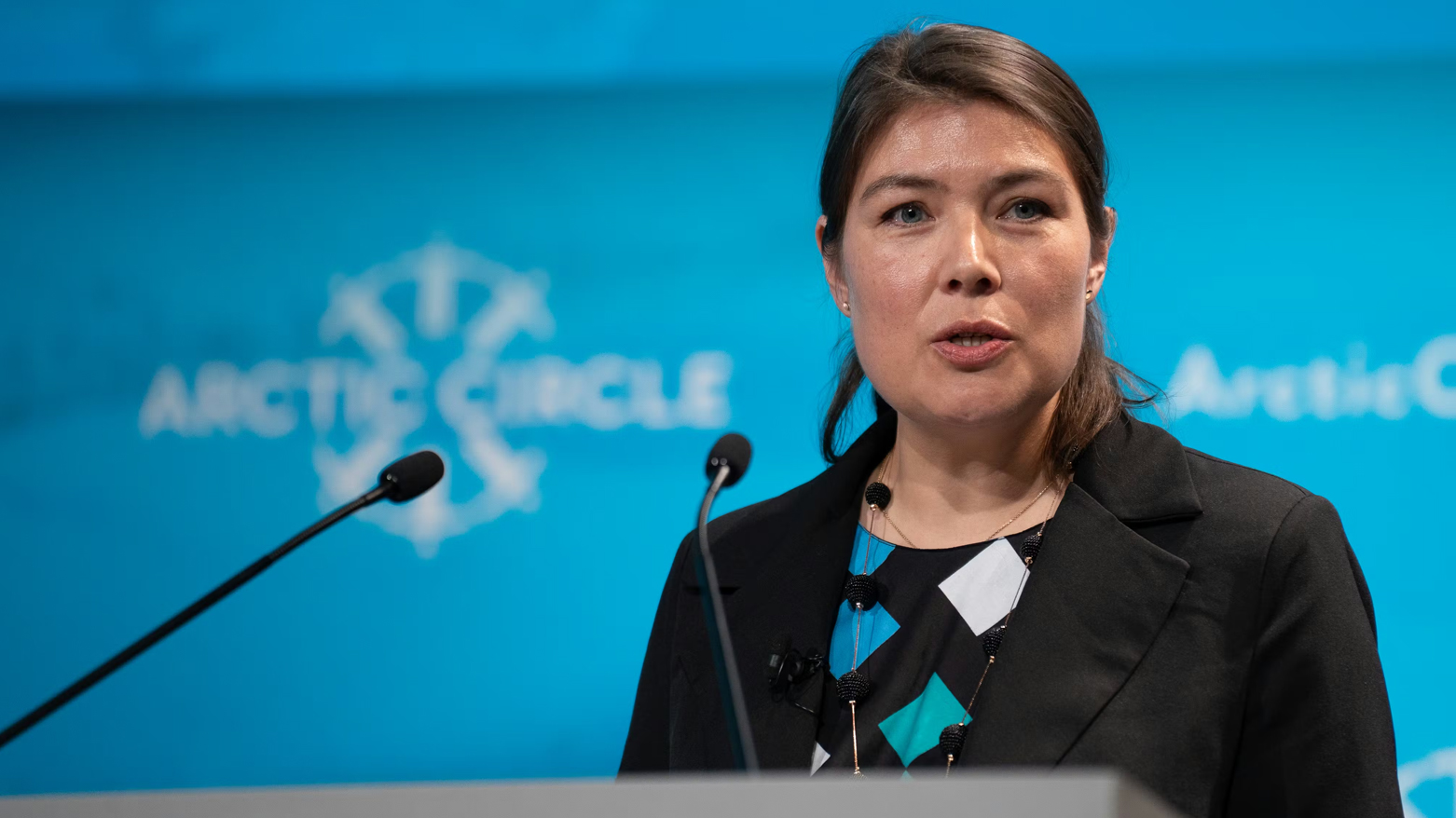
ERBIL (Kurdistan24) - Inuit advocacy organizations and residents of Greenland have issued strong objections to United States President Donald Trump’s declared interest in acquiring the Arctic island for national security purposes, characterizing the potential move as a violation of indigenous sovereignty. According to a report by CBC News, these objections come amid heightened geopolitical tensions and high-level meetings between American, Danish, and Greenlandic officials in Washington.
The backlash follows President Trump’s assertion that the United States requires control of Greenland to secure its national interests. This position has prompted immediate concern among Greenlanders regarding their own security and political status.
Leading voices in the Inuit community have publicly criticized the initiative, stating that they are weary of their homeland being treated as a strategic asset by foreign powers.
Sara Olsvig, the chair of the Inuit Circumpolar Council and a former member of both the Greenlandic and Danish parliaments, articulated the community's resistance in an interview with CBC News. Olsvig emphasized that the indigenous population has extensive historical experience with external governance and is opposed to exchanging one form of foreign oversight for another.
"We want to say loud and clear that there's no such thing as a better colonizer," Olsvig said. She further explained that the Inuit people are acutely aware of the negative consequences that arise "when decisions are taken thousands of kilometres away from us."
The sentiment expressed by Olsvig is supported by recent public opinion data.
CBC News cited a poll conducted by the Verian Group which indicates that the vast majority of Greenlanders do not wish to become American citizens.
The same polling data suggests that a majority of the population also does not wish to be identified as Danes, reflecting a strong internal desire for self-determination rather than a shift in allegiance to a different global power.
Despite this local opposition, the Trump administration has continued to pursue the territory, citing potential threats from rival nations.
President Trump has suggested that if the United States does not assume control of Greenland, global competitors such as Russia or China eventually will.
However, this rationale has been disputed by officials from multiple governments. CBC News reported that China has explicitly rejected the claim that it poses a threat to the island.
Additionally, Senator Chris Coons, a Democrat from Delaware and member of a congressional delegation to Copenhagen, stated that "there is no imminent threat to Greenland from the Chinese and the Russians."
The anxiety within the Inuit community extends beyond political rhetoric to fears of tangible loss of rights.
Laakkuluk Williamson, an Iqaluit resident with Greenlandic heritage, told CBC News that there is a genuine fear that Greenland could become the Arctic equivalent of U.S. overseas territories such as American Samoa or Puerto Rico. In such territories, residents are subject to U.S. sovereignty but lack full constitutional protections and voting representation in Congress.
Williamson noted that recent U.S. foreign policy actions, specifically the capture and arrest of Venezuelan President Nicolás Maduro, have served as a "wakeup call" for Greenlanders regarding American capabilities and intentions.
Given Greenland’s population of approximately 56,000, Williamson expressed concern that the island would have little capacity to resist a determined annexation effort by the United States.
"The ability for [Trump] to annex the entire island is not far-fetched," she told CBC News, describing the prospect as "terrifying" for the safety of her family and the preservation of the Inuit homeland.
Aaju Peter, a lawyer born in Greenland who now resides in Iqaluit, acknowledged the power asymmetry but insisted that any engagement must respect international law.
Peter told CBC News that while Greenlandic leaders are willing to engage in diplomatic dialogue with the White House, such talks must be predicated on the understanding that "Greenlandic Inuit are sovereign and they can make their own decisions." She argued that the current U.S. approach flouts the Inuit right to self-determination.
Olsvig also appealed for the preservation of established international norms in the region, advocating for the continued relevance of forums like the Arctic Council. "We've been able to maintain a zone of peace in the Arctic even through difficult times before," she said, calling on world leaders to rely on diplomacy and mutual respect.