Abdullah Öcalan Warns Escalation in Syria Threatens Regional Peace Process
Abdullah Öcalan warned that Syrian violence sabotages peace efforts and called for dialogue. This aligns with a US-Kurdish summit in Erbil hosted by President Barzani to promote stability.
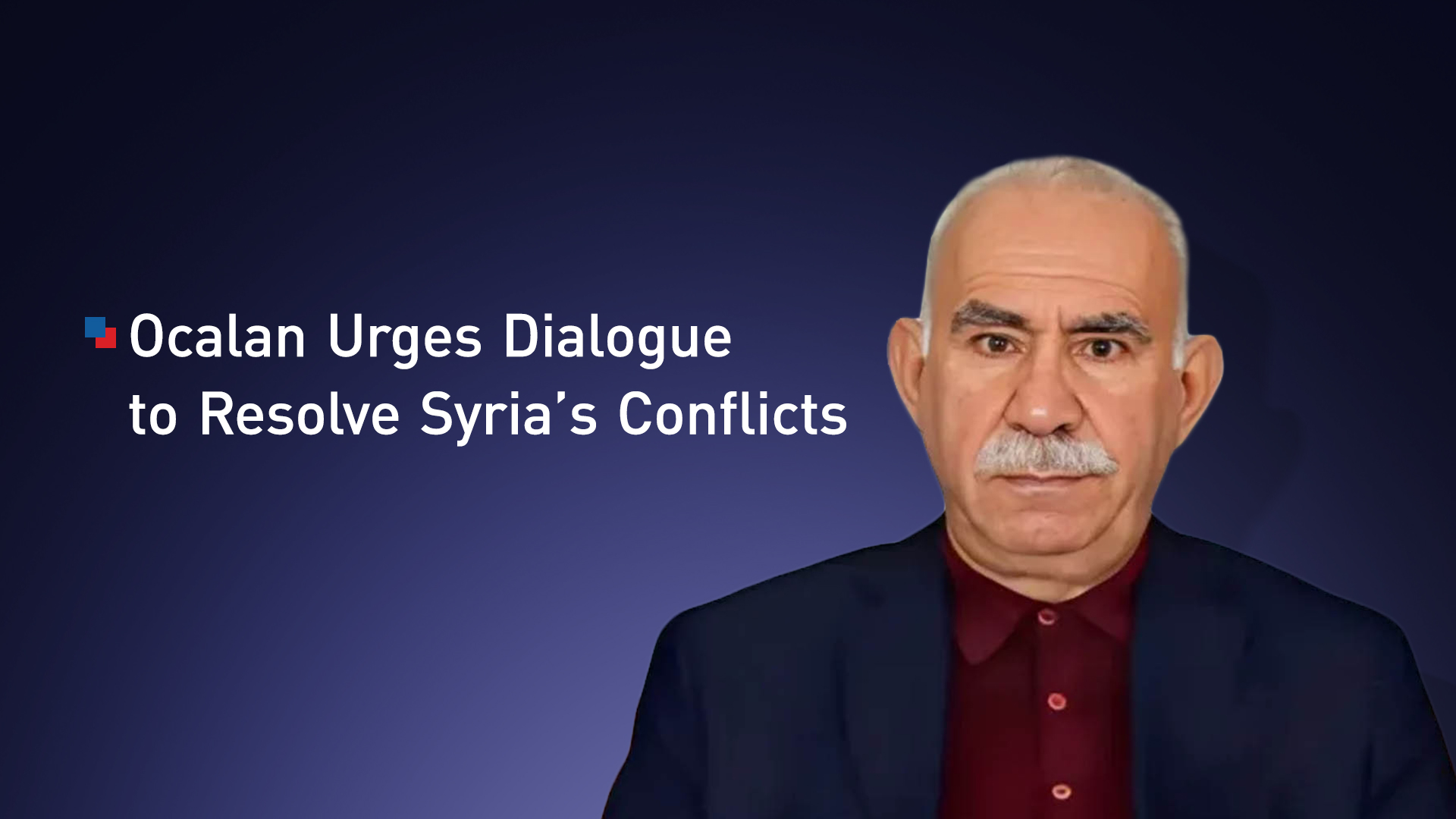
ERBIL (Kurdistan24) - Abdullah Öcalan, the imprisoned Kurdish leader, has issued a stark warning regarding the deteriorating security situation in Syria, characterizing the recent escalation of tensions as a deliberate attempt to sabotage the broader peace process and undermine the development of a democratic society.
His remarks were conveyed following a rare meeting with a delegation from the DEM Party at the Imrali island prison.
The delegation released the contents of the discussion on Sunday, detailing a visit that took place on Jan. 17. According to the statement, the meeting with Öcalan lasted approximately two and a half hours. During this significant engagement, the conversation centered heavily on the current instability in Syria.
Öcalan expressed deep concern regarding the trajectory of events on the ground, emphasizing that the rising violence serves to disrupt efforts toward political reconciliation.
In the statement provided by the DEM Party, Öcalan reiterated his steadfast commitment to the peace process and the principles of a democratic society. He specifically referenced his persistence regarding the "February 27 appeal," underscoring the necessity of taking concrete steps to advance these objectives despite the current volatility.
Regarding the conflict in Syria, he was emphatic that military solutions are unviable. "All problems in Syria can only be, and must be, resolved through dialogue, negotiation, and wisdom," Öcalan stated.
The Kurdish leader also signaled a willingness to personally intervene to de-escalate the situation. He reportedly told the delegation that he is ready to fulfill his responsibility to ensure the issue moves away from conflict and is resolved through diplomatic channels. He issued a renewed call for all relevant parties to play a positive role, urging them to deal with the matter "responsibly and conscientiously."
Diplomatic Push in Erbil
Öcalan’s appeal for dialogue coincides with a major diplomatic initiative led by President Masoud Barzani in the Kurdistan Region. On Saturday, President Barzani hosted a high-level summit in Pirmam, Erbil, designed to address the instability in Syria and coordinate a unified approach toward peace.
The gathering in Erbil brought together a significant coalition of United States officials and senior Kurdish leadership.
Attendees included Thomas Barrack, U.S. President Donald Trump’s Special Envoy to Syria; Wendy Green, the U.S. Consul General in Erbil; and General Kevin Lambert, Commander of U.S. Forces in Syria.
Representing the Kurdish factions in Syria were General Mazloum Abdi, Commander of the Syrian Democratic Forces (SDF), and Mohammed Ismail, President of the Kurdish National Council of Syria (KNCS/ENKS).
During the summit, President Barzani underscored the necessity of dialogue and coexistence as the foundational elements for a "new Syria."
Participants exchanged views on the critical issues affecting northern Syria and highlighted practical steps aimed at ensuring regional stability.
The consensus emerging from the meeting emphasized collaboration between international actors and Kurdish leadership to prevent the further escalation of conflicts.
U.S. Engagement and Strategic Cooperation
The diplomatic activity in Erbil also included a separate, bilateral meeting between President Barzani and Ambassador Barrack, which was attended by Kurdistan Region Prime Minister Masrour Barzani.
During this session, the U.S. Envoy conveyed greetings from President Donald Trump and expressed the administration's appreciation for President Barzani’s role in supporting the peace process.
According to a statement from President Barzani's office, both the U.S. and Kurdistan Region leadership agreed that resolving Syria's challenges requires reliance on mutual understanding rather than confrontation.
President Barzani took the opportunity to emphasize that ensuring the political and cultural rights of the Kurdish people must be a fundamental component of any future settlement in the country.
The synchronization of messages from both Imrali and Erbil suggests a heightened focus among Kurdish leadership across the region on arresting the slide toward violence in Syria and pivoting back to a negotiated political framework.