PM Barzani Leads High-Level Investor Delegation to Davos to Strengthen Economic Ties
PM Masrour Barzani leads a delegation including 20 investors to Davos 2026. The mission focuses on economic diplomacy and features an expanded "Kurdistan House" to attract global capital.
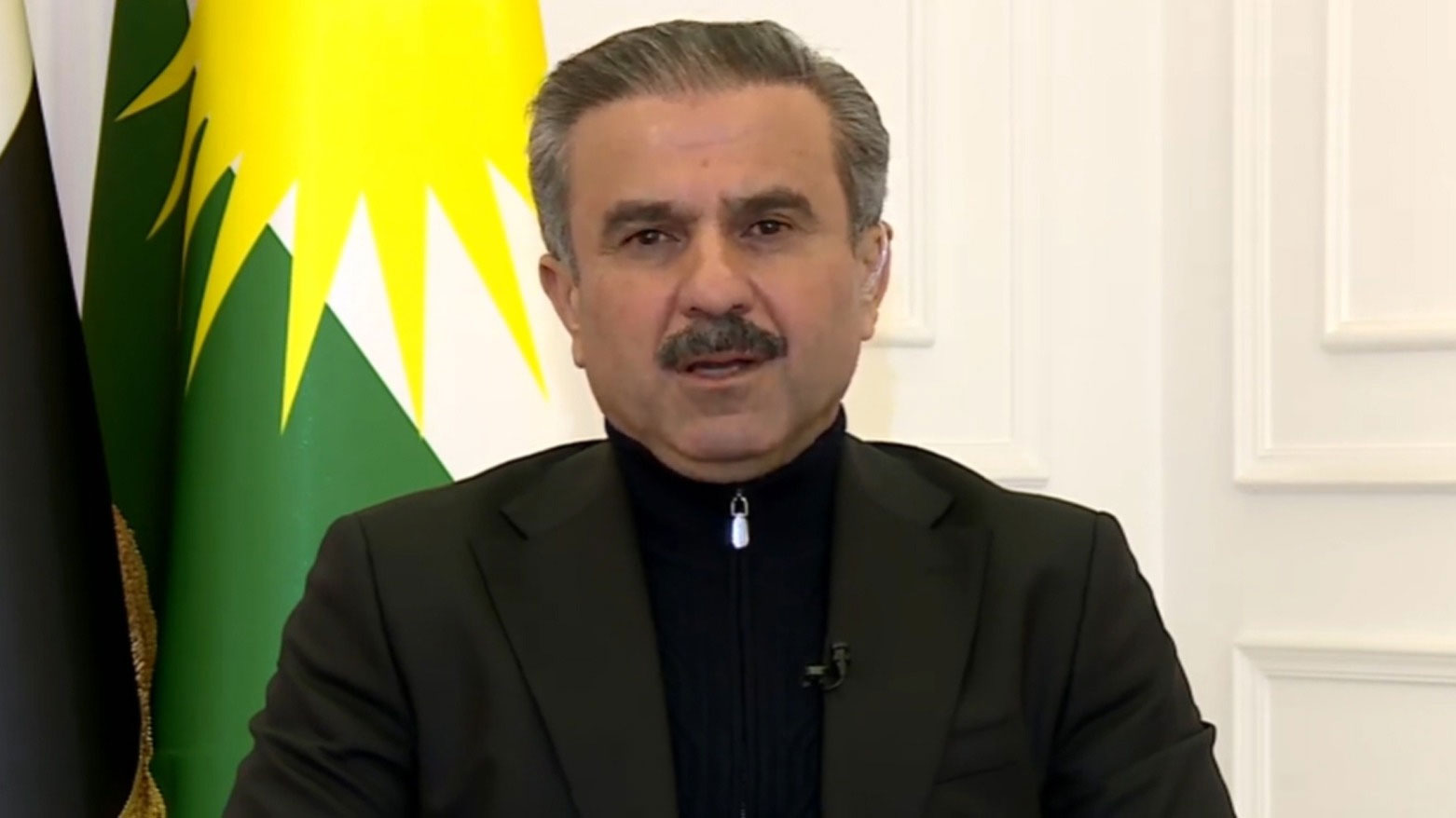
ERBIL (Kurdistan24) - Kurdistan Region's Prime Minister Masrour Barzani is set to lead a broadened delegation comprising government officials and private sector leaders to the World Economic Forum in Davos, Switzerland, this week, marking a strategic escalation in the Kurdistan Region’s efforts to court international capital. Dr. Mohammed Shukri, Chairman of the Kurdistan Region Investment Board, announced on Sunday, that the Prime Minister’s itinerary for the 56th annual meeting includes the direct participation of twenty private investors, a move designed to integrate commercial deal-making with high-level diplomacy.
In an exclusive statement to Kurdistan24, Dr. Shukri outlined the objectives of the mission, emphasizing that the composition of this year's delegation represents a departure from previous engagements. He noted that the delegation is "different and broader," specifically highlighting the presence of the twenty private sector investors alongside Prime Minister Barzani.
This inclusion falls within the framework of a specific strategy adopted by the Prime Minister, which dictates that every international diplomatic trip must be accompanied by a trade and investment component to strengthen the Region's economic relations tangibly.
The 56th World Economic Forum, scheduled to run from January 19 to January 23, 2026, is convening under the theme "A Spirit of Dialogue."
The event provides a platform for the Kurdistan Regional Government (KRG) to engage with a historic assembly of global decision-makers.
Dr. Shukri characterized the Prime Minister's participation as a "golden opportunity" for the Kurdistan Region, citing the schedule of important political, economic, and social meetings to be conducted between Mr. Barzani and high-level world leaders.
A central feature of the KRG’s presence in Switzerland will be the "Kurdistan House," which is opening in Davos for the third consecutive year.
Dr. Shukri detailed that the facility is organized under the supervision and direct cooperation of the Prime Minister, the Prime Minister's Office, the Board of Investment, and the Office of International Relations (OIC).
Sponsored by the Region’s investors, the venue this year has been expanded, featuring a larger area and a more comprehensive slate of activities compared to previous iterations. The "Kurdistan House" serves as a focal point for networking, allowing the delegation to host counterparts and showcase investment potential in a controlled environment.
"The importance of Davos lies in the fact that it opens the door of Kurdistan wider to global investors, so that in the future they come and implement projects in the Kurdistan Region," Dr. Shukri stated.
He added that Prime Minister Barzani himself oversees the implementation of decisions and understandings directly while in Davos, ensuring that diplomatic goodwill is translated into actionable economic projects.
This marks the fifth consecutive year that Prime Minister Barzani has participated in the forum, a consistency that officials argue has helped solidify the Region's standing on the global stage.
The environment into which the KRG delegation is entering is one of dense diplomatic traffic and high-stakes economic strategy.
The forum is expected to host nearly 3,000 leaders from more than 130 countries, representing a diverse cross-section of sectors. Organizers report a record level of government participation, with approximately 400 top political leaders expected to attend.
This contingent includes about 65 heads of state and government and six leaders from the Group of Seven (G7) nations, underscoring the event's significance in shaping global policy during a period of geopolitical and technological shifts.
Prime Minister Barzani’s agenda will likely intersect with a roster of political figures that reflects the changing landscape of global governance. From the Western Hemisphere, the list of participating leaders includes United States President Donald Trump, Canadian Prime Minister Mark Carney, Argentine President Javier Milei, Colombian President Gustavo Petro, and Ecuadorian President Daniel Noboa. The presence of such leaders offers the KRG delegation opportunities to discuss energy security, regional stability, and bilateral trade with major Western powers.
European leadership is also heavily represented, providing further avenues for the Kurdistan Region to strengthen its traditional ties with the continent. Key European figures slated to attend include German Chancellor Friedrich Merz, French President Emmanuel Macron, European Commission President Ursula von der Leyen, and Spanish Prime Minister Pedro Sánchez. Other notable European attendees include Belgian Prime Minister Bart De Wever, Finnish President Alexander Stubb, Greek Prime Minister Kyriakos Mitsotakis, Irish Prime Minister Micheál Martin, Dutch Prime Minister Dick Schoof, Polish President Karol Nawrocki, Serbian President Aleksandar Vučić, and Ukrainian President Volodymyr Zelensky. Swiss President Guy Parmelin will host the gathering.
The forum also draws prominent figures from the Middle East and Asia, highlighting the global reach of the event. Regional counterparts with whom the KRG delegation may engage include Qatari Prime Minister and Foreign Minister Mohammed bin Abdulrahman Al Thani, Israeli President Isaac Herzog, and Palestinian National Authority Prime Minister Mohammad Mustafa.
Notably, Syrian President Ahmed Sharaa is also on the list of attendees, alongside other regional heads of state such as Azerbaijani President Ilham Aliyev, Armenian President Vahagn Khachaturyan, and Moroccan Head of Government Aziz Akhannouch.
Asian representation includes Chinese Vice Premier He Lifeng, Indonesian President Prabowo Subianto, Pakistani Prime Minister Mian Muhammad Shehbaz Sharif, and Singaporean President Tharman Shanmugaratnam. From Africa, the forum will host Congolese President Félix-Antoine Tshisekedi and Mozambican President Daniel Francisco Chapo.
Beyond the sphere of national governments, the presence of major international organizations offers the KRG delegation access to key development and humanitarian partners. The United Nations is represented by Secretary-General António Guterres.
Of particular note for the Kurdistan Region is the attendance of Barham Salih in his capacity as the United Nations High Commissioner for Refugees (UNHCR), as well as leaders from the UNDP, WHO, and ITU. Security architecture will be represented by NATO Secretary General Mark Rutte and GCC Secretary General Jassem Al-Budaiwi.
Crucially for the investor delegation accompanying Prime Minister Barzani, the forum serves as a convening point for the leaders of the world’s primary financial institutions. Attendees include World Bank President Ajay S. Banga, IMF Managing Director Kristalina Georgieva, WTO Director-General Ngozi Okonjo-Iweala, and OECD Secretary-General Mathias Cormann. Engaging with these institutions aligns with the Ninth Cabinet’s goal of diversifying revenue sources and integrating the Kurdistan Region into the global financial system.
The private sector’s involvement is substantial, with nearly 1,700 business leaders expected to attend, including approximately 850 CEOs. The technology delegation features the heads of major firms such as Satya Nadella of Microsoft, Jensen Huang of NVIDIA, Demis Hassabis of Google DeepMind, and Dina Powell McCormick of Meta.
Access to such corporate leadership provides the KRG’s private sector delegation—comprising the twenty investors mentioned by Dr. Shukri—with direct channels to discuss technology transfer and modernization efforts.
Dr. Shukri emphasized that the strategy behind the broad delegation is to ensure that the Kurdistan Region is viewed not just as a geopolitical entity but as a viable destination for capital. By combining the diplomatic weight of the Prime Minister’s office with the commercial agility of the private sector, the KRG aims to utilize the "Spirit of Dialogue" at Davos to secure tangible economic benefits.
The expanded "Kurdistan House" and the active participation of local investors signal a maturity in the Region's external relations, moving from purely political engagement to complex economic diplomacy.