Macron Urges Syrian President to Halt Offensive and Integrate SDF Forces in Direct Call
President Macron spoke with Syrian President Sharaa, urging a permanent ceasefire and SDF integration. The call follows SDC warnings of humanitarian disaster as Syrian troops advance on Raqqa and Deir ez-Zor.
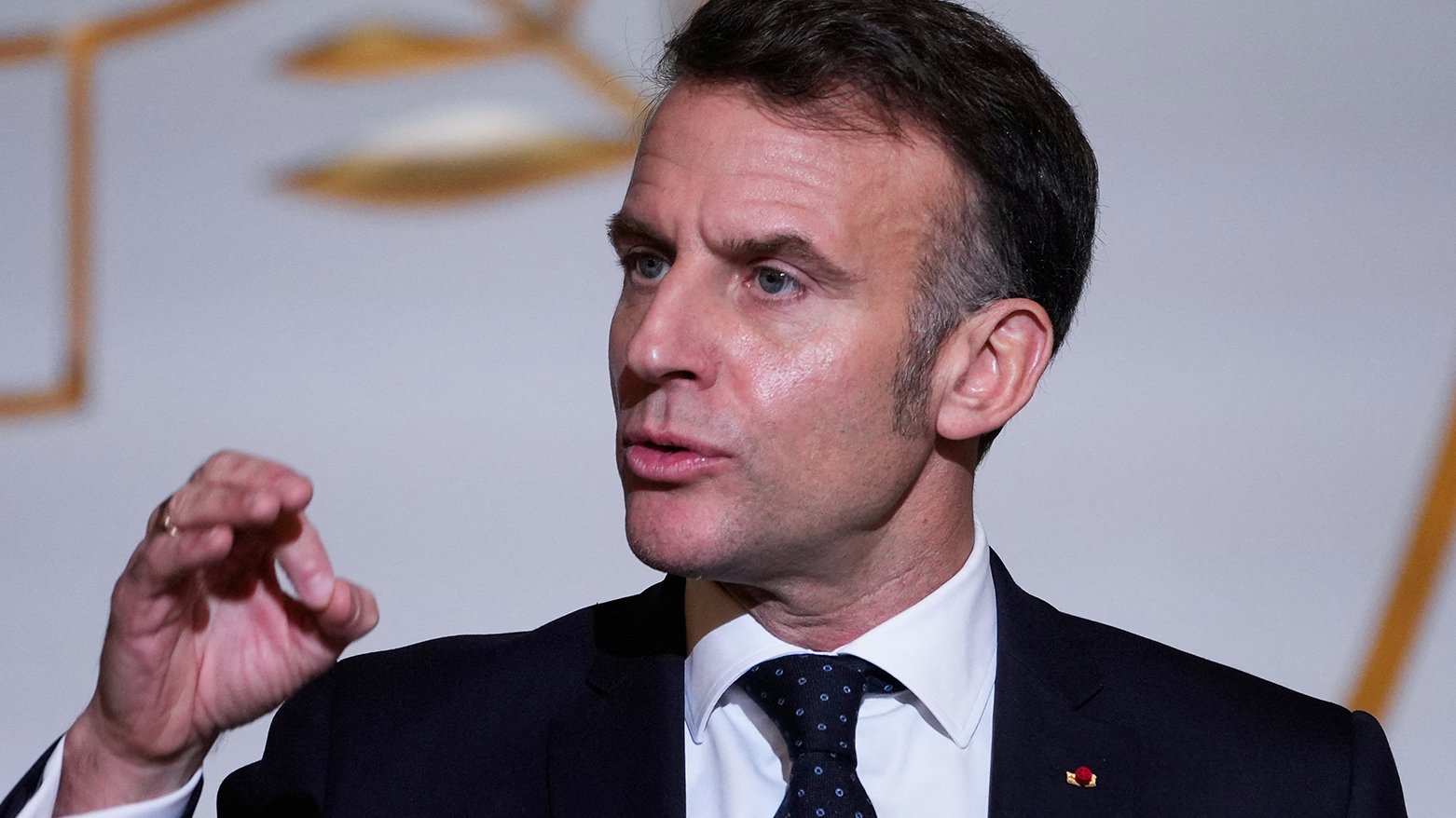
ERBIL (Kurdistan24) - French President Emmanuel Macron spoke directly with Syrian President Ahmed al-Sharaa on Sunday regarding the intensifying conflict in the country, expressing deep concern over the ongoing military offensive conducted by Syrian authorities and calling for the integration of Kurdish-led forces into the state apparatus.
The conversation marks a significant diplomatic intervention by a major European power as fighting between government troops and the Syrian Democratic Forces (SDF) threatens to unravel security in the country’s northeast.
In a statement posted to the social media platform X on January 18, 2026, President Macron detailed the substance of his morning discussion with President al-Sharaa.
The French leader stated that he had expressed "deep concern regarding the escalation in Syria and the continuation of the offensive conducted by the Syrian authorities." President Macron emphasized that a "permanent ceasefire is necessary" to prevent further instability.
Furthermore, he outlined a specific political framework for de-escalation, asserting that "an agreement must be reached on the integration of the Syrian Democratic Forces into the Syrian state, on the basis of the exchanges from last March."
He concluded his remarks by noting that the "unity and stability of Syria depend on it."
Je me suis entretenu ce matin avec le président syrien Ahmed Al-Charaa.
— Emmanuel Macron (@EmmanuelMacron) January 18, 2026
Je lui ai fait part de notre préoccupation face à l’escalade en Syrie et à la poursuite de l’offensive conduite par les autorités syriennes.…
The French President’s appeal for a cessation of hostilities coincides with grim assessments from officials on the ground, who warn that the widening conflict has created a critical threat to civilian populations.
On Sunday, Abdulwahab Khalil, the Head of Relations for the Syrian Democratic Council (SDC) in Damascus, told Kurdistan24 that the deterioration of the security environment in strategic urban centers has reached a tipping point.
Khalil warned that the intensifying military conflict has raised the specter of a widespread humanitarian disaster, particularly in the cities of Raqqa and Tabqa.
The urgency of the diplomatic outreach from Paris and the warnings from the SDC reflect a rapidly shifting battlefield. On Sunday, the Syrian Arab Army (SAA) pressed a multi-front offensive that has compromised the territorial integrity of the semi-autonomous northeast.
Reports indicate that government troops have seized control of the Omar oil field and the Conoco gas field in the eastern countryside of Deir ez-Zor Governorate. These facilities represent the economic lifeblood of the autonomous region and were key assets secured by the SDF during the campaign against the Islamic State.
Khalil provided a detailed account of the operational complexities exacerbating the violence. He noted that fighting continues to rage within the city of Raqqa and that the conflict is not limited to frontlines established by government troops.
Complicating the battlespace, Arab tribes in the Deir ez-Zor region have reportedly begun targeting SDF bases and headquarters. This development has significantly compounded the security challenges facing the Kurdish-led administration, leading the Governor of Deir ez-Zor to suspend official duties and advise citizens to remain in their homes.
The humanitarian fallout of these military maneuvers is already evident. On Sunday, the Raqqa Media Directorate issued an official statement declaring that the city’s drinking water supply had been completely cut off.
Authorities attributed the outage to damage sustained by main water transmission pipelines, alleging that shelling by the SDF had incapacitated the infrastructure. The SDF categorically denied these allegations, describing the accusation as "merely Damascus propaganda" with "no basis in truth."
Conflicting narratives continue to obscure the status of key strategic locations.
The Operations Command of the Syrian Arab Army announced a "military victory" on Sunday, claiming to have established complete control over the strategic city of Tabqa, the Tabqa Military Airport, and the Euphrates Dam.
Government sources asserted that their troops were positioned only five kilometers from the western entrance of Raqqa city. In contrast, SDF leadership denied that Tabqa and the dams had fallen, emphasizing that their fighters had repelled the attacks.
Amidst this chaos, the SDC official highlighted a grave secondary threat: the security of detention centers holding Islamic State (ISIS) prisoners. Khalil described the potential security vacuum around these facilities as a "major danger" that must be taken seriously by all parties, fearing a resurgence of extremist activity.
President Macron’s reference to the "exchanges from last March" alludes to previous frameworks for integrating the SDF into the Syrian military structure, a process that has stalled amidst mutual recriminations.
On Friday, SDF General Commander Mazloum Abdi had announced a decision to withdraw forces east of the Euphrates as a gesture of goodwill to implement agreements, but the SDF claims government forces violated the truce by launching offensives before the withdrawal deadline expired.
The French President's intervention aligns with a broader diplomatic push to arrest the violence. On Saturday, Kurdistan Region President Masoud Barzani hosted a high-level summit in Erbil, attended by U.S. Special Envoy Tom Barrack, General Abdi, and other key stakeholders.
Following that summit, President Barzani issued a formal message calling for an immediate halt to the fighting and offering a guarded endorsement of recent political overtures from Damascus regarding Kurdish rights.
Khalil expressed the SDC's support for these mediation efforts, telling Kurdistan24, "We consider the Erbil meeting a positive step." He reiterated the SDC’s position that "problems cannot be resolved through military means" and affirmed that the SDF desires dialogue.
However, faced with what the Democratic Autonomous Administration of North and East Syria (DAANES) has formally characterized as an "existential war," the administration declared a state of emergency on Sunday and issued a general call to arms, urging citizens to prepare for "popular defense."
As diplomatic channels remain active—with General Abdi reportedly seeking direct engagement with President al-Sharaa in Damascus—President Macron’s direct call to the Syrian leadership underscores the international community's growing alarm that the collapse of the status quo in northeast Syria could lead to prolonged instability and a humanitarian catastrophe.