SDF Reports Repelled Attack on Aqtan Prison in Raqqa
Kurdish Forces (Sharavan) repelled a drone and heavy weapon attack on Raqqa's Aqtan Prison by government-affiliated groups Monday, complicating the implementation of the new ceasefire and integration deal.
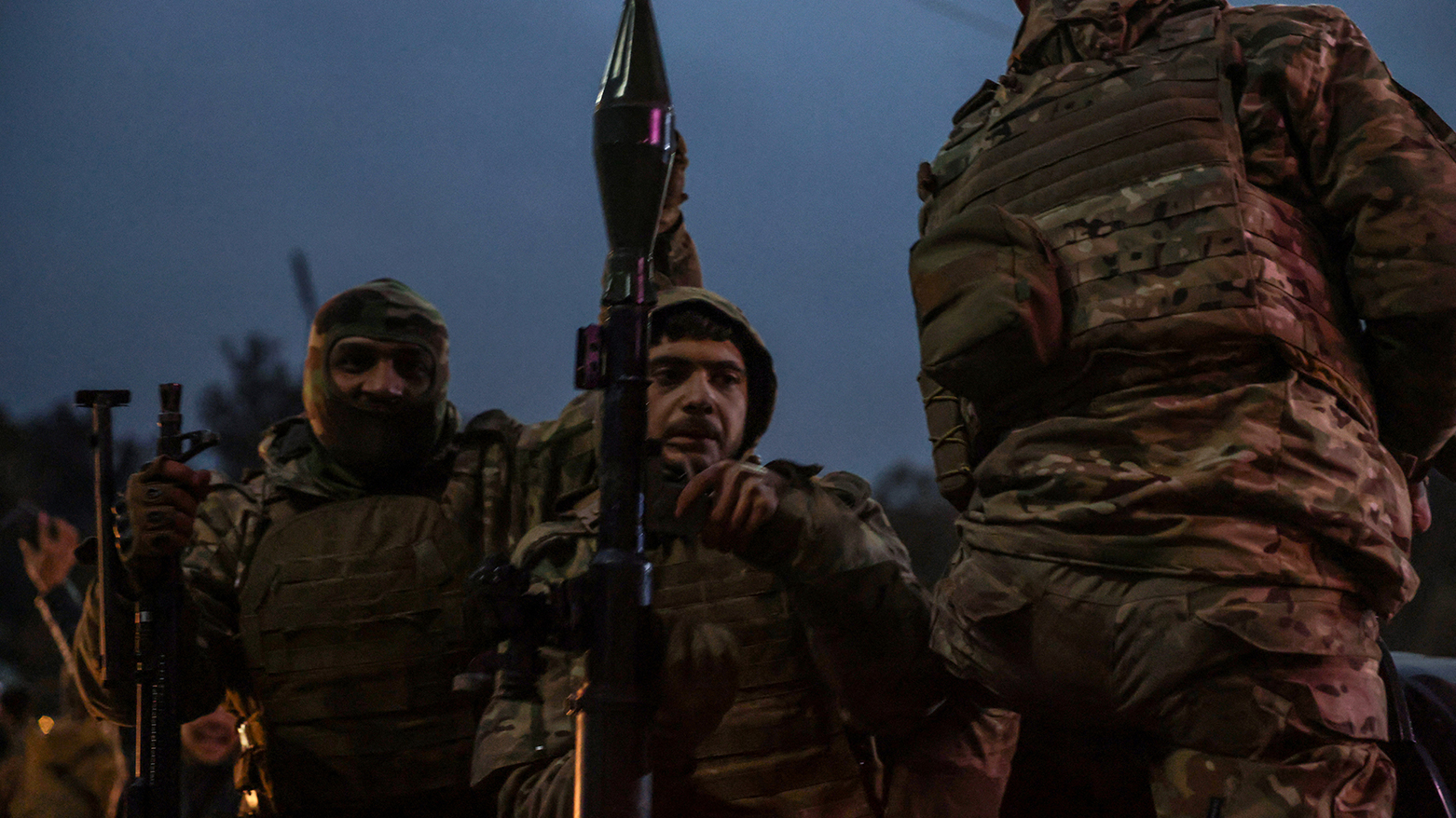
ERBIL (Kurdistan24) - The Syrian Democratic Forces (SDF) announced on Monday that their units successfully repelled a coordinated assault on Aqtan Prison in Raqqa, a sensitive detention facility located in the former de facto capital of the Islamic State.
According to a Kurdistan24 correspondent reporting from the region, the attack was carried out by armed groups affiliated with the Syrian government, utilizing unmanned aerial vehicles and heavy weaponry in an attempt to breach the perimeter.
The confrontation at the detention center occurred less than 24 hours after the Syrian Ministry of Defense issued a formal order for a comprehensive cessation of hostilities across all fronts.
SDF officials reported that their forces engaged the attackers immediately, preventing them from entering the facility or compromising the security of the detainees held within.
The use of drones and heavy arms suggests a significant level of military organization behind the assault, raising questions about the durability of the ceasefire intended to facilitate the handover of the region to central government control.
The violence at Aqtan Prison stands in stark contrast to the diplomatic breakthroughs announced over the weekend. On Sunday, the Syrian government and the SDF formally signed a detailed 14-point integration agreement.
This pact, endorsed by the United States, mandates the transfer of administrative and military control of the Raqqa and Deir ez-Zor governorates to Damascus.
Specifically, the ninth clause of the agreement stipulates the integration of the administration responsible for ISIS prisoners and camps with the Syrian government, ensuring that Damascus assumes "full legal and security responsibility" for these facilities.
The armed attempt to seize the prison on Monday appears to circumvent the orderly transition mechanisms outlined in the text of the accord.
The backdrop to Monday’s clash involves a rapidly shifting security landscape and intense diplomatic activity aimed at unifying the country. Syrian President Ahmed al-Sharaa had publicly called for calm among Arab tribes in eastern Syria to allow the implementation of the deal.
Similarly, the Syrian Ministry of Defense had instructed the Syrian Arab Army to protect citizens and ensure stability as it prepares to assume control of border crossings and strategic oil fields. However, the attack on the prison suggests that elements aligned with Damascus may be pursuing objectives on the ground that diverge from the political timeline established in the capital.
SDF Commander-in-Chief Mazloum Abdi had previously warned of the volatility in the region. In a televised address on Sunday, General Abdi stated that his forces had been subjected to "planned and violent" attacks starting January 6, which he described as aimed at destruction and collective harm.
He explained that the SDF had made the strategic decision to redeploy forces from Deir ez-Zor and Raqqa to Hasakah to protect civilians and preserve the region's achievements. This redeployment, now codified in the first clause of the new agreement requiring SDF formations to move east of the Euphrates, leaves facilities in Raqqa in a precarious transition phase.
The diplomatic framework attempting to contain this violence involves high-level international coordination.
On Sunday, U.S. Special Envoy for Syria Tom Barrack commended the integration agreement, describing it as a bridge toward a unified Syria that advances U.S. national security interests by continuing the fight against ISIS remnants.
Barrack emphasized that the deal allows for the "seamless integration" of the SDF into the Syrian state structure. Monday’s attack on Aqtan Prison, however, underscores the friction inherent in merging two military forces that have operated autonomously for more than a decade.
Regional powers have also been heavily involved in facilitating the agreement. Syrian President al-Sharaa expressed gratitude to Kurdistan Region President Masoud Barzani for his significant role in the process.
In a telephone conversation following the announcement of the deal, President Barzani and President al-Sharaa discussed the details of the agreement, with Barzani emphasizing that the protection of Kurdish rights must be respected.
The Syrian President’s Decree No. 13 of 2026, which recognizes Kurdish cultural and linguistic rights, was highlighted as a positive foundation for this new relationship.
The agreement itself is comprehensive, addressing longstanding grievances and security concerns.
Beyond the transfer of territory and prisons, it provides for the individual integration of SDF fighters into the Syrian Ministries of Defense and Interior, following security vetting. It also mandates the removal of non-Syrian Kurdistan Workers’ Party (PKK) elements from the country and establishes a mechanism for the return of displaced residents to areas like Afrin and Sheikh Maqsud.
Despite these political commitments, the tactical reality in Raqqa remains fragile. The SDF’s successful defense of Aqtan Prison prevented what could have been a catastrophic security breach involving dangerous detainees. However, the incident highlights the potential for spoilers to disrupt the implementation of the integration deal.
While the Syrian state has committed to continuing the fight against terrorism in coordination with the United States, the use of heavy weapons against a prison guarded by the SDF—technically now a partner in the transition—indicates that the "immediate and comprehensive ceasefire" ordered by Damascus has yet to take full hold on the ground.
As the implementation phase continues, with the SDF scheduled to withdraw east of the Euphrates, the security of sensitive sites in Raqqa will remain a critical test of the agreement's viability.
The postponed meeting between General Abdi and President al-Sharaa, rescheduled for Tuesday, is expected to address these violations and the mechanics of the handover to prevent further armed confrontations between the integrating forces.
This article was updated on Monday, Jan. 19, 2026, at 01:36pm.