Security Vacuum Fears Mount Over ISIS Prisons Following SDF Withdrawal
The SDF withdrawal from Raqqa and Deir ez-Zor creates a "ticking time bomb" regarding ISIS prisons. A lack of secure alternatives raises risks of riots, escapes, and attacks by sleeper cells.
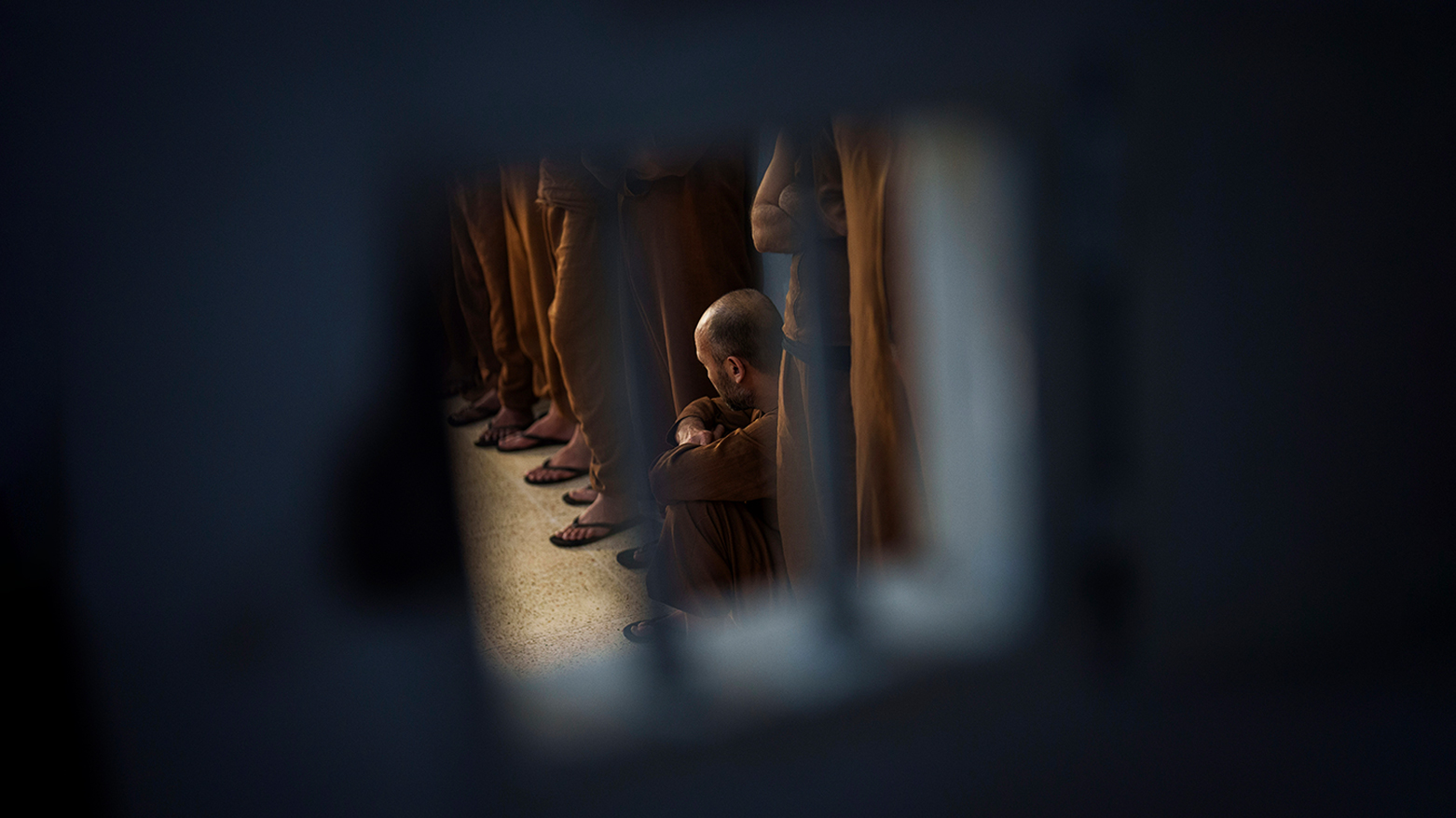
ERBIL (Kurdistan24) - The withdrawal of the Syrian Democratic Forces (SDF) from the strategic governorates of Deir ez-Zor and Raqqa on Sunday has precipitated a critical security crisis regarding the custody of thousands of imprisoned Islamic State members. According to a new security assessment, the transfer of territorial control has raised urgent questions about the management of detention facilities housing some of the world's most dangerous terrorists, creating a potential vacuum that experts warn could have global ramifications.
For years, the network of prisons in North and East Syria has served as the cornerstone of the security architecture in the region. The SDF, operating with direct support from the International Coalition forces, has managed these high-security facilities against a backdrop of persistent threats.
The primary concern for administrators has historically been the constant risk of escape attempts or coordinated external attacks aimed at freeing the detainees. However, the changing map of territorial control, driven by the SDF's departure and simultaneous attacks by armed groups affiliated with the Syrian government and extremist factions, has fundamentally altered the security equation.
The central question now facing regional and international stakeholders is which entity will assume control over these high-risk prisoners in the absence of the SDF.
The assessment describes the current situation as a "ticking time bomb," citing the demographic composition of the inmate population. The prisons currently house thousands of Islamic State affiliates, a roster that includes both local operatives and a significant number of foreign fighters.
Crucially, this population includes Islamic State "Emirs," senior field commanders, and high-ranking security officials who played instrumental roles in the group's battles against local forces and the International Coalition.
The high-value nature of these detainees has made the facilities a persistent target for the organization's remnants. The report highlights the 2022 attempt by Islamic State sleeper cells to breach the al-Sina'a prison in Hasakah as evidence of the magnitude of the threat.
That incident, which was intended to free detained members and leadership figures, serves as a stark historical precedent for the dangers inherent in the current transition.
Security analysts warn that any operational error or lapse in vigilance regarding these prisons could potentially create a major disaster, not only for the immediate region but for the international community.
Observers are currently weighing potential scenarios for the future management of these facilities, each fraught with distinct risks. One primary possibility involves the transfer of prison management to Syrian government forces or affiliated security agencies.
This scenario presents complex challenges, as it entails shifting the "ISIS file" from a local administration that enjoys international support to the administration of a state facing uncertainty regarding its future governance. This transition raises significant international concerns, particularly regarding the ultimate fate of the foreign fighters detained within the system.
Furthermore, there are open questions regarding the capacity of the government in Damascus to bear the substantial security and logistical burdens associated with such a complex issue.
Handing control to the Syrian government could also trigger a new international debate regarding the repatriation of these detainees to their countries of origin or the prospect of trying them domestically, issues that have long bedeviled Western governments.
A second scenario outlines a model of joint or temporary management. Under this framework, the prisons would operate under the direct supervision of Syrian security services, but with limited intelligence coordination involving international and regional parties.
This option might also include continuous monitoring by the International Coalition. However, the assessment characterizes this as a "weak possibility," viewing it primarily as a temporary measure designed to prevent the immediate creation of a security vacuum rather than a viable long-term solution.
Regardless of the administrative outcome, the International Coalition and relevant parties face a source of acute anxiety.
The report warns that the SDF's withdrawal inevitably creates a security weakness. Currently, there is no strong security alternative in place capable of effectively controlling the prisons and assuming full responsibility for this critical file.
Consequently, the likelihood of destabilizing events has increased. The assessment identifies a heightened probability of riots within the prisons, mass escape attempts, or external attacks launched by Islamic State cells that remain active in Syrian territories.
Ultimately, the implications of the SDF withdrawal extend far beyond the shifting control lines on the Syrian map. The true measure of this geopolitical shift, according to the report, lies within the "four walls of the prisons."
These facilities have successfully restrained the organization's most dangerous members and Emirs for years, and their security is now the focal point of a developing crisis that threatens to undo the gains made against the terrorist group.