Majid Jafar at Davos: Kurdistan’s Runaki Project Anchors Regional Stability Amid Global Energy Shifts
Crescent Petroleum CEO Majid Jafar told the Davos forum that the gas-fired Runaki Project is vital for Kurdistan's stability and 24-hour electricity. He argued the Middle East and US are winning on energy security, despite AI's soaring power demands.
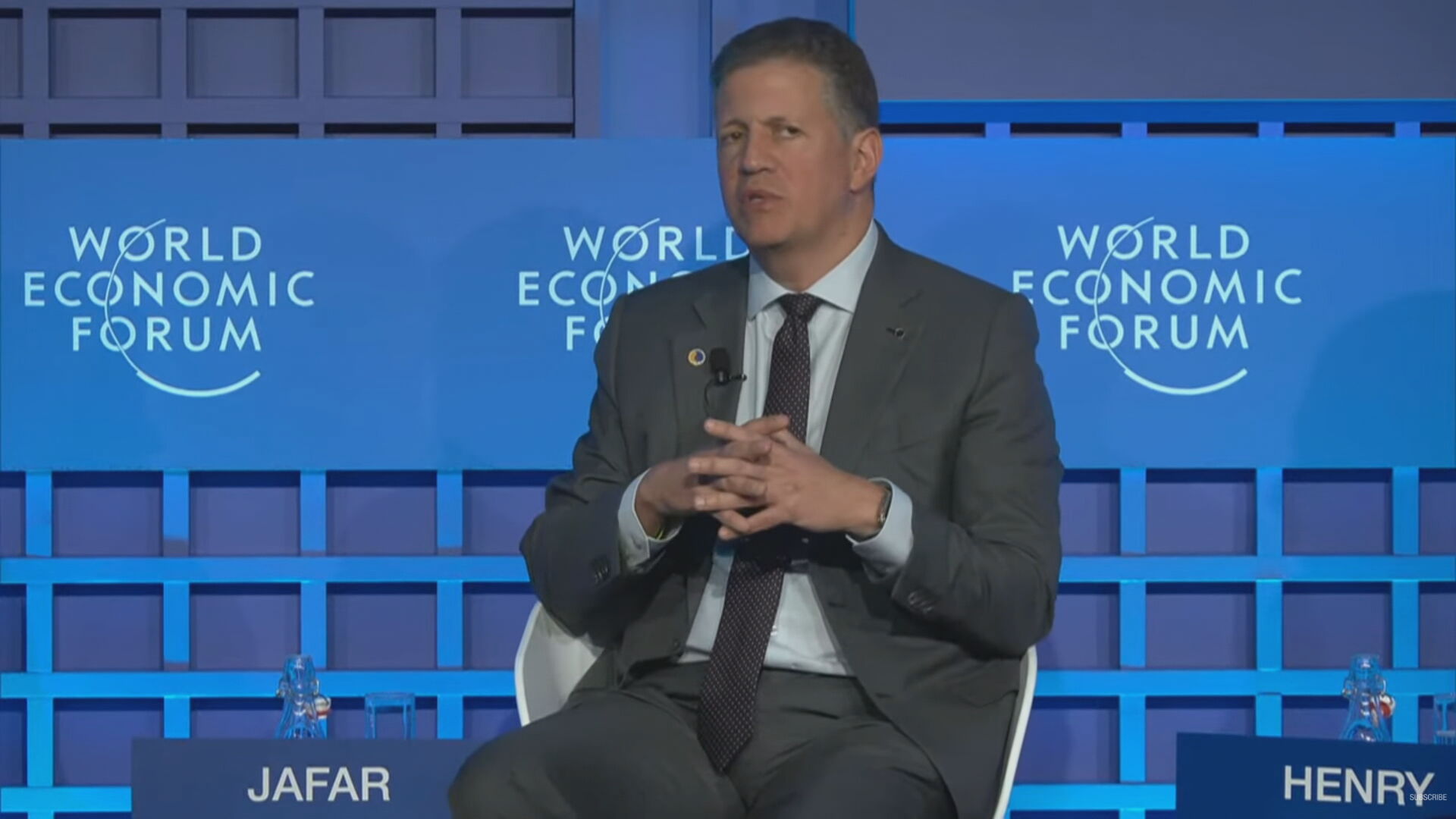
ERBIL (Kurdistan24) - Majid Jafar, the CEO of Crescent Petroleum, highlighted the strategic significance of the Runaki Project in the Kurdistan Region during a high-level panel at the World Economic Forum on Tuesday, describing the natural gas initiative as a critical driver for social stability and economic infrastructure. Speaking on January 20, 2026, amid a broader debate on global energy security, Jafar positioned the region’s energy developments as a model for utilizing natural resources to secure 24-hour electricity and foster resilience against geopolitical volatility.
During a session titled "Who is winning on energy security?" Jafar emphasized that the Runaki Project represents a pivot toward utilizing indigenous natural gas resources to meet domestic needs.
"In the Middle East, our focus is more on natural gas; to give an example, one project that we've just completed in the Kurdistan region, north of Iraq, which received US Development Finance Corporation support, is achieving 24-7 electricity there," Jafar said.
He explicitly linked the provision of reliable power to the broader health of the polity, stating that the project's goal is to "enhancing stability, political and socioeconomic, and big carbon emissions savings as well."
The remarks came as global energy leaders gathered in Switzerland to assess a landscape radically altered by technological disruption and shifting government policies.
Jafar argued that projects like Runaki not only bolster local infrastructure but also contribute to environmental goals. He indicated that these types of initiatives lead to the reduction of harmful carbon emissions, aligning the Kurdistan Region’s development with global sustainability targets despite the continued reliance on hydrocarbons.
The session, moderated by Sir Robin Niblett of Chatham House, sought to answer which regions are best positioned in the current energy climate. When pressed by the moderator to identify a winner in the race for energy security, Jafar was decisive.
"I think the Middle East and the United States," he responded, pointing to the combination of resource availability and policy frameworks in these areas.
Jafar elaborated on the Middle East’s advantages, noting that the region possesses the necessary energy resources, capital, leadership, and "agile policymaking" to navigate the nexus between traditional energy production and the burgeoning demands of technology.
"It’s playing to its strengths as a region, through partnerships rather than competition," he said.
He added that these partnerships are expanding in all directions, involving deep ties with the United States and big tech companies on policy, as well as increasing cooperation with Asian firms.
A central theme of Jafar’s address was the relationship between energy security and the explosive growth of artificial intelligence (AI).
He cautioned that the digital transformation requires a massive physical energy input, challenging the notion that economic diversification means moving away from energy sectors.
"In the past, diversification was about moving away from energy, trying to find other sectors, and with mixed results, or some might say poor results across the region as a whole. Now, suddenly, there's a diversification that's based on energy, because AI needs energy in huge amounts," Jafar told the panel.
To illustrate the scale of this demand, Jafar provided a stark comparison regarding digital consumption. He noted that creating just a single video through artificial intelligence is equal to the electricity consumption of a home in the Middle East or Africa for several hours.
In the panel discussion, he offered a similar metric, stating that "one minute video, it's about an hour's use of electricity for an average Western household," and that a single data center consumes the same amount of energy as an average town. Consequently, he argued, energy sources must be increased to accommodate these technological changes.
The panel featured a diverse group of experts who provided context for the challenges facing producers like Crescent Petroleum.
Fatih Birol, Executive Director of the International Energy Agency (IEA), opened the discussion by declaring that the world is "entering the age of electricity." Birol outlined "three golden rules" for energy security: diversification, predictability for investment, and cooperation. He warned that energy security risks are multiplying and should be elevated to the level of national security.
Birol provided a forecast that supported the logic behind gas-focused initiatives like the Runaki Project. He noted that despite political turbulence involving Iran, Venezuela, and other nations, there is a significant influx of natural gas entering global markets from the United States, Qatar, Australia, and Canada.
He predicted that this surge in supply—approximately 80 billion cubic meters next year alone—would likely exert downward pressure on prices, benefiting consumers but requiring strategic planning from producers.
Jafar addressed the investment climate required to sustain energy security, criticizing the ideological approaches that he argued had previously hampered the industry. "Resilience needs to come from responsible investment that’s not ideological," he said.
He reflected on the "trilemma" of energy availability, affordability, and sustainability, noting that voters and consumers prioritize availability and affordability first.
He argued that previous attempts to "starve the supply" of oil and gas while demand continued to grow had failed on all three counts, leading to higher emissions as developing countries reverted to coal, and causing price shocks for consumers.
The geopolitical dimension of energy was further explored by Meghan O'Sullivan, Director of the Belfer Center for Science and International Affairs at Harvard University. Ms. O'Sullivan analyzed the evolving energy dominance strategy of the United States, distinguishing between the first and second Trump administrations.
She noted that while the first term focused on domestic production and commercial deals, the second term appears to be incorporating new elements, including an aggressive approach against renewables and the use of foreign policy tools—including military force—to enhance influence over global energy markets.
Jafar touched upon this geopolitical dynamic, emphasizing that both the previous Biden administration and the new Trump administration have focused on energy independence. He stated that this continuity in U.S. policy has "special importance for the Kurdistan Region and the area," suggesting that regional actors must navigate their own path toward stability while acknowledging American priorities.
Regarding competition in the Middle East, Jafar advocated for a collaborative approach. He indicated that Chinese and Asian companies are working alongside American companies in the region. "It is better to have coordination between these companies instead of competition to develop the energy sector," he said.
The discussion also highlighted the resource intensity of the energy transition, a factor relevant to the Kurdistan Region’s broader economic development.
Mike Henry, CEO of BHP, the world's largest miner, pointed out that electrifying industries requires immense amounts of power. He cited his own company's iron ore business, noting that electrification would require five times the energy currently used.
Henry also highlighted the critical role of copper, predicting a near doubling of demand over the next 25 years due to the needs of data centers and renewable energy infrastructure.
Andrés Gluski, CEO of AES, offered a perspective on the technical solutions available to manage these demands. He argued that energy security is not a zero-sum game, as a more secure region frees up resources for others. Gluski emphasized the role of technology, such as batteries and dynamic line rating, in optimizing existing grid infrastructure.
He agreed that AI is part of the problem regarding demand but also part of the solution, as it can increase productivity and grid intelligence. However, he warned that small modular nuclear reactors, often touted as a solution, are still a decade away from being a game-changer due to supply chain and manufacturing constraints.
Jafar concluded his remarks by stressing the necessity of broad economic development.
While the Runaki Project and the energy sector are foundational, he discussed the importance of diversifying revenue sources. He stated that it is important for the region not to remain solely in the energy sector but to develop other sectors as well, utilizing the stability provided by reliable energy to foster broader growth.
The panel concluded with a consensus that the definition of energy security has shifted from a background condition to a central strategy question.
For the Kurdistan Region, represented by the Runaki Project, this strategy centers on utilizing domestic gas reserves to ensure the lights stay on, thereby securing the social and political fabric necessary to attract further investment and navigate a competitive global landscape.