Supreme Court Disqualifies Mala Bakhtiar from Iraq Presidential Race
Federal court removes Mala Bakhtiar from the list of candidates, while 24 others are cleared to participate in the upcoming parliamentary vote.
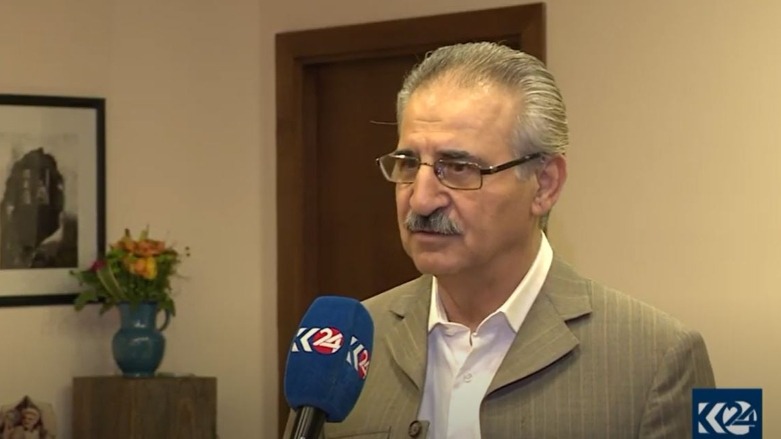
ERBIL (Kurdistan24) — Iraq’s Supreme Federal Court has officially disqualified Mala Bakhtiar from running for the presidency, a significant development in the country’s upcoming presidential election. The court issued its decision following special sessions on Jan. 19 and 20, 2026, reviewing the eligibility of 28 candidates who had not been previously approved by the Iraqi Parliament for the position of president.
According to a statement released by the court on Wednesday, 24 of the 28 candidates were cleared to participate, while the disqualification of Mala Bakhtiar was confirmed.
The court also overturned the disqualification of four other candidates, allowing them to rejoin the final approved list. The four reinstated candidates are: Khalid Sadiq Aziz Mohammed, Azad Majid Hassan, Rafi’ Abdullah Hamid Mousa, and Salem Hawas Ali.
On Jan. 5, Kurdistan24’s correspondent in Baghdad reported that Mala Bakhtiar, a veteran Kurdish politician and former senior figure in the Patriotic Union of Kurdistan (PUK), has nominated himself as an independent candidate.
Meanwhile, the PUK had formally announced its own official nominee. Party spokesperson Karwan Gaznayi, on the same day, confirmed that Nizar Amedi, a member of the PUK Politburo, has been selected as the party’s official candidate for the presidency.
The final list of approved candidates for the presidency now includes 19 individuals, including the reinstated candidates. The full list comprises:
1: Shwan Hawwez Fariq Nameq
2: Ahmed Abdullah Tawfiq Ahmed
3: Hussein Taha Hassan Mohammed Sinjari
4: Najmaddin Abdulkarim Hamekarem Nasrullah
5: Aso Faridun Ali
6: Saman Ali Ismail Shali
7: Sabah Saleh Saeed
8: Abdullah Mohammed Ali Zahir
9: Abdulatif Mohammed Jamal Rashid Sheikh Mohammed
10: Iqbal Abdullah Amin Halawi
11: Nizar Mohammed Saeed Mohammed Kenji
12: Sardar Abdullah Mahmoud Taymaz
13: Fouad Mohammed Hussein Begi
14: Musanna Amin Nader
15: Nawzad Hadi Mawlood
16: Khalid Sadiq Aziz Mohammed
17: Azad Majid Hassan
18: Rafi’ Abdullah Hamid Mousa
19: Salem Hawas Ali
Before the disqualification decisions, the application process for the presidential position had closed on Jan. 5, 2026, with approximately 81 candidates having submitted their CVs.
A special session of the Iraqi Parliament will be convened to elect the president. For the session to be legally valid, two-thirds of the parliamentary members must be present. In the first round of voting, a candidate must receive a two-thirds majority of the present members to be elected, in accordance with Article 70 of the Iraqi Constitution.
If no candidate achieves the required votes in the first round, a second round is held between the top two candidates from the initial vote. The candidate receiving the higher number of votes in the second round is declared president. Once elected, the new president is formally announced and assumes office after taking the constitutional oath.
Under Iraq’s post-2003 political convention, the presidency is traditionally allocated to a Kurdish figure, while executive power rests primarily with the prime minister. However, the position retains symbolic weight and constitutional authority, particularly in overseeing parliamentary procedures, ratifying laws, and safeguarding the constitution.
The Iraqi parliament is expected to soon begin formal procedures for electing the next president, which requires a two-thirds majority in the first round, or a simple majority in a runoff between the top two candidates.
The Supreme Federal Court’s disqualification of Mala Bakhtiar marks a critical turning point in the electoral process, narrowing the field of candidates and shaping the competitive landscape ahead of Iraq’s next presidency.
With multiple Kurdish candidates now officially in the race, attention is turning to whether the KDP and PUK can ultimately converge on a single consensus nominee or whether internal competition will shape negotiations with other parliamentary blocs.