DBP Co-Chair Says Peace in Turkey Impossible While Western Kurdistan Faces Shelling
Bayindir stated that the DBP has repeatedly warned that the sound of tanks and shelling in Western Kurdistan is incompatible with efforts to advance peace and dialogue in southeastern Turkey.
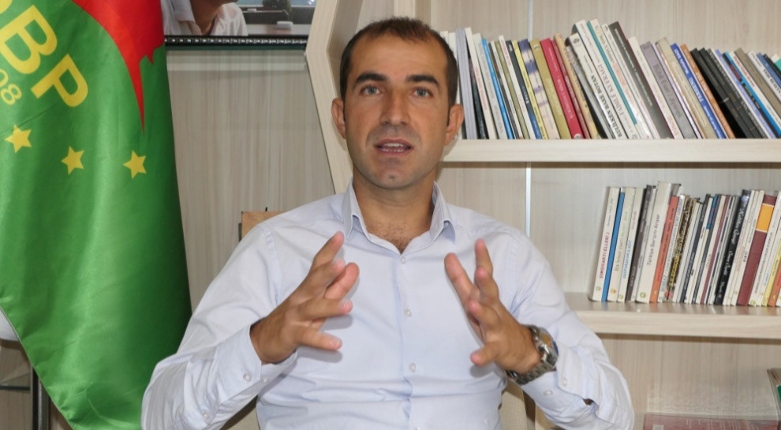
ERBIL (Kurdistan24) – Democratic Regions Party (DBP) co-chairman Keskin Bayindir on Friday said that lasting peace in Northern Kurdistan and Turkey cannot be achieved as long as Western Kurdistan (northeastern Syria) remains under military attack.
Bayindir stated that the DBP has repeatedly warned that the sound of tanks and shelling in Western Kurdistan is incompatible with efforts to advance peace and dialogue in southeastern Turkey. He stressed that peace cannot be selective and must encompass all Kurdish regions.
Emphasizing Kurdish unity, Bayindir said the party firmly rejects any attempt to divide the Kurdish people and will continue to assert their shared political and social ties across Kurdistan.
He added that Turkish authorities must recognize the complexity of the Kurdish issue, arguing that it is impossible to launch military operations in one region while simultaneously discussing peace and political solutions in another.
The DBP, a major political force in Northern Kurdistan, has long highlighted the interconnectedness of Kurdish regions. Bayındır’s remarks come amid ongoing Turkish military operations, which Kurdish parties say have heightened concerns over regional stability and reinforced calls for unity.
In January, a significant military escalation took place between the Syrian transitional government, led by President Ahmed Sharaa, and the Kurdish-led Syrian Democratic Forces (SDF). Although the two sides signed a landmark agreement in March 2025 to integrate the SDF into the national army, the deal stalled, resulting in the worst fighting since the fall of the Assad regime in late 2024.
Following the escalation, a 14-point ceasefire agreement was brokered by U.S. envoy Tom Barrack and announced on January 18.
Kurdish political movements in Turkey argue that developments in Western Kurdistan have a direct impact on prospects for peace in southeastern Turkey.