DEM Spokesperson Urges Acceptance of Kurdish Achievements as Regional Reality
DEM Party spokesperson Ayşegül Doğan urged acceptance of Kurdish rights as non-threatening, citing Türkiye-KRG ties as a model, amid a siege on Kobani and high-level mediation efforts.
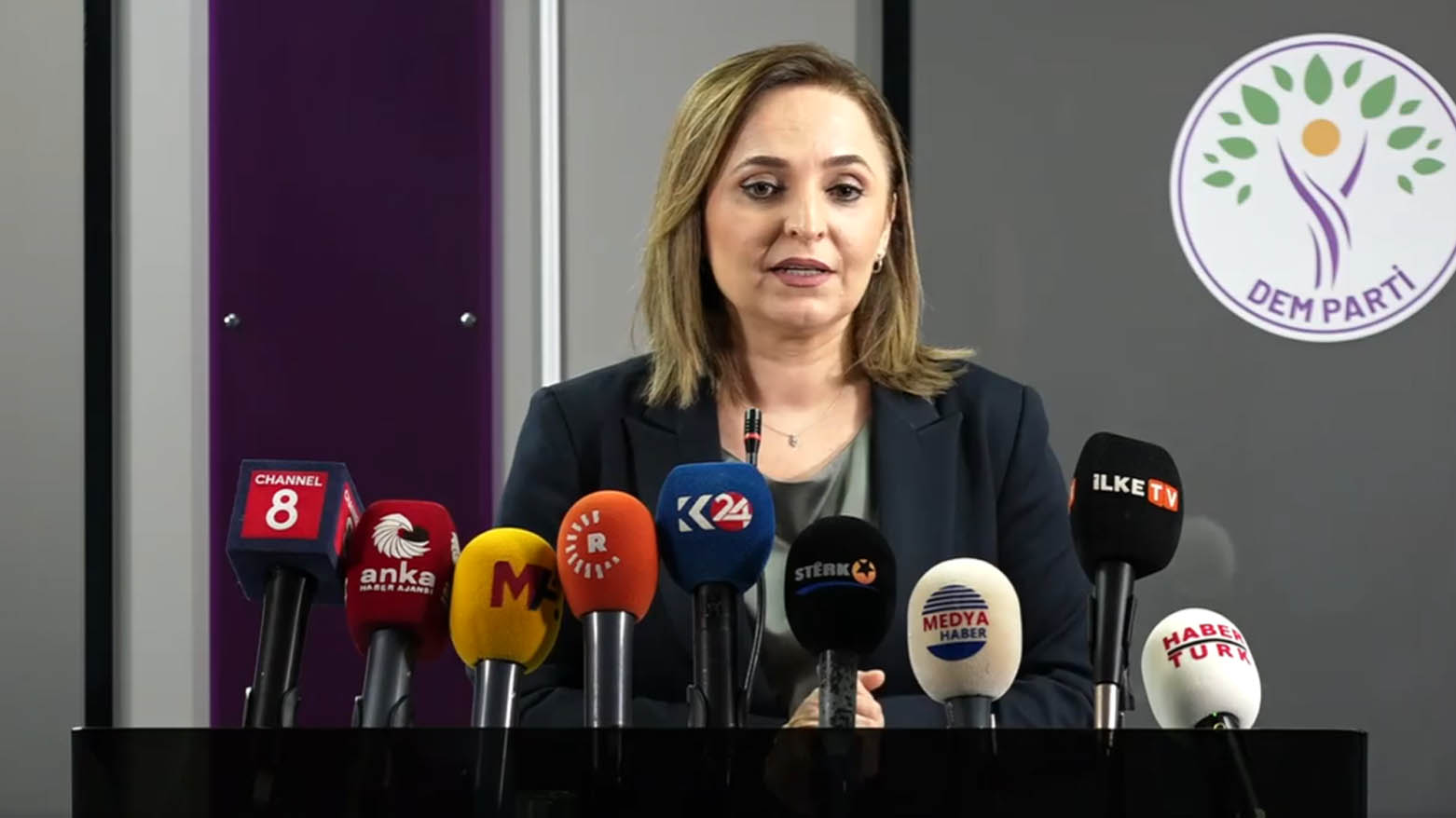
ERBIL (Kurdistan24) – Ayşegül Doğan, the Spokesperson for the Peoples' Equality and Democracy Party (DEM Party), issued a call on Friday for a shift in regional perspective, urging that the political and social achievements of the Kurdish people should be accepted rather than perceived as a threat. Speaking at a press conference, Doğan emphasized the need for a positive peace process involving Türkiye and Syria, highlighting the existing relationship between Ankara and the Kurdistan Region of Iraq as a blueprint for stability.
Doğan addressed the historical fragmentation of the Kurdish population due to geographical borders, asserting that despite physical separation, "at heart, all Kurds are united." She stated that the cultural identity of the Kurdish individual transcends borders, a sentiment she noted has been reiterated thousands of times by her party.
"The rights and demands of the Kurdish people must be accepted and recognized," Doğan said. "Kurds protect their existence and will no longer accept lack of identity; the Kurdish language and identity are not a threat to any country."
The spokesperson specifically pointed to the diplomatic ties between Türkiye and the Kurdistan Region as a source of hope. "We ask that this relationship also exist between Türkiye and Rojava and be developed," she said, referring to the Kurdish-majority regions of northern Syria.
Doğan argued that if Türkiye aspires to be a leading country in peace, the path is open, and her party supports such a trajectory.
Context of Crisis in Kobani
Doğan's remarks come amid a deepening humanitarian and security crisis in Kobani, a major Kurdish city in northern Syria.
Reports from the ground indicate that the Syrian Arab Army (SAA) and affiliated armed groups have tightened a siege around the city and its surrounding villages, cutting off essential supplies and services.
Mustafa Sheikh Muslim, a lawyer residing in Kobani, told Kurdistan24 that the situation is at its "worst," with significant obstruction to the delivery of humanitarian aid.
Basic services such as electricity, drinking water, and internet have collapsed, isolating the population as winter conditions worsen. Journalist Redwan Bezar reported via video that the city is "completely besieged" amid heavy snowfall, with stocks of fuel, medicine, and baby formula running critically low.
The crisis is exacerbated by a massive influx of displaced persons.
Thousands of migrants from areas such as Ain Issa, Raqqa, and Girê Spî have sought refuge in Kobani, further straining depleted resources.
The Syrian Observatory for Human Rights (SOHR) has warned of a "major humanitarian disaster," citing both the physical blockade and international silence.
Regional and International Diplomatic Efforts
The escalation in Syria has drawn high-level diplomatic intervention.
President Masoud Barzani, speaking from Italy, called for stronger international support to safeguard Kurdish rights in Western Kurdistan.
He revealed that he had contacted Syrian President Ahmed Sharaa to warn against renewed conflict and confirmed a meeting in Erbil involving SDF Commander Mazloum Abdi, U.S. Special Envoy Tom Barrack, and CENTCOM Commander Admiral Brad Cooper.
"Our hearts and minds are with our brothers and sisters in Western Kurdistan," President Barzani said, emphasizing that while he would send forces if possible, the Barzani Charity Foundation is currently providing humanitarian aid.
SDF Commander Mazloum Abdi publicly welcomed the mediation role played by the Kurdistan Region.
In a statement on X, Gen. Abdi confirmed he met with President Nechirvan Barzani as part of efforts to bridge viewpoints between the SDF and the Syrian government. He expressed strong appreciation for the efforts of both President Masoud Barzani and President Nechirvan Barzani in coordinating with U.S. mediators to achieve a ceasefire.
Gen. Abdi also revealed that he received a phone call from French President Emmanuel Macron, who expressed support for the ceasefire and the return to dialogue.
Challenges to Peace and Stability
Despite diplomatic movements, the security situation remains volatile.
The United Nations High Commissioner for Refugees (UNHCR) reported that security conditions have blocked access to the al-Hol camp, a detention site housing thousands of ISIS-affiliated individuals, even after control shifted from Kurdish forces to the Syrian army.
Furthermore, political figures in Türkiye have linked the violence in Syria to domestic stability. Keskin Bayindir, co-chair of the Democratic Regions Party (DBP), stated that lasting peace in Türkiye is impossible as long as Western Kurdistan remains under attack.
"The sound of tanks and shelling in Western Kurdistan is incompatible with efforts to advance peace and dialogue," Bayindir said.
As the siege of Kobani continues and international actors push for a ceasefire implementation, Doğan’s call for the acceptance of Kurdish achievements highlights the central tension: whether the region's powers will view Kurdish autonomy as a security threat to be neutralized or a political reality to be integrated.