Trump Raises Possibility Iran Used Tomahawk in Deadly Strike on Iranian School
Trump says Iran could possess Tomahawk missiles used in a deadly strike on a girls’ school, while advisers privately urge a swift end to the war as early U.S. operations cost $5.6 billion in munitions, according to Politico, The Wall Street Journal and The Washington Post.
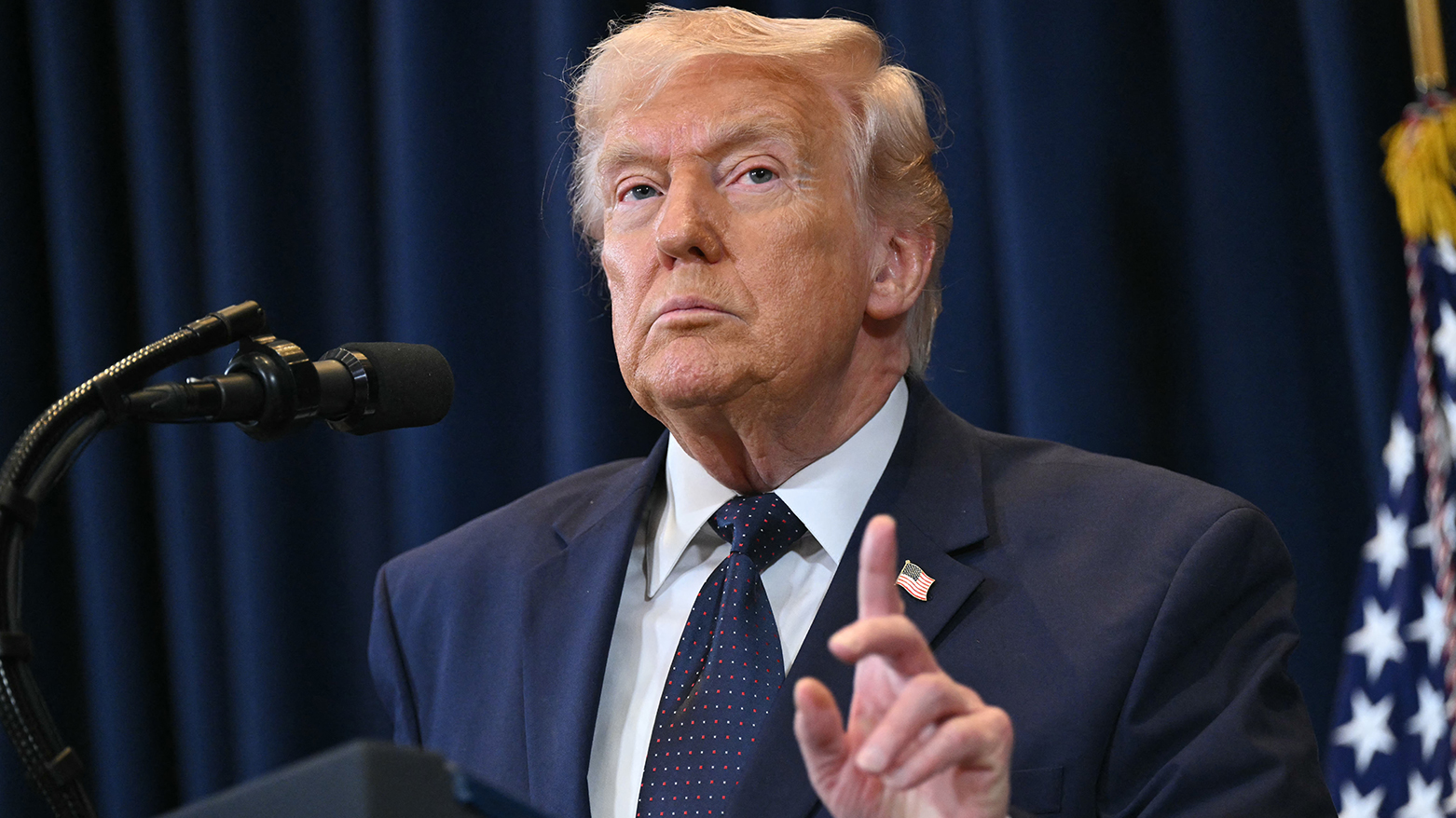
ERBIL (Kurdistan24) - U.S. President Donald Trump said Monday that Iran could possess Tomahawk cruise missiles similar to the weapon used in a deadly strike on a girls’ school in southern Iran, remarks he made during a news conference reported by Politico, while advisers privately encouraged him to seek a rapid end to the conflict, The Wall Street Journal reported, as U.S. officials disclosed that the first two days of the war consumed about $5.6 billion in American munitions, according to reporting by The Washington Post.
Speaking to reporters at a news conference, Trump said Iran and other countries use Tomahawk missiles like the one believed to have struck the school during the opening phase of the U.S.-Israeli air campaign against Iran, Politico reported.
Iranian authorities said the strike hit a girls’ elementary school in the southern city of Minab and killed about 175 people, most of them children, the outlet reported.
Trump told reporters he had not seen video of the attack and said investigators were still determining responsibility for the strike.
“Well, I haven’t seen it and I will say that the Tomahawk, which is one of the most powerful weapons around, is used by, you know, is sold and used by other countries,” Trump said, as quoted by Politico.
He added that Iran “also has some Tomahawks” and did not rule out the possibility that Iranian forces could have launched the weapon involved in the attack, according to the report.
“But whether it’s Iran or somebody else, the fact that a Tomahawk, a Tomahawk, is very generic. It’s sold to other countries. But that’s being investigated right now,” Trump said during the remarks cited by Politico.
The president also said he did not yet know who was responsible for the strike and confirmed that an investigation was underway.
“I just don’t know enough about it,” Trump said, in comments reported by the publication. “I think it’s something that I was told is under investigation.”
Neither Iran nor Israel are known to possess Tomahawk missiles, a U.S.-manufactured weapon used by several allied countries including Britain, Australia, and the Netherlands, Politico noted in its report.
Trump had first suggested that Iran might have carried out the attack during remarks aboard Air Force One on Saturday, telling reporters that “in my opinion and based on what I’ve seen, that was done by Iran,” according to Politico’s account of the exchange.
The president’s comments came as broader questions emerged inside the administration about how long the conflict with Iran might continue.
According to The Wall Street Journal, Trump told reporters in Florida on Monday that he believed the war could end “very soon,” while some advisers privately urged him to consider an exit plan amid rising oil prices and concerns about political fallout.
During the remarks, Trump said the military campaign had largely achieved its objectives.
“We’re way ahead of schedule,” Trump said, as cited by The Wall Street Journal.
He added that he believed the conflict might conclude soon, although he did not specify a timeline.
“We want a system that can lead to many years of peace, and if we can’t have that, we might as well get it over with right now,” Trump said in comments reported by the newspaper.
The military campaign began on Feb. 28 with coordinated U.S. and Israeli strikes against Iranian military facilities, missile sites, and government installations, U.S. officials told The Wall Street Journal.
According to the newspaper’s reporting, the Trump administration has said the central objective of the operation is to prevent Iran from threatening the United States or its regional allies by targeting elements of its nuclear and ballistic missile programs.
People familiar with internal discussions told The Wall Street Journal that several of the president’s advisers have recently encouraged him to present the military operation as largely successful and outline a path toward ending the conflict.
Those advisers expressed concern that a prolonged war could create economic pressures and weaken political support, according to the newspaper.
Oil prices briefly surged above $100 per barrel in recent days before retreating, developments that prompted concern among some of Trump’s political allies, the Journal reported.
Stephen Moore, described as an outside economic adviser to the president, said higher energy prices could have broader economic effects.
“When the price of gas and oil rise, so does everything else. Given affordability was already an issue, this leads to real challenges,” Moore said, according to The Wall Street Journal.
Trump said Monday that the United States could take steps intended to stabilize oil markets, including removing certain “oil-related sanctions” on some countries, though he did not identify which nations might be affected, the Journal reported.
The president also said the United States could provide “risk insurance” to tankers operating in the region and that the U.S. Navy and its partners might escort oil tankers through the Strait of Hormuz if necessary.
“We will escort the tankers if it’s needed,” Trump said, according to the Journal’s coverage.
Despite the president’s remarks suggesting the war might conclude soon, some administration officials indicated that a U.S. withdrawal could prove difficult if Iran continues launching attacks across the region or if Israeli operations persist, according to The Wall Street Journal.
A senior administration official told the newspaper that Trump would not end the campaign until he could claim a satisfactory outcome, particularly given what officials described as a U.S. military advantage.
White House press secretary Karoline Leavitt also rejected reporting that advisers were pushing Trump toward a rapid end to the war.
“This story is full of crap from anonymous sources who, I can guarantee, are not in the room with President Trump,” Leavitt said in a statement quoted by The Wall Street Journal.
“The president’s top aides are focused 24/7 on ensuring Operation Epic Fury continues to be a tremendous success, and the end of these operations will ultimately be determined by the commander in chief,” she added.
Trump’s public statements about the conflict have shifted in recent days. Last week he said he was seeking Iran’s “unconditional surrender” and declined to rule out sending U.S. ground forces into the country, The Wall Street Journal reported.
On Monday he told the New York Post he was “nowhere near” issuing such an order, according to the newspaper’s account.
After saying the war could end soon, Trump also indicated that military operations might expand if necessary.
“We could go further, and we’re going to go further,” he said, as quoted by The Wall Street Journal.
Alongside the policy debate, new information has emerged about the scale and cost of the opening phase of the conflict.
The Washington Post reported Monday that the Pentagon spent approximately $5.6 billion in munitions during the first two days of its assault on Iran.
Three U.S. officials shared the estimate with Congress on Monday, according to the newspaper’s reporting.
The figure reflects the heavy use of precision-guided weapons during the initial wave of strikes, officials told The Washington Post.
U.S. Central Command has said that more than 5,000 targets in Iran have been struck since hostilities began, using more than 2,000 munitions, according to details cited in the Post’s report.
Officials said the early phase of the campaign relied heavily on advanced weapons such as Tomahawk cruise missiles and sophisticated air defense interceptors, the newspaper reported.
Defense Secretary Pete Hegseth and Joint Chiefs Chairman Gen. Dan Caine said last week that the campaign would gradually transition away from expensive precision munitions and rely more heavily on laser-guided bombs, according to The Washington Post.
Mark Cancian of the Center for Strategic and International Studies said the change would significantly reduce the cost of each strike.
Some laser-guided bombs cost less than $100,000, compared with precision munitions that can cost millions of dollars per round, Cancian said, as cited by the newspaper.
The Pentagon has also begun redirecting military resources from other global theaters to support operations in the Middle East, according to The Washington Post.
U.S. officials told the newspaper that components of a Terminal High Altitude Area Defense system are being moved from South Korea to the region.
The military is also drawing from its stocks of Patriot interceptor missiles in the Indo-Pacific and elsewhere to strengthen defenses against Iranian missile and drone attacks, the report said.
One official told The Washington Post that the redeployments were precautionary and intended to ensure sufficient air defense capability if Iran increased the scale of its retaliatory strikes.
Cancian said heavy use of those systems could affect U.S. readiness in other regions.
“The more THAADs and Patriots you shoot, the more risk you assume in the Indo-Pacific and in Ukraine,” Cancian said, according to The Washington Post.
The conflict has also resulted in casualties among U.S. forces.
Seven American service members have been killed since fighting began on Feb. 28, including six who died during an Iranian drone strike in Kuwait and one killed in an attack in Saudi Arabia, according to figures cited by The Washington Post.
Three U.S. F-15 fighter jets were also destroyed in a friendly-fire incident involving Kuwaiti forces, each aircraft estimated to cost about $100 million, Cancian said in comments reported by the newspaper.
Iran has responded to the U.S.-Israeli campaign with missile and drone attacks targeting U.S. bases and regional infrastructure, including airports and oil facilities, U.S. officials told The Wall Street Journal.
Meanwhile, the U.S. State Department said Monday that more than 36,000 Americans have returned to the United States from the Middle East since the conflict began, according to the Journal’s reporting.
Trump said Monday that the investigation into the strike on the girls’ school in southern Iran remains ongoing and that he would accept its findings once completed.
“I will certainly, whatever the report shows, I’m willing to live with that report,” Trump said, according to Politico.