KRG Representative to Washington Urges U.S. Protection for Rojava Civilians Amid Deepening Humanitarian Crisis
KRG Representative Treefa Aziz called for U.S. protection of Rojava's civilians, supporting Trump administration efforts as Kobani faces a catastrophic siege and record-breaking winter weather.
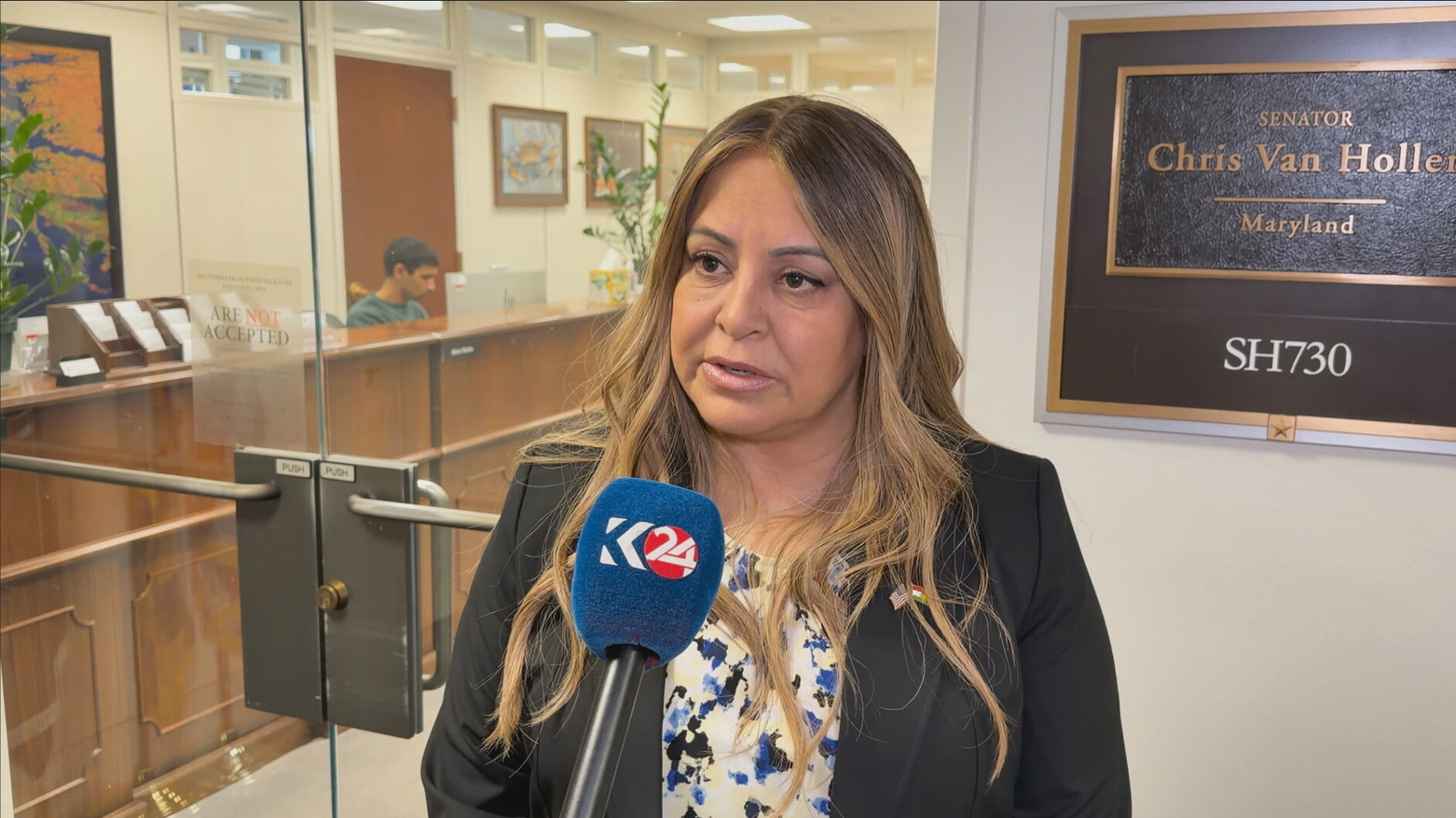
ERBIL (Kurdistan24) - The Kurdistan Regional Government’s (KRG) representative to the United States on Friday launched a diplomatic push on Capitol Hill, calling for urgent international intervention to protect civilians in Rojava, the Kurdish-majority region of northeastern Syria. The appeal comes as the city of Kobani remains under a tightening military siege and the region grapples with its most severe winter in half a century.
Treefa Aziz, the KRG Representative to the United States, disclosed on Friday, Jan. 23, 2026, that she has initiated a series of high-level briefings with members of the U.S. Congress.
According to Aziz, the primary objective of these ongoing meetings is to secure a commitment from the United States to safeguard the Kurdish population from escalating military threats.
Speaking to Kurdistan24, she emphasized the gravity of the situation, stating that her office is working alongside regional leaders to ensure "peace and stability in Western Kurdistan."
Aziz noted that she has provided detailed assessments to U.S. lawmakers regarding the deteriorating conditions on the ground.
"We have asked them for their assistance and to focus their attention on the situation, to ensure that the innocent and blameless civilians of Western Kurdistan do not become victims and that their lives are protected," she said.
In articulating the official position of the Kurdistan Regional Government, Aziz expressed formal support for the diplomatic initiatives currently being pursued by the White House.
"As the Regional Government, we support the efforts of the Donald Trump administration to ensure peace in the region," she stated, highlighting the coordination between Erbil and Washington as they navigate a volatile geopolitical landscape.
Suffocating Siege in Kobani
The diplomatic efforts in Washington coincide with a catastrophic humanitarian situation in the city of Kobani.
Local sources and medical relief groups report that the city and its surrounding villages have been placed under a "suffocating siege" by armed factions affiliated with the transitional government in Damascus.
Despite a previously announced regional ceasefire, the encirclement has reportedly intensified, preventing the entry of essential life-saving supplies.
The Kurdish Red Crescent team operating in the city issued a formal appeal on Friday to the United Nations, specifically addressing the United Nations High Commissioner for Refugees, Barham Salih.
The medical group characterized the offensive as a "brutal military campaign" that has effectively severed access to water, fuel, and food for the civilian population. Medical workers warned that the current environment evokes "painful memories" of the city's previous siege by the Islamic State (ISIS), asserting that the humanitarian status is now "catastrophic."
The siege has triggered a significant internal displacement crisis. Large numbers of families from rural districts have sought refuge within the city center, only to find themselves trapped without adequate shelter.
According to reports from the Kurdish Red Crescent, many of these families are being forced to sleep outdoors or in their vehicles. The situation has been further complicated by the recent termination of internet and communication services, which has severed the city’s link to international monitoring agencies.
Environmental Obstacles and Relief Efforts
The humanitarian emergency is being compounded by extreme weather. Stav Aso, the director of the Barzani Charity Foundation’s (BCF) Erbil office, told Kurdistan24 that the city of Qamishlo and its environs are currently facing snowfall that has not been witnessed in the region for more than 50 years.
Aso described the cold as "extreme" and the situation as "very difficult," justifying the need for a sustained and rapid relief response.
In Erbil, a public aid collection campaign has generated significant momentum. Aso confirmed on Friday that more than 100 million Iraqi dinars in cash have been collected from citizens and philanthropists.
On the same day, the BCF dispatched two heavy transport trucks toward the border; the first was loaded with food, baby formula, and diapers, while the second carried blankets, mattresses, and winter provisions. Foundation officials noted they are currently waiting to fill a third truck to continue the flow of aid.
Beyond the public campaign, the BCF has maintained a long-standing operational presence.
Karzan Noori, a member of the BCF Administrative Board, stated that the foundation has delivered a total of 102 trucks—comprising more than 850 tons of essential supplies—to Rojava through its warehouses and international partners.
Noori added that a specialized medical team of more than 25 doctors and staff is providing services in the region, having treated 685 individuals in just the last two days. However, the siege remains a formidable barrier; the BCF is currently utilizing diplomatic channels to attempt to establish a humanitarian corridor to reach those trapped inside Kobani.
Security Volatility and Allegations of War Crimes
The humanitarian crisis is developing alongside a deepening security vacuum. Farhad Shami, the spokesperson for the Syrian Democratic Forces (SDF), released a comprehensive dossier on Friday alleging that the Syrian Arab Army and affiliated militias have committed a series of war crimes during the 17-day military campaign.
The dossier lists 51 specific incidents, including the targeting of medical facilities.
A focal point of these allegations is the Khaled Fajr Hospital in the Sheikh Maqsud neighborhood of Aleppo.
According to the SDF, the hospital was besieged for three days, leaving patients and staff without food before it was subjected to heavy shelling and drone attacks.
The SDF also published graphic video evidence purportedly showing the burning of mutilated human remains and the torture of captives by government-affiliated factions. Shami characterized these acts as an "extreme level of brutality" and a clear breach of international law.
These reports have fueled a sense of existential dread among the Kurdish leadership.
Elham Ahmad, the Head of Foreign Relations for the Autonomous Administration of North and East Syria (DAANES), issued a public message crediting the Kurdish diaspora as a "true line of defense" for the region. She called for continued international advocacy to prevent what she described as the "threat of genocide" against her people.
Diplomatic Maneuvering in Erbil
As the military encirclement continues, high-level diplomatic activity has centered on Erbil. President Masoud Barzani recently hosted a meeting with U.S. Special Envoy Tom Barrack and U.S. Central Command (CENTCOM) Commander Admiral Brad Cooper.
While these talks reportedly resulted in "positive steps" toward a ceasefire, the situation remains precarious.
Megan Bodette, the Director of Research at the Kurdish Peace Institute, reported from Qamishlo on Friday that the Syrian Arab Army is continuing its advance toward Kobani.
She highlighted a significant fear among residents that armed forces intend to cut the strategic road between Qamishlo and Derik. If successful, this maneuver would sever the primary escape route toward the borders of the Kurdistan Region of Iraq, effectively trapping the population as the ceasefire deadline approaches.
The convergence of military pressure, a record-breaking winter, and a systematic blockade has left the population of Rojava in a state of acute vulnerability. While Aziz continues her advocacy in Washington and the BCF scales its relief operations in Erbil, local officials and monitoring groups emphasize that only a decisive international intervention can prevent a major loss of life in the besieged districts.