PYD Co-Chair to Kurdistan24: We Are Striving to Resume Negotiations with Damascus
PYD Co-Chair Parwin Yusuf seeks constitutional enshrinement of Kurdish rights as the SDF-Damascus ceasefire is extended for one month. A lethal siege on Kobani remains the primary humanitarian focus.
ERBIL (Kurdistan24) - The political leadership of northeastern Syria is moving to capitalize on a newly extended ceasefire to resume negotiations with the central government in Damascus, seeking a decentralized governing model that would formally enshrine Kurdish rights within the Syrian constitution.
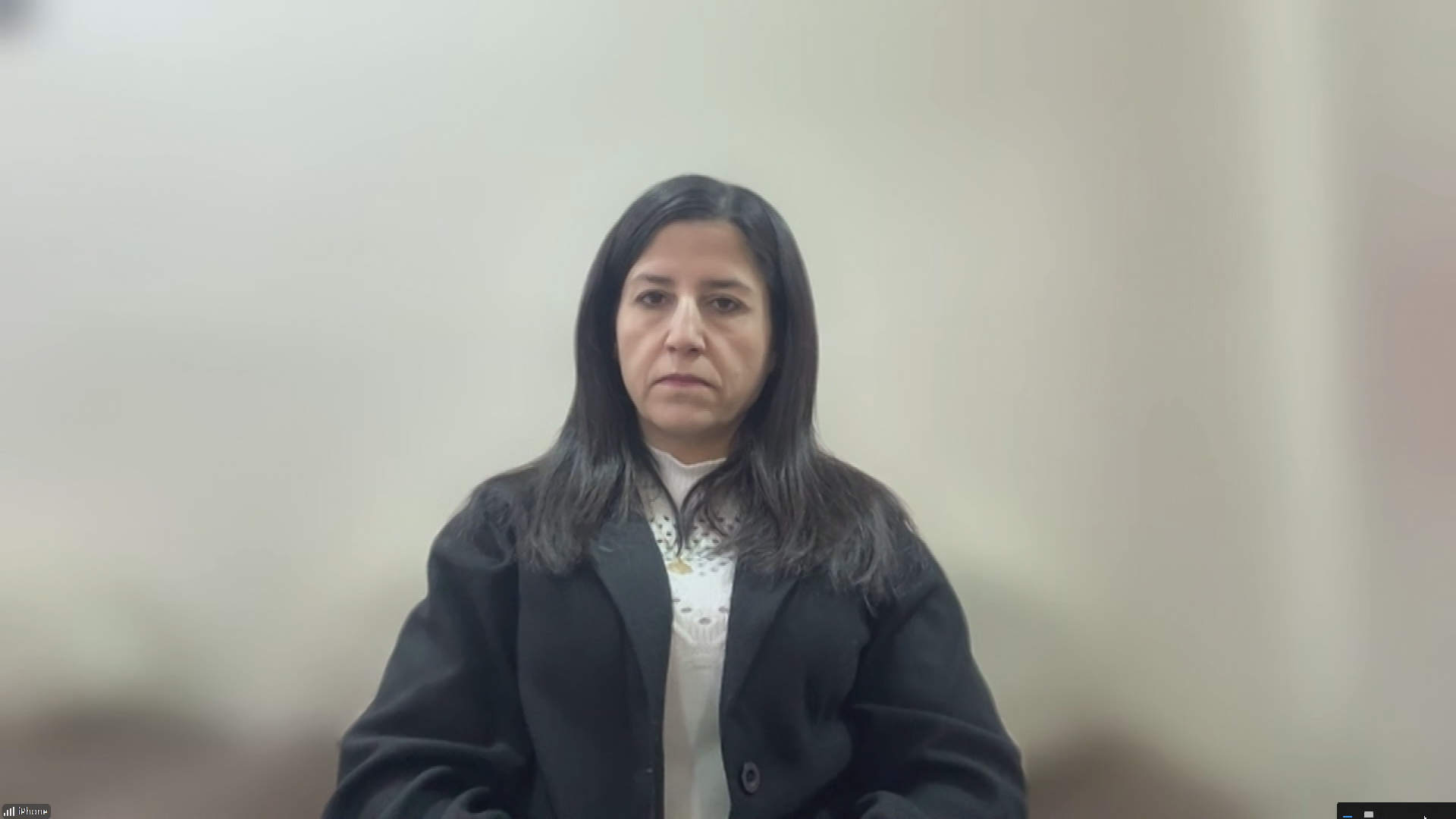
Parwin Yusuf, the Co-Chair of the Democratic Union Party (PYD), stated on Saturday that while the region remains in a "sensitive phase" characterized by a catastrophic siege in the city of Kobani, the Autonomous Administration remains committed to finding a political solution that satisfies all parties.
Speaking during an appearance on Kurdistan24’s news bulletin on Saturday, Jan. 24, 2026, Yusuf emphasized that the current priority is to transform the temporary cessation of hostilities into a lasting framework for stability.
Her remarks coincided with reports from diplomatic and local sources that the Syrian Arab Army and the Syrian Democratic Forces (SDF) have agreed to extend a ceasefire—originally scheduled to expire at 8:00 p.m. local time on Saturday—for at least one additional month.
The PYD Co-Chair articulated a vision for the future of the Syrian state that balances national unity with regional autonomy. She stated that the administration is ready to become an integral part of the Syrian government, provided that the political and cultural rights of the Kurdish people are given constitutional protection.
Yusuf characterized the desired outcome as a democratic and decentralized system where the rights of all ethnicities and religions are protected. "We are ready to become part of the Syrian government, but our rights must be enshrined in the constitution," she told Kurdistan24.
The diplomatic reprieve provided by the ceasefire extension follows weeks of intense combat and a rapidly deteriorating humanitarian environment.
While no official public statement has been issued by either the SDF or Damascus regarding the specific terms of the extension, three informed sources told Agence France-Presse (AFP) that the truce will remain in effect for at least thirty days.
A diplomatic source in Damascus noted the extension could reach a month, while a Kurdish official familiar with the discussions stated that the duration is intended to bridge the gap until a comprehensive political settlement is reached.
The suspension of active combat is particularly critical for the city of Kobani, which Yusuf reported has been under a tightening military encirclement for 10 days.
The city is currently besieged on three sides by the Syrian Arab Army, while the border with Turkey remains closed on the fourth side. This isolation has precipitated what local officials and monitoring groups describe as an imminent humanitarian disaster.
According to field reports provided to Kurdistan24, the blockade has resulted in a total collapse of essential services in Kobani.
Electricity and water have been cut off since Jan. 15, and a severe shortage of fuel, medicine, and food has paralyzed daily life for the approximately 150,000 civilians trapped within the city. The human cost of the siege became lethal on Saturday, as four children were reported to have died from causes related to extreme cold exposure.
Dilan Barzan, a Kurdistan24 correspondent in Western Kurdistan, reported that the humanitarian situation is at its "worst," noting that families displaced from the outskirts are currently sheltering in mosques and schools with little more than the clothes they were wearing.
The crisis in Kobani has unfolded despite an ambitious regional aid mobilization led by the Barzani Charity Foundation (BCF). Earlier reports indicate that the foundation has successfully delivered 102 trucks—consisting of over 850 tons of food and essential supplies—to other parts of Rojava.
Furthermore, the BCF has tripled its fuel distribution to 300,000 liters to assist families during a winter season that regional experts say is the most severe in five decades. However, none of this assistance has been able to penetrate the military lines surrounding Kobani.
Musa Ahmad, the President of the Barzani Charity Foundation, stated on Saturday that discussions with relevant parties to establish a humanitarian corridor are "close to reaching a result," as the foundation awaits the necessary permissions to deliver aid to the besieged population.
The United Nations has also voiced significant concern over the isolation of the city. Farhan Haq, the Deputy Spokesperson for the UN Secretary-General, stated on Friday that all access routes to Kobani remain closed, a situation he said is worsening by the day.
Haq confirmed that while the UN has facilitated aid to Hasakah, Raqqa, and Deir ez-Zor, it has formally requested specific facilitation from officials in Aleppo to reach Kobani. The Kurdish Red Crescent team in the city has echoed these pleas, warning of a "major humanitarian disaster" and appealing to the United Nations High Commissioner for Refugees for immediate intervention.
The diplomatic maneuvers between the SDF and Damascus are occurring in parallel with a significant U.S.-led security operation. Concurrently with the ceasefire, the United States has initiated the transfer of approximately 7,000 Islamic State (ISIS) prisoners from facilities in Syria to Iraq.
Iraqi officials confirmed that a convoy of 150 fighters, including prominent European militants and organizational leaders, reached Iraq on Wednesday after being moved from a prison in Hasakah. Amnesty International has noted that this prisoner population is diverse, including Syrian, Iraqi, and foreign nationals, as well as an estimated 1,000 youth and minors.
The security of these detention facilities has been a recurring theme in the negotiations. Observers have warned that any renewed military confrontation could jeopardize previous agreements, such as the March 10 integration roadmap between SDF Commander Mazloum Abdi and Syrian Interim President Ahmed al-Sharaa.
The current one-month extension is viewed by analysts as a vital window to preserve these arrangements and prevent a total security collapse that could lead to mass ISIS prison breaks.
During her remarks, Yusuf highly valued the mediation efforts of the Kurdistan Region, specifically citing the role of President Masoud Barzani and Kurdistan Region's President Nechirvan Barzani in attempting to preserve peace and bring the viewpoints of the SDF and Damascus closer together.
She issued a call for political unity among all Kurdish parties across different regions, urging them to utilize their international relationships to support the cause in Rojava.
The prospect of a political solution appears bolstered by recent overtures from Damascus, including Decree No. 13 of 2026, which formally recognized Kurdish identity and language as an integral part of Syria’s national fabric. However, as Yusuf noted, the "sensitive phase" will require these promises to be translated into binding constitutional articles.
For the residents of Kobani, the success of these high-level negotiations is a matter of immediate survival. As the ceasefire enters its new month-long term, the focus of the international community remains on whether a humanitarian corridor will be opened to prevent further fatalities among the 150,000 civilians currently trapped by the blockade.