Iraqi Dinar Plummets Against Dollar as Citizens Rush to Exchange
Value of $100 jumps by 8,000 dinars in two days amid rising fear and market uncertainty.
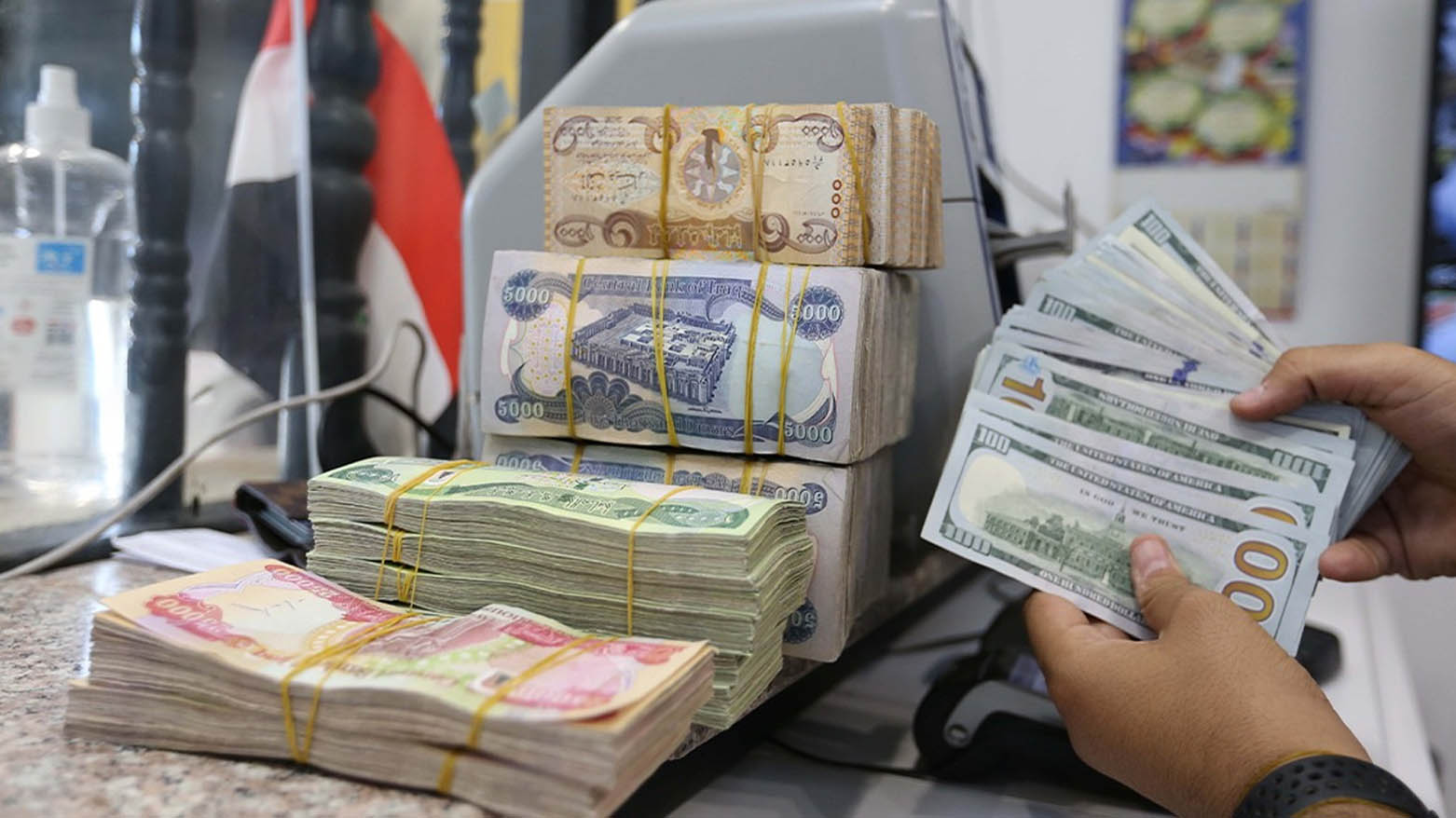
ERBIL (Kurdistan24) — The Iraqi dinar continued its sharp decline on Tuesday, with the exchange rate for $100 rising to 157,000 dinars in Erbil’s markets, up from 149,000 dinars on Monday, reflecting a surge in demand for U.S. currency. Currency traders attributed the rapid increase to widespread public concern and the ongoing preference to hold dollars over the domestic currency.
Tahsin Khushnaw, a local currency exchange office owner in Erbil, on Tuesday told Kurdistan24 that the dollar’s value has climbed noticeably in recent days.
“Previously, half of the funds in exchange offices were in dollars and half in dinars,” he said. “Now, three-quarters of cash is in dollars, leaving only a small portion in dinars. Citizens’ fear and the rush to convert dinars into dollars is one of the main reasons.”
Khushnaw also cited administrative changes as a contributing factor. The distribution of dollars through Iraq’s central bank to merchants has been disrupted, particularly due to the implementation of a new electronic customs system, leaving many traders unable to access official bank dollars and forcing them to turn to the open market.
“The lack of confidence in future stability has prompted many residents to exchange their dinars for dollars,” Khushnaw said.
He noted that political uncertainty in the region and fears of U.S. sanctions on Iraq over militia involvement in government have added pressure on the dinar.
Since the beginning of January, the dinar’s value has been on a rapid upward trajectory against the dollar in both the Kurdistan Region and Baghdad. Traders say delays and new regulations in the official currency transfer system have further pushed them to seek dollars from market sources, amplifying the surge.
Supporting the dinar’s volatility, Iraq’s central bank imposed 22 financial penalties on local banks over the past three months for violations of banking regulations, with fines totaling 34.4 billion dinars. The highest number of penalties in late 2025 was 13 fines, exceeding 18 billion dinars.
Over the previous year, a total of 120 asset-related penalties were issued, mostly during the first quarter, reflecting central bank efforts to enforce compliance among Iraq’s 74 licensed banks. Observers note that these sanctions, often linked to irregularities in cash handling and electronic transfers, have contributed to uncertainty in domestic financial markets.
The dinar’s steep depreciation coincides with tightening of electronic dollar transfers and escalating U.S. pressure on Baghdad regarding the inclusion of militias in the next government.
The domestic currency decline has occurred amid a historic surge in global gold prices, which exceeded $5,100 per ounce for the first time, signaling broader economic and geopolitical instability.
Kaifi Mohammed, a spokesperson for Erbil’s currency market, on Monday said market confidence has been undermined by administrative and political factors.
Procedures in the official banking transfer system have created bottlenecks for merchants needing dollars for international trade. Coupled with U.S. warnings regarding armed factions in Iraq’s next cabinet, merchants have rushed to secure dollars, driving the dinar’s fall.
Global gold markets are simultaneously reflecting geopolitical risk, large-scale bullion purchases, and expectations of lower interest rates from the U.S. Federal Reserve, further reinforcing the dinar’s volatility.
Economists warn that Iraq may face a “dangerous crossroads,” as U.S. threats to restrict access to the country’s oil revenues could trigger systemic salary shocks and broader financial disruption.
Observers stress that economic stability is now inseparable from political and security stability, and that ordinary citizens are bearing the brunt of the currency decline and rising cost of living.
As of Tuesday, merchants across Erbil and Baghdad remain on high alert, closely monitoring exchange rates for further signs of currency fluctuations.