Legacy of Idris Barzani Recalled as Kurdistan Observes Anniversary of His Passing
Kurdistan marks the 39th anniversary of Idris Barzani's passing. A veteran diplomat and commander, he played a vital role in the 1970 Accord and the Gulan Revolution to reorganize Kurdish forces.
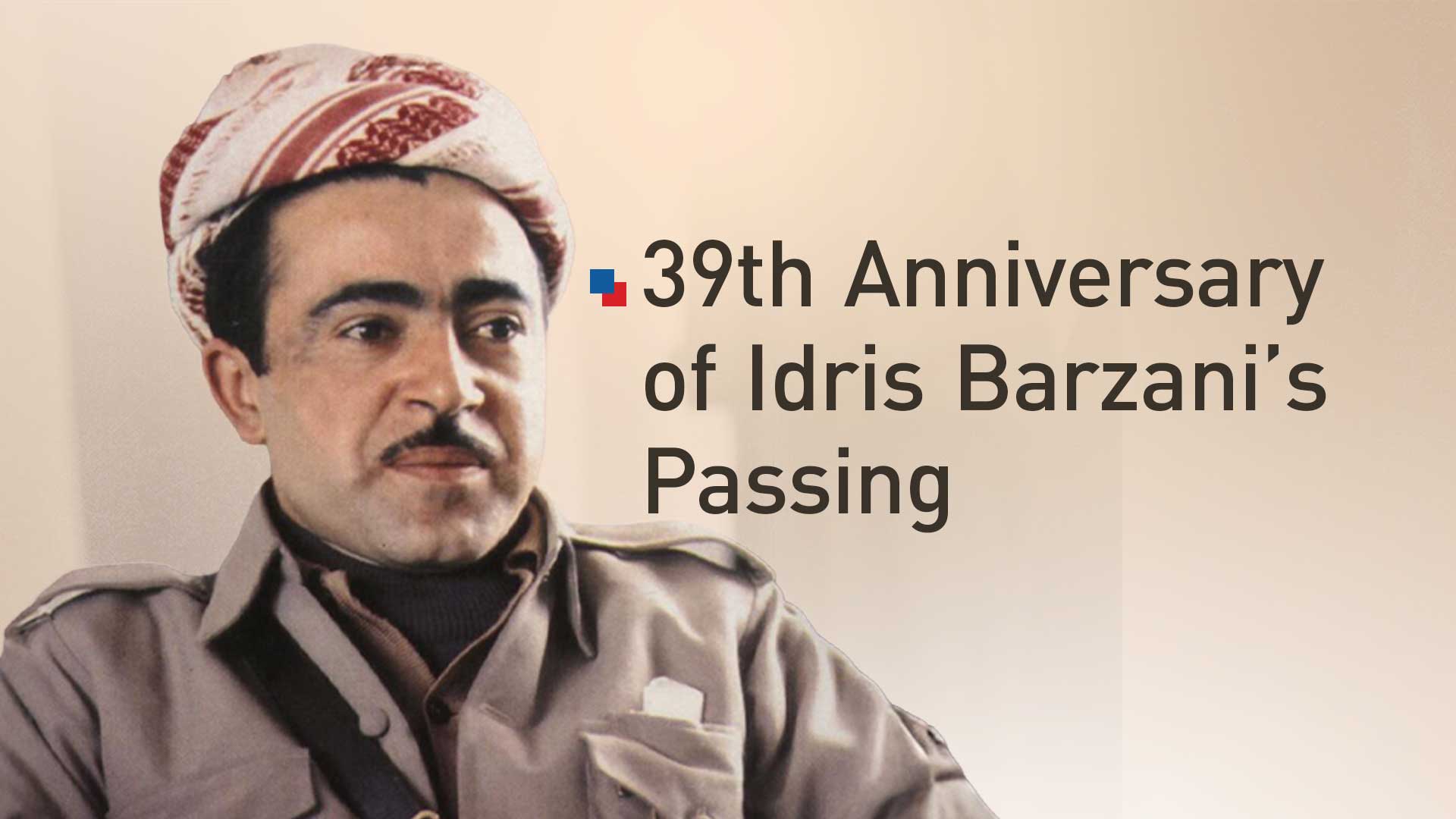
ERBIL (Kurdistan24) - The Kurdistan Region on Saturday marked the 39th anniversary of the passing of Idris Mustafa Barzani, a prominent Kurdish leader and military strategist whose career was defined by efforts to unify political factions and negotiate landmark autonomy agreements. The commemoration, held on Jan. 31, 2026, honors a figure whom regional historians describe as a vital bridge of communication between diverse political parties and the various social components of Kurdistan during a period of significant regional upheaval.
Born in 1944 in the village of Barzan, Idris Barzani’s early life coincided with an era of profound political change for the Kurdish people. His birth took place during the Third Barzan Revolution and near the time of the establishment of the Republic of Kurdistan in Mahabad.
According to biographical records, these formative years were interrupted by the collapse of the Kurdistan republic and the 1947 departure of his father, the Kurdish leader Mulla Mustafa Barzani, to the Soviet Union.
Following these events, the four-year-old Idris Barzani and his family were subjected to an 11-year exile in southern and central Iraq. Between 1947 and 1958, the family endured what reports characterize as a difficult life marked by significant hardships while residing in the cities of Basra, Mosul, and Baghdad.
This decade of internal displacement ended only with the shifting political tides in Iraq that allowed for a brief period of return before the resumption of hostilities.
The late Idris Barzani’s transition from a victim of exile to a capable military and political leader began in earnest with the outbreak of the September Revolution in 1961. Participating as a Peshmerga fighter, he quickly established a reputation for bravery and competence on the battlefield.
Historical accounts indicate that his skills earned him the high trust of the late Mulla Mustafa Barzani, who subsequently entrusted him with substantial administrative and military responsibilities.
By the late 1960s, Idris Barzani had moved into the diplomatic sphere, serving as a primary negotiator for the Kurdish movement. He played a central role in the discussions that culminated in the March 11, 1970 Accord.
This agreement is regarded as one of the most significant historic achievements of the Kurdish liberation movement, as it provided a formal framework for Kurdish autonomy within Iraq, though its implementation was eventually hindered by the central government.
The Kurdish movement faced a severe strategic setback in 1975 following the signing of the Algiers Agreement between Iraq and Iran, which resulted in the collapse of the September Revolution. In the aftermath, Idris Barzani, working in close coordination with his brother Masoud Barzani, was instrumental in reorganizing the displaced Peshmerga forces.
This period saw the launch of the Gulan Revolution, a renewed effort to continue the Kurdish struggle under restructured leadership. During this phase, Idris Barzani also took on the responsibility of supervising the large numbers of Kurdish refugees who had fled to Iran following the 1975 collapse.
Idris Barzani’s life was cut short on January 31, 1987, when he died of a heart attack at the age of 43. His passing occurred in the Silvana sub-district of Urmie, located in East Kurdistan (Iran). He was initially laid to rest in the city of Şino (Shino or Oshnavieh), interred beside his father.
Following the 1991 Uprising and the subsequent liberation of portions of the Kurdistan Region, the remains of both Mulla Mustafa Barzani and Idris Barzani were repatriated. In October 1993, during a solemn national ceremony, their remains were brought back to their birthplace in the village of Barzan and interred in the soil of their homeland.
Observers of Kurdish history note that Idris Barzani’s legacy remains a cornerstone of the region's political philosophy.
His emphasis on patriotism and the necessity of internal unity continues to be cited by current political leaders as a prerequisite for peace. As the 39th anniversary is observed across the region, he is remembered not only as a commander but as a diplomat who sought to resolve domestic differences through dialogue and shared national purpose.