Iran Declares European Armies “Terrorist Groups” in Retaliation for EU Move Against IRGC
Tehran warns of consequences after EU designates Revolutionary Guards a terrorist organization.
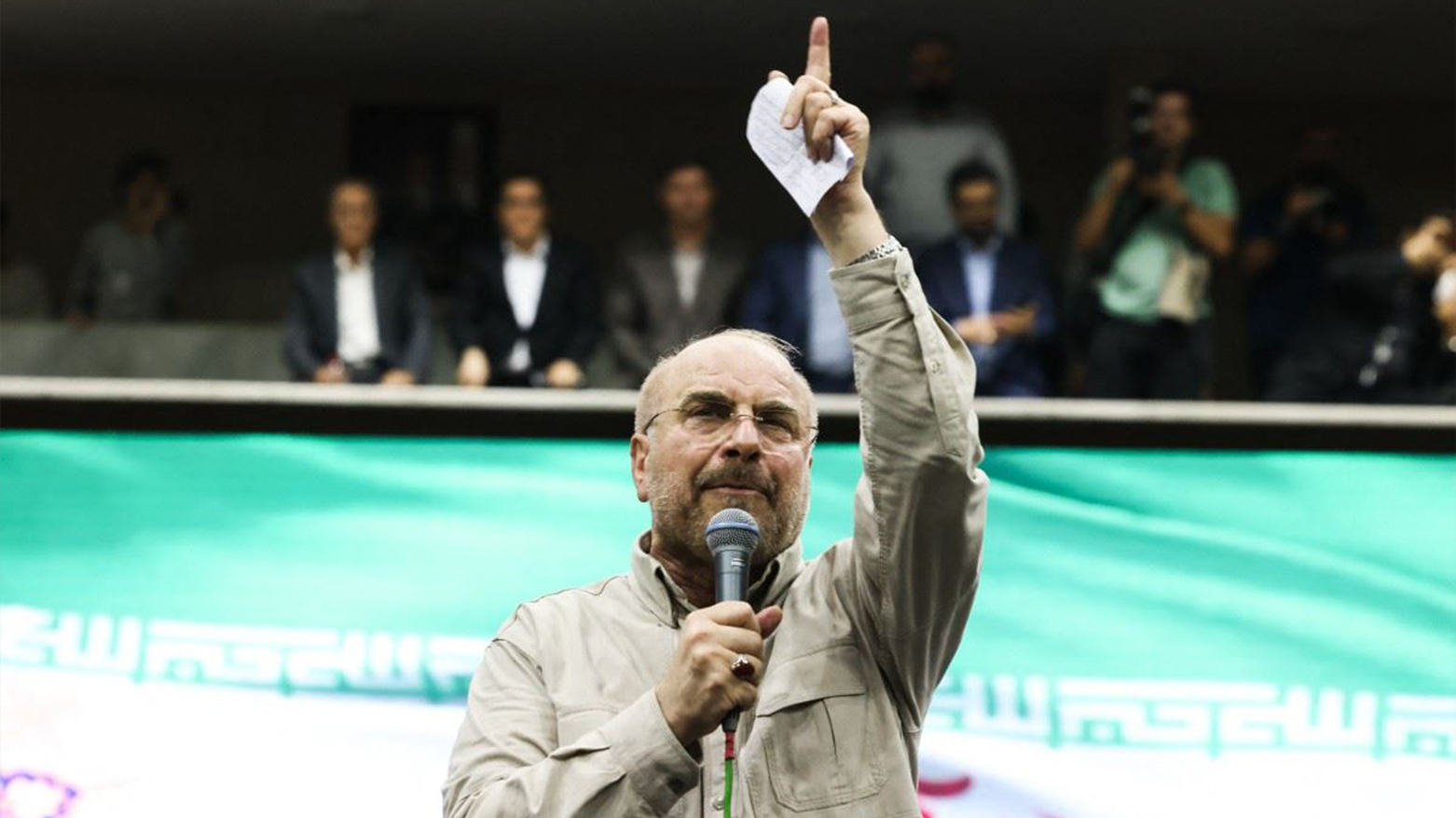
ERBIL (Kurdistan24) — Iran on Sunday declared the armies of European countries to be “terrorist groups,” in a retaliatory move following the European Union’s decision to designate the Islamic Revolutionary Guard Corps (IRGC) as a terrorist organization, according to remarks by Iranian parliament speaker Mohammad Bagher Ghalibaf.
Speaking in parliament while wearing an IRGC uniform in a show of solidarity, Ghalibaf said that under Article 7 of Iran’s “Law on Countermeasures Against the Declaration of the IRGC as a Terrorist Organization,” the armed forces of European states would now be considered terrorist entities.
It remained unclear what immediate practical or legal consequences the declaration would entail.
The move comes days after the EU agreed to blacklist the IRGC over its role in an alleged deadly crackdown on mass protests in Iran. European Commission President Ursula von der Leyen said the designation was “long overdue,” describing the Iranian authorities as a regime that “crushes its own people’s protests in blood.”
While the EU step is widely seen as largely symbolic, it has already drawn sharp warnings from Tehran, which said the decision would have “destructive consequences.”
Alongside the designation, the 27-member bloc imposed visa bans and asset freezes on 21 Iranian state entities and officials, including the interior minister, the prosecutor general, and regional IRGC commanders, citing repression of protesters.
Iranian authorities acknowledge that more than 3,000 people were killed during the unrest, claiming most were members of the security forces or bystanders killed by “rioters.” Rights groups dispute that figure, saying the death toll could be far higher—possibly in the tens of thousands—and accuse security forces, including the IRGC, of directly firing on demonstrators.
The IRGC, an ideological pillar of Iran’s military established after the 1979 Islamic Revolution to protect the clerical system, wields vast political and economic influence and controls major sectors of the Iranian economy.
Although the organization and its senior commanders were already under EU sanctions, officials acknowledged that formally adding the IRGC to the terror blacklist is unlikely to have a significant additional practical impact.
EU foreign policy chief Kaja Kallas said diplomatic channels with Tehran were expected to remain open despite the designation. The move followed shifts in position by France and Italy, with Paris previously seen as hesitant due to concerns over Europeans detained in Iran and the desire to preserve diplomatic engagement.
French Foreign Minister Jean-Noël Barrot said the decision sent a clear message that there would be “no impunity” for crimes committed by Iranian authorities, urging Tehran to release detainees, halt executions, lift internet restrictions, and allow Iranians to “choose their own future.”
The EU decision was welcomed by Israel as a “historic” step and aligns the bloc with similar designations already adopted by the United States, Canada, and Australia.