KRG Health Minister Reports Continued Annual Decline in Cancer Rates
Health Minister Saman Barzanji said cancer rates in the Kurdistan Region are declining, with 10,481 new cases recorded last year. Free PET scans, electronic tracking, and a legal support fund have expanded cancer care.
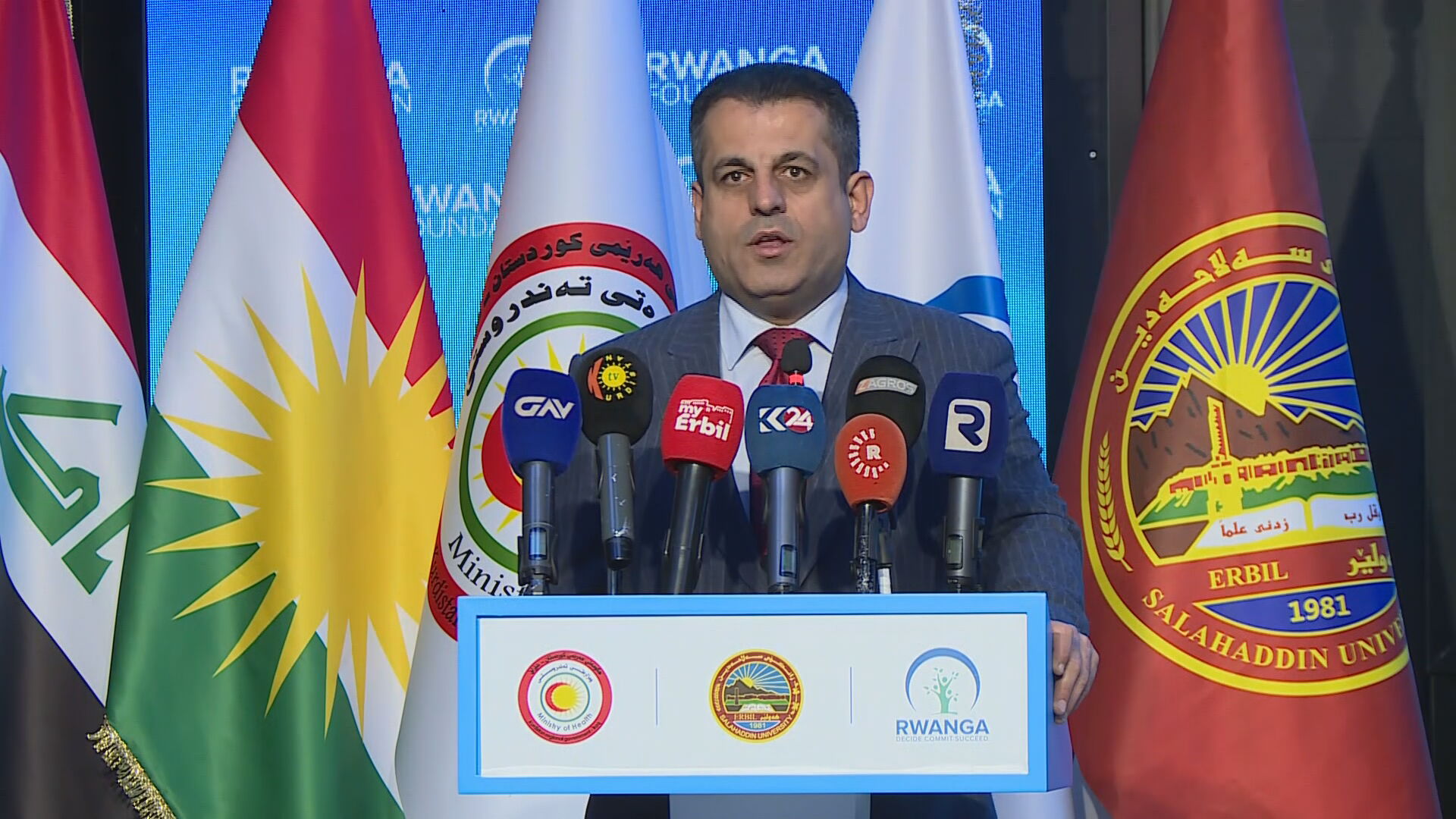
ERBIL (Kurdistan24) - Kurdistan Region Health Minister Saman Barzanji said cancer rates in the Kurdistan Region are declining, with 10,481 new cases recorded last year. Free PET scans, electronic tracking, and a legal support fund have expanded cancer care. Saman Barzanji stood before medical staff and students at Salahaddin University and delivered a message of cautious reassurance: cancer rates in the Kurdistan Region are not only lower than in Iraq and other countries, but are also declining year after year.
Speaking during a World Cancer Day event at Salahaddin University, Barzanji said the incidence of cancer in the Kurdistan Region is lower than in Iraq and other countries and is decreasing annually. He noted that more than 10,000 new cases were recorded last year, nearly 40 percent of them from other Iraqi provinces.
He explained that over the past three years, cancer cases and deaths have been registered through a precise electronic system. “This system, which has been recognized by the World Health Organization, helps us produce accurate reports, and every patient now has a dedicated file and personal address,” he said.
Updated statistics and services
Barzanji revealed that 10,481 new cancer cases were registered last year. Between 35 percent and 40 percent of those patients came from other Iraqi provinces and sought treatment in the Kurdistan Region.
He stressed that PET scans are now being provided free of charge in the Kurdistan Region for the first time. Only last year, 3,300 such scans were conducted. In addition, 596 other cases that could not be treated in the public sector were covered by the support fund in private hospitals.
Government support and aid fund
The health minister said the Kurdistan Region is the only place with a legal support fund for cancer patients. He added: “In the ninth cabinet, with the continued support of Masrour Barzani, Prime Minister of the Kurdistan Region, this fund was activated even in the most difficult economic conditions to assist patients.”
Declining incidence rate
Barzanji emphasized that cancer rates are falling year by year. According to global figures, there are 190 cases per 100,000 people, while in the Kurdistan Region there were 151 cases the previous year, dropping to 141 last year.
He attributed the decline to government measures, public awareness, increased green spaces, projects to reduce chemical emissions, and an environmental lighting project. He also said the cancer mortality rate in the Kurdistan Region is significantly lower and that Iraq’s Ministry of Health is now working to replicate the Region’s support fund model in other cities.
These remarks came as Nanakali Hospital, a specialized cancer treatment center, released its 2025 statistics, reporting that 535,630 cancer screenings were conducted and 1,200 cancer files were opened.
As new data and expanded services reshape cancer care, the Kurdistan Region’s health system presents a model built on access, monitoring, and sustained government support.