Kurdistan24's Interview with Kurdistan Region PM Barzani
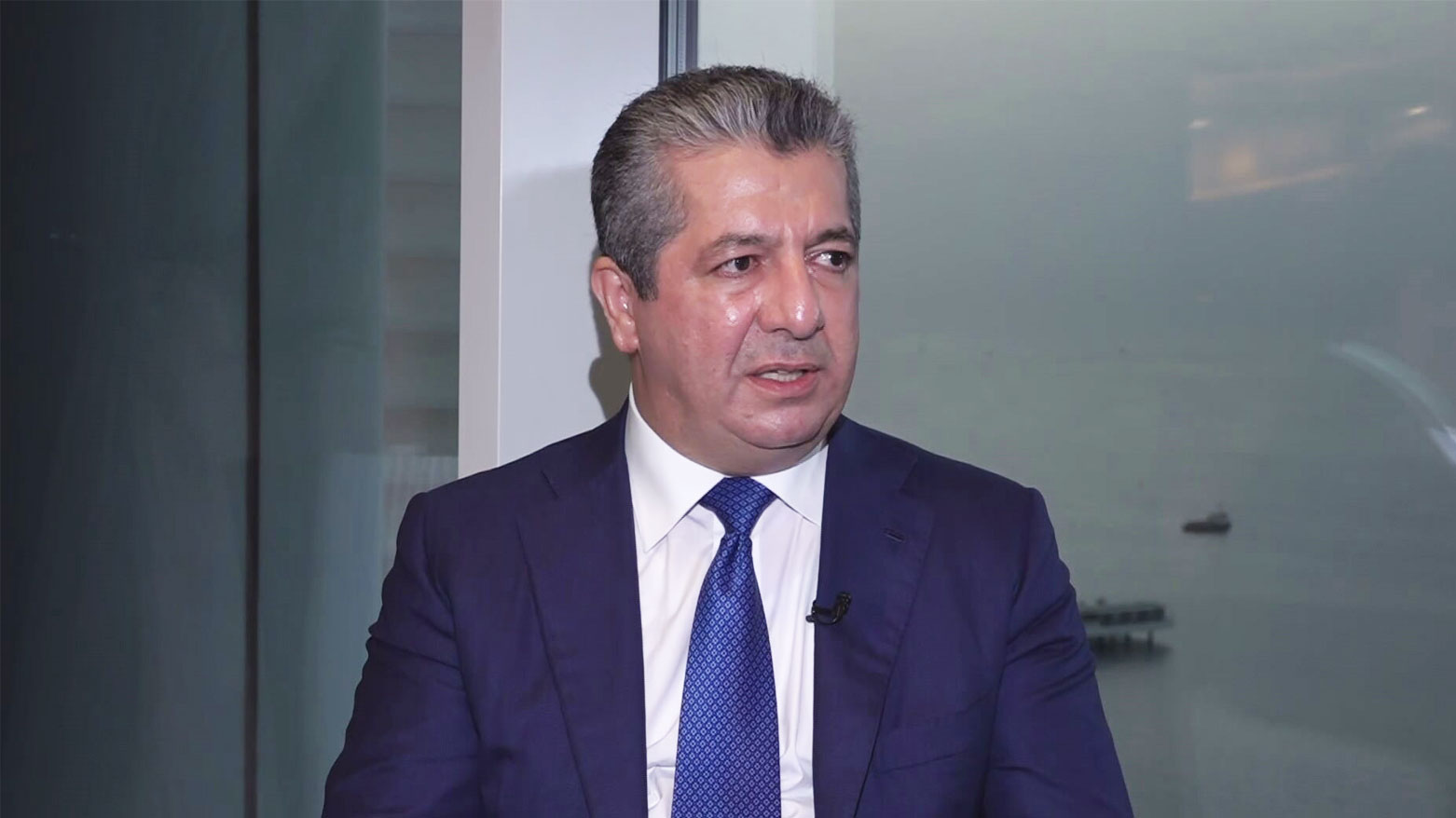
ERBIL (Kurdistan24) – The following is an interview with Masrour Barzani, the Prime Minister of the Kurdistan Region, conducted by Kurdistan24 presenter Ammar Najmaddin on Wednesday during the World Government Summit in Dubai:
Ammar Najmaddin: Good afternoon, Kurdistan24 viewers. At the World Governments Summit, we have the opportunity to hold a brief meeting with Kurdistan Region Prime Minister Masrour Barzani. Thank you for this opportunity. You are an active participant in the summit, and congratulations on your many meetings here. However, yesterday evening you had an important meeting with the President of the UAE. I looked at their newspapers this morning, which described the meeting as a brotherly one. Where did this relationship originate, and how has it developed with the UAE?
Masrour Barzani: We have had relations with the UAE for a long time and have great respect for its leadership, including the president and the prime minister. These relationships are based on mutual trust. We have maintained contact for a significant period, and these ties have strengthened day by day. Several UAE companies operate in the Kurdistan Region, and many Kurdish entrepreneurs and businessmen have invested in the UAE. This trade and economic relationship has enabled us to establish better economic ties. Politically, we share common views on the issues currently facing the region. We frequently exchange ideas and consult with each other to determine the best ways to protect our region from chaos and crises and to better serve our citizens. I believe this perspective has helped us further develop these relationships.
Ammar Najmaddin: How important is this summit for the Kurdistan Region, especially considering its theme on " Shaping Future Governments"? How can we take advantage of this summit?
Masrour Barzani: These summits are often attended by politicians, economic leaders, and CEOs of the world's largest companies. They provide a platform for exchanging political views and reaching a common understanding to prevent the escalation of tensions and crises, which is vital. We can meet and discuss with many leaders in a short period. Most of these meetings can be efficiently held here. Additionally, with the presence of global economic leaders, many look to successful experiences worldwide. Thankfully, the Kurdistan Region is now viewed as a successful model by many countries, and there is a significant opportunity for them to consider the Kurdistan Region as an example. We should promote the successful experiences from the Kurdistan Region to attract investors, which will contribute to economic recovery and development in the region, creating more jobs for the Kurdish people. Such summits allow us to maximize the benefits of our meetings.
Ammar Najmaddin: Returning to our domestic situation, if I may ask briefly, when will the deadlock in forming the government [Kurdistan Regional Government] be resolved?
Masrour Barzani: The formation of government is based on the will of the people. Once political parties recognize and respect the wishes of the Kurdish people and voters, forming a government becomes straightforward. Since we have agreed on the agenda, we do not foresee any issues with the government's program for the next cabinet. However, we cannot prioritize personal gain or specific positions over the supreme interests of the country. We must consider how to protect the highest interests of our nation. Our advocacy for the management of certain ministerial funds aims to better serve the citizens. Unfortunately, while we have often discussed the idea of a unified government, there has been a lack of commitment from all sides to achieve this goal. We genuinely desire that the services available in other parts of the Kurdistan Region, which result from some provinces' commitment to the government's agenda, be extended to all provinces. Once we establish this shared vision, I believe it will be easier to form a government.
Ammar Najmaddin: Isn't it linked to the presidential election in Baghdad?
Masrour Barzani: No, because elections in the Kurdistan Region have been held for over a year, and we wanted this government to be formed last year. It was the other side that sought to link the two, arguing that if they bundled them together, they could take advantage of this opportunity, merging some achievements from this election with those from previous elections to gain more privileges. We view the two governments and elections as separate issues. There have been distinct elections in the Kurdistan Region and in Iraq, so they should be treated independently, and we do not see a connection.
Ammar Najmaddin: So, they have not reached an agreement on the issue of the president?
Masrour Barzani: As far as I know, there has been no agreement yet. I'm not sure if there has been any development in the past few hours. A candidate should not be from a political party that did not win an election, believing they have the exclusive right to choose a presidential candidate. If they had won, they would be entitled to it, but they did not, and the majority of the Kurdish people do not support this option. Therefore, a mechanism has been proposed where the majority of members of parliament, whether in the Kurdistan Region parliament or among Kurdish representatives in the Iraqi parliament, can come together and vote on which candidate should be the common candidate for all Kurds.
Ammar Najmaddin: The issue of salaries and financial entitlements in the Kurdistan Region remains unresolved. When will this issue be addressed so that people are no longer anxious about their salaries?
Masrour Barzani: To be honest, we are surprised that the salary issue is so delayed. Many times we have stated that this is a legal and political issue, yet it is often not accepted as such. However, I still believe that the issue has been politicized because Kurdish citizens must be treated equally with all other Iraqi citizens. The federal government often claims they lack funds or that the economy is struggling. You cannot treat the Kurdistan Region separately unless you provide salaries for all Iraqis; otherwise, the people of the Kurdistan Region will be the last to be considered. We spoke with Prime Minister Sudani when he visited Erbil recently. He acknowledged that while Iraq's economic issues are significant, he hopes the salary situation will not become a problem and will be resolved. We want to know if they have started distributing salaries in Iraq, and we hope they will send the salaries for the Kurdistan Region public employees. What is important for the Kurdistan Region is that they have met all their commitments. For your information, most of the salaries in the Kurdistan Region are funded by the region itself. The oil sold in the Kurdistan Region and the 120 billion Iraqi dinars of non-oil revenues handed over to the federal government cover over 60 to 70 percent of the salaries of the Kurdish people. The remaining portion is 200 billion dinars, which must be added to the funds that should return to the region's own revenues. Thus, it is not too difficult for the Iraqi government to send salaries to the region if it adheres to the constitution and its obligations.
Ammar Najmaddin: Mr. Masrour Barzani, Prime Minister of the Kurdistan Region, thank you for this opportunity.
Masrour Barzani: Thank you.