Kurdish Aspirations in Western Kurdistan Largely Met, Says Veteran Kurdish Politician
Omar Sheikhmous said about 65% of Kurdish aspirations in Western Kurdistan have been achieved, crediting dialogue and leadership while stressing unity to preserve recent gains.
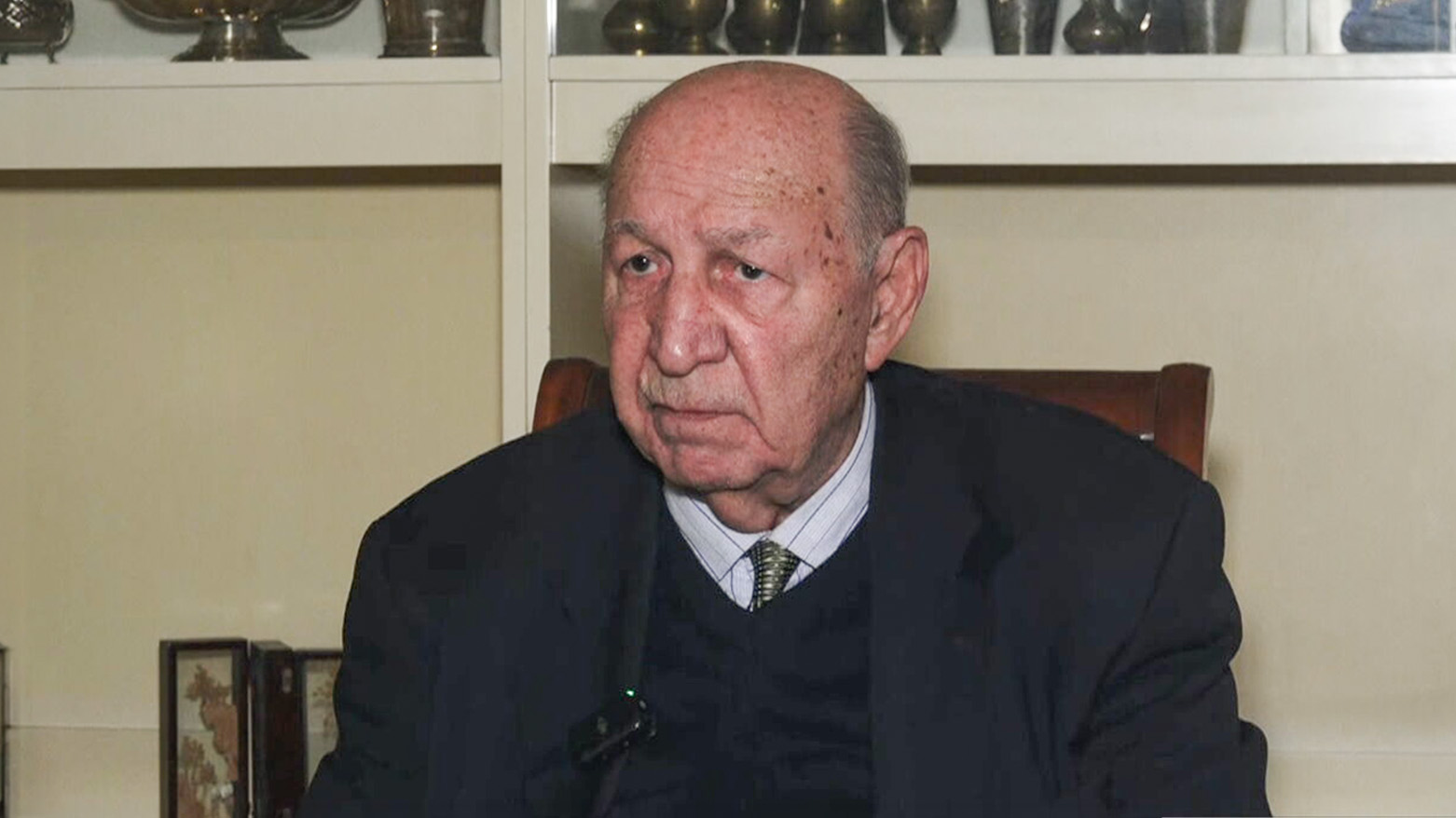
ERBIL (Kurdistan24) - Omar Sheikhmous, a veteran Kurdish politician, said that most of the political and social objectives long pursued by Kurds in Western Kurdistan have now been realized, describing recent developments as a significant achievement while stressing that preserving these gains depends on sustained national unity.
In an interview with Kurdistan24, Sheikhmous addressed the evolving political situation in Western Kurdistan, also known as Rojava, at a moment he described as sensitive for both the region and Syria as a whole.
He said that approximately 65 percent of the achievements and aspirations sought by Kurds in Western Kurdistan have been fulfilled, framing this outcome as a major success in light of longstanding challenges faced by the Kurdish population there.
Sheikhmous expressed optimism about the future of the Kurdish people, stating that they will not be destroyed despite regional uncertainty and political change. His remarks were presented as an assessment grounded in his long experience in political and diplomatic affairs, rather than as a declaration tied to a single event or agreement.
Central to his assessment was the role played by Kurdish leadership in facilitating dialogue among Syrian political actors.
Sheikhmous said that President Masoud Barzani’s efforts to bring Syrian political parties closer together had been “very effective and historic,” attributing tangible progress in Western Kurdistan partly to this role. He did not elaborate on specific mechanisms of that engagement but underscored its importance in the broader political trajectory of the region.
Discussing recent political steps in Syria, Sheikhmous drew a comparison between a Syrian presidential decree and the March 11, 1970 Accord in Iraq, which recognized certain Kurdish rights.
He said the decree was similar “in many aspects” to that earlier agreement, suggesting that it represents a structured attempt to address Kurdish demands within a state framework. His comparison was presented as an analytical observation rather than an assertion that the two situations were identical.
While emphasizing achievements, Sheikhmous also cautioned that maintaining and protecting these gains requires unity among Kurdish political forces.
He said that only national unity can preserve what has been achieved in Western Kurdistan, implying that internal divisions could place recent progress at risk. His remarks reflected a recurring theme in Kurdish political discourse, stressing cohesion as a prerequisite for safeguarding political and social advances.
On the question of autonomy, Sheikhmous said that achieving it at this stage would be difficult.
Instead, he argued that Western Kurdistan should draw on the experience of the Kurdistan Region in Iraq to organize its own affairs. He said this approach was particularly relevant given what he described as significant support from European countries for the Kurdish cause.
He did not specify the form of that support but presented it as a favorable external environment that could assist in consolidating existing gains rather than pursuing more ambitious political arrangements immediately.
Sheikhmous’s comments come as Western Kurdistan and Syria undergo political changes linked to recent agreements and diplomatic activity involving regional and international actors. In recent days, Erbil has hosted a series of high-level meetings focused on Syria and Western Kurdistan, highlighting the Kurdistan Region’s role as a venue for dialogue.
On Thursday, Kurdistan Region President Nechirvan Barzani met in Erbil with Syrian Democratic Forces (SDF) Commander-in-Chief Mazloum Abdi and an accompanying delegation to discuss developments in Western Kurdistan and the broader situation in Syria.
According to the Kurdistan Region Presidency, the talks focused in particular on the agreement between Damascus and the SDF and its potential implications for stability and security in the region.
Those discussions coincided with an official visit to Erbil by French Foreign Minister Jean-Noël Barrot.
Barrot was received by senior Kurdistan Regional Government officials and held a joint press conference with President Nechirvan Barzani addressing regional political developments and cooperation between France and the Kurdistan Region. His visit underscored Erbil’s growing diplomatic role in regional dialogue related to Syria.
Separately, Mazloum Abdi met with Barrot in Erbil to discuss implementation of the Damascus–SDF agreement, counterterrorism efforts, and the protection of Kurdish rights in Syria.
In a statement posted on social media platform X, Abdi said the talks focused on practical steps to implement the agreement and on continued cooperation against ISIS. He also emphasized the need to preserve the privacy and security of Kurdish regions and to uphold the political and civil rights of Kurds in Syria.
According to Abdi, issues discussed included the integration of military and security forces under broader security arrangements and the importance of maintaining stability during the implementation phase of the agreement. The Kurdistan Region Presidency said these meetings formed part of broader high-level talks in Erbil focused on Western Kurdistan and Syria.
From Damascus, Barrot described the SDF–Syrian government agreement as strengthening Kurdish rights and counterterrorism efforts. He said the agreement would enhance the fundamental rights of the Kurds and support the fight against ISIS, adding that France would provide support during this phase.
Barrot confirmed that he discussed the agreement with Syrian officials in Damascus and later with Abdi in Erbil.
Within this context, Sheikhmous’s remarks framed recent political steps as part of a broader process in which many Kurdish aspirations in Western Kurdistan have been partially met, though not fully realized. He said that the agreement and related measures do not fulfill all demands but represent meaningful progress at a critical juncture.
His assessment reflects an emphasis on consolidation rather than escalation, pointing to the need to protect existing achievements through unity and pragmatic governance. While acknowledging the limits of current arrangements, he presented them as evidence that sustained political engagement has yielded tangible results for Kurds in Western Kurdistan.